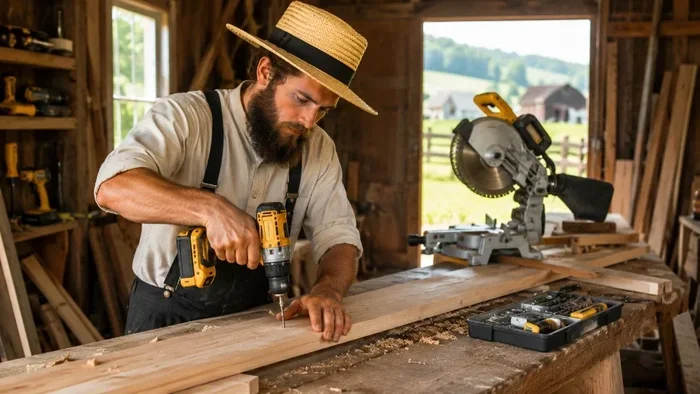
Do Amish Use Power Tools Here Is What They Really Think
Many people wonder do Amish use power tools, and the answer is more nuanced than you might expect. While Amish communities follow strict guidelines called the Ordnung, they do accept certain power tools that run on alternative energy sources. Amish carpenters and builders blend traditional hand craftsmanship with select modern tools to create stunning furniture and structures.
This is a comprehensive guide about do amish use power tools.
Key Takeaways
- The Amish do use some power tools: but only those powered by batteries, compressed air, or hydraulic systems — never grid electricity.
- The Ordnung governs all technology use: each Amish community sets its own rules about what tools are allowed.
- Amish woodworking tools include pneumatic options: like air-powered nail guns and compressors that don’t rely on external power lines.
- Hand tools remain the backbone: most Amish carpenters still prefer traditional hand tools for precision and simplicity.
- Amish furniture making thrives: because their careful approach to tools produces high-quality, durable craftsmanship.
- Battery-powered and pneumatic tools bridge the gap: allowing Amish builders to work faster without violating their beliefs.
- Not all Amish communities are the same: technology acceptance varies widely from one group to another.
[FEATURED_IMAGE_PLACEHOLDER]
Do Amish Use Power Tools Here Is What They Really Think
When you picture Amish life, you probably imagine hand saws, hammers, and lots of elbow grease. And for the most part, that picture is right. But here is the twist. Amish power tools do exist, and they play a real role in how these communities build, craft, and create. The truth is far more interesting than a simple yes or no answer.
So do Amish use power tools? The short answer is yes, but with important rules. The longer answer takes us into the heart of Amish communities, their beliefs about technology, and the clever ways they balance tradition with practical needs. If you have ever wondered what goes on inside an Amish workshop, this article will give you the full picture.
Let us break down exactly what power tools the Amish use, why they use them, and what they really think about mixing old-world craftsmanship with modern machines. You might be surprised by what you find.
Understanding Amish Views on Technology
The Amish approach to technology is not about rejecting progress. It is about protecting what matters most to them. Family, community, and simplicity sit at the center of everything they do. When a new tool or gadget appears, the question is never just “does it work.” The real question is “does it help or hurt our way of life?”
This careful thinking is why you will not see Amish households plugged into the power grid. But it also explains why you might spot a battery-powered drill or a pneumatic nail gun inside a workshop. The source of power matters just as much as the tool itself.
The Amish Technology Rules Explained
Every Amish community follows a set of unwritten rules called the Ordnung. This German word means “order” or “discipline.” It governs everything from how people dress to what tools they can use. The Ordnung is different from one community to another, which means there is no single rulebook for Amish technology.
Some Amish groups are more open to modern inventions. Others stick very closely to 18th-century ways. This diversity is important to understand because it directly affects which power tools are welcome and which are not.
What the Ordnung Says About Power
The Ordnung generally prohibits connection to public electric lines. This is the biggest boundary. Grid electricity represents the outside world in a way that many Amish leaders want to keep at arm’s length. But the rules do not always ban the tools themselves. They ban the power source that comes from the grid.
This distinction opens the door for creative solutions. Amish builders have found ways to use pneumatic tools, battery-powered devices, and even hydraulic systems. These alternatives let them get the job done without breaking their commitment to simple living.
Who Decides What Is Allowed?
The bishop and church leaders make these decisions. They discuss new technologies carefully and prayerfully. Sometimes a tool gets approved for one community but not another. Sometimes a tool that was once banned becomes acceptable after years of debate.
This means you cannot make blanket statements about all Amish people. A carpenter in Lancaster County might use very different woodworking tools than a builder in rural Ohio. The local Amish rules shape what happens on the job site every single day.
Which Power Tools Do the Amish Actually Use
Now let us get to the fun part. What kinds of Amish power tools show up in workshops and job sites? The list is longer than most people expect. But every tool on it passes a simple test. It must do the work without tapping into public electricity.
Pneumatic Tools and Air Compressors
Pneumatic tools are a big deal in Amish workshops. These tools run on compressed air, which means they do not need grid power. A small air compressor powered by a gas engine can run a full set of pneumatic tools all day long.
Here are the pneumatic tools you commonly find in Amish shops:
- Pneumatic nail guns for framing and trim work
- Air-powered drills for boring holes quickly
- Sanders that run on compressed air for smooth finishes
- Impact wrenches for heavy assembly jobs
- Paint sprayers for finishing furniture and cabinets
Many Amish builders use a small gas engine to run their air compressor. This setup gives them the speed and power of pneumatic Amish carpentry tools without any connection to the electrical grid. It is a clever workaround that respects their values while boosting productivity.
If you are curious about how air compressors work and what they can do, check out this guide on whether you need an air compressor for your own projects.
Battery-Powered Tools
Battery-powered tools have become more popular in Amish workshops over the past decade. Rechargeable batteries allow Amish builders to use familiar tools like drills, saws, and sanders without any cord or grid connection.
The key here is the battery. As long as the power comes from a battery that was charged off-grid or replaced with a new one, it is generally acceptable. Some communities even use solar panels to charge batteries, which fits neatly into their off-grid lifestyle.
Common battery-powered tools in Amish shops include:
- Cordless drills for everyday woodworking
- Battery saws for cutting lumber
- Reciprocating saws for demolition or rough cuts
- Flashlights and work lights powered by rechargeable batteries
Hydraulic and Pneumatic Systems
Larger Amish workshops sometimes use hydraulic systems for heavy lifting and pressing. These systems run on fluid pressure rather than electricity. You might see hydraulic presses used for shaping metal or pressing large wooden joints together.
These hydraulic tools are less common than pneumatic or battery options, but they serve an important purpose. They allow Amish craftspeople to tackle bigger projects without compromising their beliefs.
Amish Hand Tools vs Power Tools
Here is where things get really interesting. Even though Amish power tools exist, hand tools still hold a special place in Amish work culture. The balance between the two is something that takes years to understand.
Why Hand Tools Still Matter
Hand tools connect the worker directly to the material. When you use a hand plane or a hand saw, you feel the wood. You control the cut. This connection matters deeply to Amish craftsmen who value patience, skill, and attention to detail.
Hand tools also make no noise, produce no fumes, and need no fuel. They fit perfectly into the Amish simple living philosophy. Many Amish furniture makers still rely primarily on hand tools for the finest pieces.
Common Amish hand tools include:
- Hand planes for smoothing wood surfaces
- Chisels for detailed joinery
- Hand saws for precise cuts
- Clamps and vises for holding pieces in place
- Marking gauges for measuring and layout
The Best of Both Worlds
In practice, most Amish workshops use a mix of hand tools and approved power tools. A carpenter might start a project with hand tools for the fine details and switch to a pneumatic nail gun for the framing work. This blend gives them the speed of modern tools and the precision of traditional methods.
The result is craftsmanship that is both efficient and beautiful. Amish furniture making is famous worldwide, and this balanced approach to tools plays a big part in why the quality is so high.
If you want to learn more about how nail guns work with compressors, here is a helpful guide on how to use a nail gun with a compressor.
Amish Carpentry and Woodworking in Practice
Seeing Amish power tools in action helps bring all of this to life. Let us walk through a typical day in an Amish carpentry shop.
A Day in the Workshop
A morning in an Amish workshop starts early. The carpenter checks his hand tools first. Chisels are sharp. Planes are clean. Then he moves to the pneumatic tools connected to his gas-powered air compressor.
For framing work, he reaches for the nail gun. For drilling, he uses a battery-powered drill. For the fine furniture pieces, he switches back to hand tools. The rhythm of the work blends old and new in a way that feels natural and intentional.
The workshop itself is usually a simple wooden building. No electric lights. Instead, battery-powered work lights or natural light from large windows illuminate the space. The tools on the walls tell the story of a community that values both tradition and practical progress.
What They Build
Amish carpenters build a wide range of things. Furniture is the most famous product. But they also build barns, sheds, homes, and commercial structures. Each project calls for different power tools and techniques.
For furniture, you will see more hand tools and careful hand-finishing. For barn raising and construction, pneumatic tools and battery-powered saws speed up the work significantly. The tool choice always matches the job and the community’s standards.
The quality of Amish woodworking speaks for itself. Pieces built by Amish craftsmen often last for generations. This durability comes from a deep respect for materials, a commitment to hand-finishing, and yes, the smart use of approved power tools where they make sense.
What Do the Amish Really Think About Power Tools
This is the question that really matters. What goes on inside the minds of Amish craftspeople when they pick up a power tool instead of a hand saw?
The Honest Perspective
Most Amish people are practical thinkers. They do not reject technology out of fear. They evaluate it based on how it affects their community, their family time, and their relationship with God. When a power tool makes sense, they use it. When it creates problems, they set it aside.
Many Amish carpenters will tell you that battery-powered tools and pneumatic systems save them time and reduce physical strain. That matters when you are building a barn or crafting fifty chairs in a week. The tools help them serve their customers better without compromising their values.
At the same time, there is a deep appreciation for hand tools. Many Amish craftsmen say that hand tools keep them connected to the work in a way that electric tools sometimes do not. The feel of a hand plane on wood, the sound of a hand saw — these sensory experiences are part of what makes the work meaningful.
The Generational Shift
There is also a generational conversation happening inside Amish communities. Younger Amish workers sometimes push for more access to modern power tools. They see the efficiency gains and want to compete in the marketplace. Older leaders sometimes push back, worried that too much technology could erode the community’s values.
This tension is healthy and normal. It mirrors conversations happening in every society about technology and its role in daily life. The Amish approach — carefully evaluating each tool on its own merits — offers a thoughtful model for everyone.
For more on how compressor tools work and what the knee setting does, check out this guide on what the knee does on a compressor.
Common Myths About Amish Power Tool Use
There are several misconceptions about Amish power tools that deserve to be cleared up. Let us address the big ones.
Myth 1: Amish People Never Use Any Electricity
This is the biggest myth. The Amish do not use grid electricity, but they absolutely use other forms of power. Battery power, compressed air, gas engines, and hydraulic pressure all count as acceptable power sources in most communities.
Myth 2: Amish Craftspeople Are Against All Modern Tools
The Amish are not anti-technology. They are pro-judgment. They evaluate each tool based on its impact on community, family, and faith. A pneumatic nail gun might be approved because it speeds up work without connecting to the grid. A television might be banned because it pulls people away from family and community.
Myth 3: All Amish Communities Follow the Same Rules
As mentioned earlier, the Ordnung varies from community to community. Some Amish groups allow more power tools than others. Some permit battery chargers but not gas engines. The rules are local and living documents that evolve over time.
Understanding these myths helps you see Amish technology use for what it really is. It is not a rejection of progress. It is a thoughtful, community-driven approach to choosing which tools and technologies serve their values best.
Key Takeaways
- Amish communities do use power tools: but only those powered by batteries, compressed air, gas engines, or hydraulic systems — never grid electricity.
- The Ordnung governs all technology decisions: each local community sets its own rules about which Amish power tools are acceptable.
- Pneumatic tools are the most common: air-powered nail guns, drills, and sanders run on gas-powered compressors and are widely accepted.
- Battery-powered tools are growing in popularity: cordless drills, saws, and work lights are now standard in many Amish workshops.
- Hand tools remain essential: Amish craftsmen still value the precision, simplicity, and connection that hand tools provide.
- Amish furniture making benefits from this balance: the mix of hand and power tools produces high-quality, durable pieces that last generations.
- Technology rules vary by community: there is no single answer that applies to all Amish groups across the country.
Frequently Asked Questions
Do Amish people use any electric tools at all?
Yes, but only tools powered by sources other than the grid. Battery-powered drills, pneumatic tools run by gas-powered compressors, and hydraulic systems are all commonly used. The key rule is that the power source must not come from public electric lines.
Why do Amish communities avoid grid electricity?
The Amish avoid grid electricity because it connects them to the outside world in ways they prefer to avoid. Grid power brings dependency on utility companies and easy access to non-Amish entertainment and distractions. Staying off the grid helps preserve Amish simple living and family-centered values.
What is the most common power tool in Amish workshops?
The pneumatic nail gun is probably the most widely used Amish power tool. It runs on compressed air from a gas-powered air compressor, making it completely independent of grid electricity. It is fast, reliable, and practical for both furniture making and construction.
Can Amish people use solar panels to power their tools?
Some Amish communities do allow limited use of solar panels, especially for charging batteries. This falls into a gray area that different communities handle differently. The general principle is that the power source must be self-contained and not tied to public utilities.
How do Amish builders charge battery-powered tools without grid electricity?
Many Amish workshops use solar panels or battery swapping systems. Some communities also use small gas-powered generators for charging. The goal is always to keep the power source independent and off the public grid.
Are Amish power tools different from regular power tools?
The tools themselves are often the same brands and models you would find in any workshop. The difference is in the power source. Amish builders use battery packs, gas engines, and compressed air instead of plugging into wall outlets. The Amish carpentry tools are chosen for their ability to work off-grid.
Conclusion
The question “do Amish use power tools” opens a window into a fascinating world of thoughtful balance and practical innovation. Amish communities are not stuck in the past. They are actively choosing which tools serve their values and which ones do not.
Amish power tools include pneumatic systems, battery-powered devices, and hydraulic equipment — all running on alternative energy sources that keep these communities connected to their roots. The Ordnung ensures that every tool is evaluated carefully, and the results show in the exceptional quality of Amish furniture making and construction.
What really stands out is not just the tools themselves but the philosophy behind them. The Amish teach us that technology is a choice, not an inevitability. Every tool, every gadget, every innovation can be evaluated through the lens of community, family, and faith. That is a powerful lesson for all of us, whether we live in an Amish community or a modern city.
So the next time you see a beautifully crafted piece of Amish furniture or a sturdy barn built by Amish builders, remember the story behind it. It is a story of careful choices, smart compromises, and a deep respect for the tools — both old and new — that make the work possible. Amish power tools are not about rejecting the modern world. They are about engaging with it on their own terms, and that is something truly worth respecting.
Frequently Asked Questions
What is do amish use power tools?
do amish use power tools is an important topic with many practical applications.