What Does SAE Stand for in Tools Everything You Need
SAE stands for the Society of Automotive Engineers, the organization that created the standard measurement system used across American tools and automotive parts. Understanding SAE measurements is essential for anyone working on cars, machinery, or home projects because using the wrong size can damage fasteners and components. This guide breaks down everything from SAE wrench sizes to SAE fittings so you can shop and work with confidence.
If you have ever stood in front of a wall of tools and wondered what all those numbers and letters mean, you are not alone. One question comes up more than any other: what does SAE stand for in tools. The answer might seem simple, but the world behind those three letters is surprisingly deep and important. Whether you are a weekend car enthusiast, a professional mechanic, or just someone trying to fix a loose bolt at home, understanding SAE standards will make your life much easier.
SAE stands for the Society of Automotive Engineers. This organization was founded in 1905 and has grown into one of the most influential standards bodies in the world. They created the SAE measurement system that defines everything from bolt head sizes to hydraulic fittings. In the United States, most tools and automotive parts follow these SAE specifications. That means when you pick up a SAE wrench or a set of SAE sockets, you are using tools built to standards that have been around for over a century.
The reason this matters so much is simple. Using the wrong size tool on a fastener can strip the head, crack the bolt, or even damage the part you are trying to fix. When you know your SAE sizes and how they compare to other systems like metric, you can work faster, smarter, and with much less frustration. Let us dive into everything you need to know about SAE in tools.
Key Takeaways
- SAE stands for Society of Automotive Engineers: This organization developed the imperial measurement standard used widely in American tools and automotive parts.
- SAE vs metric is a key distinction: SAE uses inches and fractions while metric uses millimeters. Mixing them up can cause serious damage to bolts and tools.
- Common SAE sizes range from small to large: Socket sizes like 1/4 inch, 3/8 inch, and 1/2 inch form the backbone of most SAE tool sets.
- SAE standards cover more than just wrenches: Fittings, fasteners, bolts, and thread pitch all follow SAE specifications in many industries.
- Knowing your SAE sizes prevents costly mistakes: Using the right SAE measurements saves time, money, and prevents stripped bolts.
- Both SAE and metric tools are widely used: Many professional mechanics and DIYers keep both sets on hand for different jobs.
📑 Table of Contents
- What Does SAE Stand For and Why Does It Matter
- SAE vs Metric: Understanding the Difference
- Common SAE Sizes You Will Encounter
- SAE Fittings and Their Applications
- SAE Grading and Bolt Strength
- How to Choose the Right SAE Tool Set
- Common Mistakes People Make With SAE Tools
- Why SAE Standards Continue to Matter Today
- Final Thoughts on SAE in Tools
What Does SAE Stand For and Why Does It Matter
The Society of Automotive Engineers is the full name behind the SAE abbreviation. This group started with a focus on the rapidly growing automobile industry in the early 1900s. Over time, their standards expanded far beyond cars. Today, SAE standards cover aerospace, agriculture, construction equipment, and industrial machinery.
When it comes to hand tools, SAE refers specifically to the imperial measurement system. This means sizes are measured in inches, often expressed as fractions like 1/4 inch or 9/16 inch. This is different from the metric system, which uses millimeters. In the United States, most consumer tools, automotive parts, and household hardware follow SAE measurements. If you live in the US and work on American vehicles or appliances, you will encounter SAE sizes constantly.
The History Behind SAE Standards
The Society of Automotive Engineers brought together engineers from different car companies in the early 1900s. Before standardized SAE specifications, every manufacturer used its own measurements. This made parts interchangeable almost impossible. A bolt from Ford would not fit a Chevrolet. The chaos was real and costly.
SAE introduced a unified system of SAE thread sizes, SAE bolt grades, and SAE socket sizes. This revolutionized manufacturing and repair work. Suddenly, a mechanic could walk into any garage and find tools that fit the parts they needed. The system has evolved over the decades but the core SAE standard remains the backbone of American tool manufacturing.
SAE vs Metric: Understanding the Difference
If there is one topic that confuses people most, it is the difference between SAE vs metric measurements. These are two completely different systems, and mixing them up is one of the most common mistakes people make in the workshop.
SAE uses inches and fractions of inches. A typical SAE socket set might include sizes like 1/4 inch, 5/16 inch, 3/8 inch, 7/16 inch, and 1/2 inch. On the other hand, metric tools use millimeters. A metric socket set includes sizes like 8mm, 10mm, 12mm, 14mm, and 17mm.
Here is the critical point: a 1/4 inch SAE bolt is not the same as a 6mm metric bolt. They are close but not identical. Trying to force a metric wrench onto an SAE fastener or vice versa can round off the bolt head or crack the tool. Always check the measurement system before you start tightening or loosening anything.
How to Tell SAE From Metric Fasteners
There are a few quick ways to identify whether a fastener uses SAE measurements or metric. First, look for markings on the bolt or nut itself. Some fasteners have stamps that indicate the system. Second, use a ruler or caliper. SAE sizes are based on fractions of an inch, so the measurements will not line up neatly with millimeter markings. Third, look at the surrounding parts. If you are working on an American vehicle or appliance, there is a good chance the fasteners are SAE. European and Asian vehicles typically use metric.
Many professional mechanics keep both SAE and metric tool sets in their shops. This is a smart approach for anyone who works on different types of equipment. Having both systems available means you are never caught off guard by an unexpected SAE fitting or a metric bolt in an unexpected place.
Common SAE Sizes You Will Encounter
Understanding common SAE sizes is one of the most practical things you can do as a tool user. These measurements show up everywhere from car engines to furniture assembly. Let us break down the most frequently used SAE socket sizes and SAE wrench sizes you will encounter in everyday work.
SAE Socket Sizes
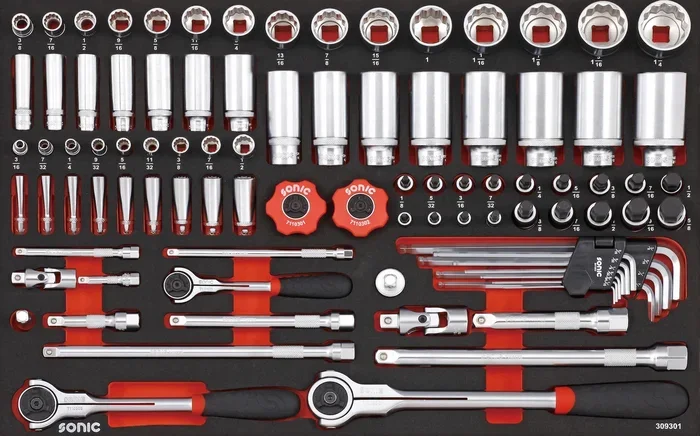
A standard SAE socket set typically includes the following sizes:
- 1/4 inch drive: Used for smaller fasteners in tight spaces like dashboard components and appliances.
- 3/8 inch drive: The most versatile size for general repair work and automotive maintenance.
- 1/2 inch drive: Used for larger bolts and high-torque applications like lug nuts and engine mounts.
- 3/4 inch and 1 inch drive: Heavy-duty sizes for construction and industrial equipment.
Within each drive size, the socket itself comes in various SAE measurements. Common sizes include 5/16 inch, 3/8 inch, 7/16 inch, 1/2 inch, 9/16 inch, and 11/16 inch. Having a solid SAE socket set in these sizes covers the vast majority of repair jobs around the house and garage.
SAE Wrench Sizes
SAE wrenches follow the same fractional inch system. Open-end wrenches and box-end wrenches are sized by the nut or bolt they fit. The most common sizes in a basic SAE wrench set include:
- 5/16 inch
- 3/8 inch
- 7/16 inch
- 1/2 inch
- 9/16 inch
- 5/8 inch
These sizes handle most automotive and household tasks. If you are building a basic tool collection, start with these SAE sizes and expand from there as your projects grow.
SAE Fittings and Their Applications
SAE fittings are another area where SAE standards play a huge role. These are the connectors used in hydraulic systems, fuel lines, brake lines, and air compressor setups. An SAE fitting is designed to a specific SAE thread standard that ensures a tight, leak-free connection.
In the automotive world, SAE fittings are everywhere. Your brake lines use them. Your fuel lines use them. Even your power steering system relies on properly sized SAE fittings. Using the wrong fitting or thread pitch can lead to leaks, pressure loss, and dangerous situations on the road.
Understanding SAE Thread Pitch
Thread pitch refers to the spacing between threads on a bolt or fitting. SAE thread pitch is measured in threads per inch. This is different from metric thread pitch, which is measured in millimeters between threads. When you are replacing a fitting or bolt, matching the correct SAE thread pitch is just as important as matching the diameter.
For example, a 1/4 inch SAE bolt might have 20 threads per inch, while a 1/4 inch metric bolt has a different thread spacing. They may look similar in diameter but will not be compatible. Always double-check both the size and the thread pitch when ordering SAE fasteners or fittings.
SAE Grading and Bolt Strength
One aspect of SAE standards that often gets overlooked is SAE bolt grading. Not all bolts are created equal, and the SAE grade tells you how strong a bolt is. This is especially important in automotive and structural applications where safety is a top priority.
SAE bolt grades are marked by numbers on the head of the bolt. The most common grades you will see are:
- Grade 2: Standard bolts for general use. These are the most common in household and light automotive applications.
- Grade 5: Stronger bolts used in automotive engines and heavy-duty applications. They have three radial marks on the head.
- Grade 8: The strongest common SAE bolts. Used in extreme stress applications like suspension components and heavy machinery. They have six radial marks on the head.
Using the wrong SAE bolt grade can be dangerous. A Grade 2 bolt in a suspension application might shear under stress, leading to a serious accident. Always match the bolt grade to the application requirements. This is one of those details that separates a careful mechanic from someone who is just throwing parts together.
How to Choose the Right SAE Tool Set
Buying a SAE tool set can feel overwhelming when you see all the options available. The key is to think about what you will actually be working on. Different projects require different levels of SAE tool quality and completeness.
For the Home DIYer
If you are mainly doing household repairs, furniture assembly, and light automotive work like oil changes and tire rotations, a basic SAE socket set with a 3/8 inch drive and a range of SAE sizes from 1/4 inch to 1 inch will cover most of your needs. Add a few SAE wrenches in the common sizes and a good ratchet, and you have a solid starter kit.
For the Professional Mechanic
Professional mechanics need a much more comprehensive collection of SAE tools. This includes multiple drive sizes, deep and shallow sockets, specialty wrenches, and a full range of SAE fittings and fasteners. Investing in high-quality SAE tools pays off in durability and precision. A well-organized set of SAE tools also helps with workflow management and keeps repair jobs moving efficiently.
For the Automotive Enthusiast
If you work on classic cars or custom builds, you will encounter a mix of SAE and metric fasteners. Many older American vehicles are entirely SAE, while newer models and imported parts may be metric. Building a collection that includes both systems, along with a reliable set of SAE tools, gives you the flexibility to tackle any project.
When shopping for tools, look for brands known for their SAE tool quality. Durability, precision, and proper SAE specifications should guide your purchasing decisions. Cheap tools that do not meet SAE standards can slip, strip fasteners, and ultimately cost you more money in the long run.
Common Mistakes People Make With SAE Tools
Even experienced tool users make mistakes with SAE measurements from time to time. Being aware of these common errors can save you a lot of frustration and prevent costly damage to your tools and projects.
Mixing Up SAE and Metric
The single most common mistake is grabbing a metric tool when you need an SAE tool or vice versa. The sizes are close enough to seem interchangeable, but they are not. Forcing a mismatch can strip bolt heads, crack sockets, and ruin fasteners. Always verify the measurement system before you start a job.
Guessing Sizes Instead of Measuring
Another mistake is guessing the SAE size instead of measuring the fastener directly. Even experienced mechanics sometimes assume a size and end up using the wrong tool. A simple SAE ruler or digital caliper can eliminate guesswork and save you from damaged parts.
Ignoring Bolt Grades
As mentioned earlier, not all bolts are the same strength. Ignoring SAE bolt grades and using the wrong grade for an application can lead to catastrophic failures. Always check the grade markings and match them to the requirements of your project.
Over-Tightening SAE Fasteners
Using the wrong torque or simply tightening too hard can damage SAE fasteners and the parts they connect. Many SAE applications require specific torque specifications that are listed in repair manuals. Following these specifications protects both the fastener and the component it secures.
Why SAE Standards Continue to Matter Today
You might wonder why SAE standards still matter in an increasingly globalized world where metric is the dominant system in many industries. The answer is simple: the United States still primarily uses SAE measurements for automotive, construction, and household applications. While metric is gaining ground, especially in imported vehicles and equipment, SAE tools remain essential for anyone working on American-made products.
The Society of Automotive Engineers continues to update and expand its standards. Modern SAE specifications cover advanced materials, new technologies, and evolving safety requirements. This means that SAE is not just a legacy system. It is a living standard that continues to shape the tools and parts we use every day.
For anyone who works with tools regularly, staying familiar with SAE measurements and SAE standards is a worthwhile investment of time. Whether you are a professional who relies on SAE tools daily or a weekend hobbyist working on a side project, understanding this system gives you confidence and competence in the workshop.
Many professional shops rely on organized tool management systems to keep their SAE tools and metric tools separated and easy to find. This kind of organization, combined with a solid understanding of SAE standards, is what separates efficient, professional work from frustrating trial and error.
Final Thoughts on SAE in Tools
By now you should have a clear picture of what SAE means in the world of tools and why it plays such a vital role. From SAE socket sizes and SAE wrench sets to SAE fittings and SAE bolt grades, these standards touch nearly every aspect of tool use in America. The next time you reach for a tool, take a moment to check if it is SAE or metric. That small habit will save you time, protect your tools, and keep your projects on track.
Building your knowledge of SAE measurements and SAE standards is one of the best things you can do as a tool user. It is foundational knowledge that pays dividends in every project, from simple home repairs to complex automotive work. Keep learning, keep practicing, and keep your SAE tools organized and in good condition.
Whether you are exploring productivity tools for work, organizing your workshop with process workflow tools, or managing repair jobs with work order management tools, understanding SAE standards gives you a strong foundation. These three-letter initials carry over a century of engineering wisdom, and knowing them puts you ahead of the curve.
Frequently Asked Questions
What does SAE stand for in tools?
SAE stands for the Society of Automotive Engineers. This organization created the imperial measurement standard used in most American tools, automotive parts, and industrial equipment. When you see SAE on a tool or part, it means the measurements follow the standards set by this organization.
What is the difference between SAE and metric tools?
SAE tools use inches and fractions of inches for their measurements, while metric tools use millimeters. A 1/2 inch SAE socket is not the same as a 12mm metric socket, even though they are close in size. Always match your tools to the measurement system of the fasteners and parts you are working with.
Are SAE tools only used in the United States?
SAE tools are most common in the United States because American vehicles, appliances, and machinery typically use imperial measurements. However, SAE standards are recognized worldwide and are used in various industries globally. Many professional shops around the world keep SAE tools on hand for working on American equipment.
How do I know if my bolt is SAE or metric?
You can identify a SAE bolt by measuring it with a ruler or caliper marked in inches. SAE bolts will have fractional inch measurements. You can also look for markings on the bolt head that indicate the grade and standard. If you are working on an American vehicle or appliance, the fasteners are very likely SAE.
Can I use a metric tool on an SAE fastener?
You should never use a metric tool on an SAE fastener or vice versa. The sizes are close but not identical, and forcing a mismatch can strip the fastener head, damage the tool, or compromise the integrity of the connection. Always use the correct measurement system for each fastener.
What are the most common SAE sizes for home use?
The most common SAE sizes for home use include 1/4 inch, 5/16 inch, 3/8 inch, 7/16 inch, 1/2 inch, and 9/16 inch. These sizes cover the majority of household repairs, automotive maintenance, and furniture assembly tasks. A basic SAE socket set with these sizes will serve most DIY needs.
=== CONCLUSION ===
SAE stands for the Society of Automotive Engineers, and the standards this organization created form the backbone of American tool manufacturing and automotive repair. From SAE wrench sizes and SAE socket sets to SAE fittings and SAE bolt grades, understanding these measurements is essential for anyone who works with tools. The difference between SAE and metric is not just academic. It is practical, everyday knowledge that prevents mistakes, saves time, and protects your equipment.
Take the time to build a solid collection of SAE tools, learn to identify SAE sizes quickly, and always match your tools to the correct measurement system. These habits will serve you well whether you are a professional mechanic, a weekend DIYer, or someone just getting started with basic home repairs. The world of SAE tools is vast, but with a little knowledge and the right approach, you can navigate it with confidence and skill.