Find the Right Air Compressor CFM Calculator for Your Needs
Finding the perfect air compressor starts with knowing your CFM needs. Our air compressor cfm calculator helps you quickly determine the right compressor size for any job. You’ll learn how to calculate CFM, avoid common sizing mistakes, and match tools to the right machine.
So you need a new air compressor, but you’re not sure what size to buy. The secret lies in a simple number: CFM. CFM stands for cubic feet per minute, and it tells you how much air your tools need to work properly. If you pick a compressor with too little CFM, your tools will underperform. Too much, and you waste money. An air compressor cfm calculator is the fastest way to find the perfect balance.
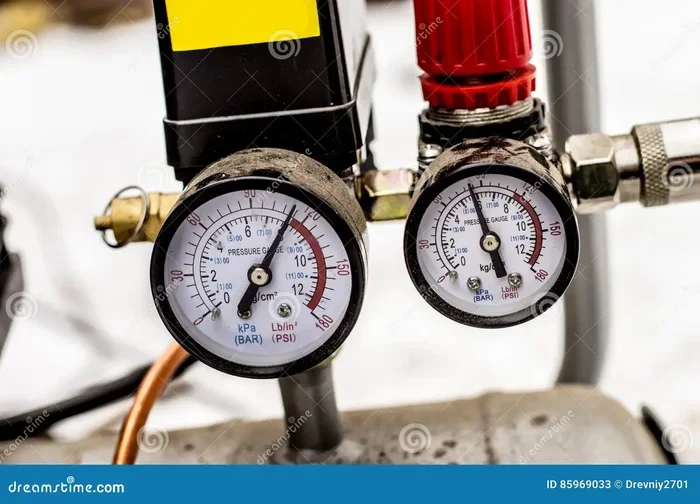
Many people get confused by PSI and tank size. Those matter, but CFM is king. Think of it like water from a hose. PSI is the water pressure. CFM is how many gallons flow each minute. A tool needs both the right pressure and the right flow to work. If you have high PSI but low CFM, the tool will stall. Most air tools list their CFM requirement at 90 PSI. That’s the number you must match.
This guide will show you exactly how to calculate your CFM needs. You’ll learn what to enter into a calculator, how to read tool requirements, and how to avoid costly mistakes. By the end, you’ll know exactly which compressor to buy. Whether you run a small garage shop or a busy industrial facility, the right compressor sizing starts with understanding CFM.
Key Takeaways
- Know your CFM: CFM (cubic feet per minute) is the most important factor when choosing an air compressor.
- Use a calculator: An air compressor cfm calculator takes the guesswork out of sizing.
- Add a safety margin: Always add 25-30% extra CFM to handle pressure drops and future tools.
- Check tool requirements: Every pneumatic tool has a specific CFM demand at a given PSI.
- Duty cycle matters: A compressor must run long enough to meet continuous air demand.
- Avoid common mistakes: Don’t ignore SCFM vs. ACFM or underestimate future needs.
📑 Table of Contents
What Is an Air Compressor CFM Calculator?
An air compressor cfm calculator is a tool that tells you the minimum CFM your compressor must deliver. It takes the air demand of all your tools and adds a safety buffer. The result is the exact compressor size you need. Without it, you’re guessing. Guessing leads to underpowered machines or wasted cash.
The calculator works by summing the CFM of every tool you run at the same time. It then applies a multiplier to account for real-world losses. Those losses include pressure drops in hoses, leaks in fittings, and the extra air needed when the compressor starts up. The final number is your target CFM rating. This is the number you should look for on the compressor’s nameplate.
Why CFM Matters More Than PSI
PSI measures pressure. It’s how hard the air pushes. But CFM measures volume. It’s how much air flows per minute. Think of it like water from a hose. PSI is the water pressure. CFM is how many gallons flow each minute. A tool needs both the right pressure and the right flow to work. If you have high PSI but low CFM, the tool will stall. Most air tools list their CFM requirement at 90 PSI. That’s the number you must match.
Many buyers focus only on PSI because it’s a bigger number. A compressor might deliver 150 PSI, which sounds impressive. But if it only delivers 3 CFM, it can’t run a sandblaster. Always check the CFM first. The PSI rating just tells you the maximum pressure the compressor can build. Most tools operate well below that maximum. The real bottleneck is always the airflow, not the pressure.
How a CFM Calculator Works
A simple calculator adds up the CFM of every tool you run at the same time. It then multiplies that total by 1.25 to 1.30. This extra 25-30% accounts for pressure drops, leaks, and future tools. More advanced calculators also ask for your compressor’s duty cycle. They factor in how long the machine can run without overheating. The output is the recommended compressor CFM rating. This number is your target when shopping.
Some calculators also ask for your shop’s altitude and ambient temperature. These factors affect air density. Thinner air at high altitudes means the compressor must work harder to deliver the same CFM. A good calculator will adjust for this automatically. This ensures your compressor selection is accurate for your specific location.
How to Calculate Your Required CFM
The CFM calculation process is straightforward. You don’t need to be a math whiz. Just follow these steps and you’ll get an accurate number every time.
Step-by-Step CFM Calculation Method
- List every tool you use. Write down the name of each pneumatic tool. Include everything from nail guns to sanders.
- Find each tool’s CFM rating. Check the tool’s manual or the manufacturer’s website. Look for the CFM at 90 PSI. If the tool lists CFM at a different pressure, you may need to convert it.
- Identify the tools that run together. Not all tools run at the same time. But if you run a spray gun and a sander at the same time, add their CFM.
- Add up the CFM for simultaneous use. Suppose your spray gun needs 12 CFM and your sander needs 6 CFM. That’s 18 CFM total.
- Multiply by 1.25 to 1.30. This adds a 25-30% safety margin. 18 CFM x 1.25 = 22.5 CFM. So you need a compressor rated at least 23 CFM.
This method works for most home shops and small businesses. If you run many tools at once, add them all up first, then apply the buffer. I always recommend writing this down on a sticky note and keeping it near your compressor. It’s a quick reference for future purchases.
Real-World Example: A Small Body Shop
Let’s say you run a small body shop. You have a spray gun (12 CFM), a die grinder (5 CFM), and an impact wrench (4 CFM). You use the spray gun and die grinder at the same time. That’s 17 CFM. You also use the impact wrench occasionally at the same time. So you add all three: 12 + 5 + 4 = 21 CFM. Multiply by 1.25 = 26.25 CFM. You need a compressor rated at least 27 CFM. This example shows how quickly CFM adds up. It also shows why a calculator is so valuable. Without it, you might buy a 20 CFM compressor and struggle to run all tools.
The SCFM vs. ACFM Difference
You’ll see two terms when calculating air demand: SCFM and ACFM. SCFM stands for Standard Cubic Feet per Minute. It’s a rating measured at standard conditions (14.5 PSIA, 68°F, 0% humidity). Most tool manufacturers list SCFM because it’s a fair comparison across different environments. ACFM stands for Actual Cubic Feet per Minute. This is what your compressor delivers in your real shop environment. Your shop’s altitude, temperature, and humidity affect ACFM. A compressor rated at 20 SCFM might only deliver 18 ACFM on a hot day. Always design for ACFM to be safe. When in doubt, use the SCFM number from the tool and add your safety buffer. This ensures your air compressor cfm calculator results are realistic.
Common Air Tool CFM Requirements
Every pneumatic tool has a specific air tool CFM requirement. Knowing these numbers helps you size your compressor correctly. Here is a quick reference for the most popular tools.
CFM Chart for Popular Tools
| Tool | Typical CFM @ 90 PSI | Common Use |
|---|---|---|
| Brad Nailer | 0.3 CFM | Light trim work |
| Finish Nailer | 0.5 CFM | Cabinetry and molding |
| Framing Nailer | 2.2 CFM | Decking and framing |
| Impact Wrench (1/2″) | 4.0 CFM | Tire changing and heavy bolts |
| Die Grinder | 4.5 CFM | Metal grinding and polishing |
| Spray Gun (HVLP) | 10.0 CFM | Automotive and furniture finishing |
| Sandblaster | 12.0 CFM | Surface preparation and rust removal |
| Tire Inflator | 1.5 CFM | Quick inflation tasks |
Always double-check the tool’s label. Some tools list CFM at 40 PSI instead of 90 PSI. You may need to adjust the number. The table above gives you a solid starting point for compressor sizing. Keep this chart handy when you’re using an air compressor cfm calculator. It helps you enter the correct values quickly.
Matching Compressor Size to Tools
If you only run one tool at a time, you can pick a compressor based on that single tool’s CFM. For example, a finish nailer needs only 0.5 CFM. A small 1.5 CFM compressor will handle it easily. But if you run a spray gun (10 CFM) and a sander (6 CFM) at the same time, you need at least 16 CFM before the safety buffer. Add 25% and you’re looking at a 20 CFM compressor. This is where an air compressor cfm calculator shines. It adds up all your tools and gives you the exact number. You don’t have to guess or rely on memory.
For contractors who move between job sites, a portable compressor with 4-6 CFM is often enough. For full-time shops, a stationary unit delivering 20+ CFM is standard. The key is matching the compressor’s continuous CFM output to your heaviest simultaneous tool demand.
Using an Online Air Compressor CFM Calculator
You don’t need to do all the math by hand. Many websites offer a free air compressor cfm calculator online. These tools walk you through the process step by step. They are especially helpful if you have many tools or run a busy shop.
Top Free Calculator Tools
Several reputable sites provide free calculators. Some are built by compressor manufacturers. Others are independent tools that give unbiased results. Look for calculators that ask for tool CFM, number of tools, and duty cycle. A good calculator will also suggest a compressor size in horsepower and tank gallons. I recommend using a calculator that lets you enter SCFM values directly. This avoids confusion between standard and actual conditions. Some calculators even let you save your tool list for future reference.
Popular options include the Quincy Compressor CFM calculator, the California Air Tools sizing tool, and various independent engineering sites. Always use a calculator that allows you to input your specific tools. Generic calculators that just ask for “shop size” are less accurate. The more specific your inputs, the better your compressor sizing will be.
What to Enter in the Calculator
Most calculators ask for these inputs:
- Number of tools you plan to run simultaneously.
- CFM requirement for each tool at 90 PSI.
- Total CFM (the calculator adds them up).
- Safety factor (usually 25-30%).
- Desired operating pressure (most tools need 90 PSI).
Some advanced calculators also ask for your shop’s altitude. Higher altitudes mean thinner air, which reduces compressor output. If you live more than 3,000 feet above sea level, add another 10% to your CFM requirement. The calculator then gives you a recommended compressor size in CFM and horsepower. This is the most accurate way to determine your needs. It removes all the guesswork from compressor selection.
Choosing the Right Compressor Based on CFM
Once you know your required CFM, you can start shopping. But not all compressors with the same CFM rating are equal. You need to consider the type of compressor, its duty cycle, and your available power source.
Portable vs. Stationary Compressors
Portable compressors are great for DIYers and contractors who move around. They usually have smaller tanks and lower CFM. A portable unit might deliver 2-6 CFM. That’s perfect for a nail gun or a small impact wrench. If you need more than 10 CFM, you’ll likely need a stationary compressor. These are built for shops and factories. They run on 220V power and can deliver 20+ CFM continuously. For most home garages, a 5-7 HP stationary compressor with a 60-gallon tank hits the sweet spot.
Portable compressors are convenient but often lack the continuous CFM needed for heavy tasks. Stationary compressors are louder and less mobile but deliver reliable power. Think about where you’ll use the compressor most. If it’s a fixed shop location, invest in a stationary unit. If you move around, prioritize portability and look for a wheeled cart.
Duty Cycle and Continuous Operation
The duty cycle tells you how long a compressor can run before it needs to cool down. A 50% duty cycle means the compressor runs for 5 minutes and rests for 5 minutes. A 100% duty cycle means it can run nonstop. If you run a spray gun that needs 10 CFM continuously, you need a compressor with a 100% duty cycle at that CFM. Many compressors are rated at 50% duty cycle, which means their actual continuous output is half the listed CFM. Always check the duty cycle when comparing compressor specs. An air compressor cfm calculator that includes duty cycle helps you avoid this trap.
Expert Insight: “I always tell customers to buy a compressor rated for 125% of their peak CFM demand. That extra 25% gives you room for leaks, future tools, and hot days when the compressor struggles. It’s a small cost that saves you from buying a second compressor later.” — Compressor Specialist
Common Mistakes When Sizing a Compressor
Even with a calculator, people make mistakes. Here are the most common ones and how to avoid them.
Overlooking Future Needs
Don’t size your compressor for today’s tools only. Think about what you might add next year. A small spray gun today could become a full-blown paint booth tomorrow. Buying a compressor with a little extra CFM now saves you from upgrading later. A 30% buffer is a smart investment. It also prevents the frustration of outgrowing your compressor too quickly. Future-proofing your compressor sizing is one of the best decisions you can make.
Ignoring the Duty Cycle
This is the number one mistake. A compressor might be rated at 15 CFM, but that rating is often at a 50% duty cycle. That means it can only deliver 7.5 CFM continuously. If your tool needs 10 CFM nonstop, the compressor will overheat and trip the breaker. Always match the continuous CFM rating to your tool’s demand. Look for the duty cycle on the spec sheet and calculate the true continuous output. This simple step prevents many compressor failures.
Using PSI Instead of CFM
PSI and CFM are different. A tool might need 90 PSI but only 4 CFM. If you buy a compressor that delivers 100 PSI but only 3 CFM, the tool won’t work. Always use the CFM number from the tool’s spec sheet. The PSI requirement just tells you the minimum pressure the compressor must provide. Most compressors easily exceed 90 PSI, so CFM is the real bottleneck. Focus on CFM and you’ll make the right choice every time.
Not Accounting for Pressure Drop
Long air lines cause pressure drops. Every foot of hose adds a little resistance. If your compressor is far from your workbench, you lose CFM. A good rule is to add 5-10% CFM for every 50 feet of hose. This ensures your tools still get enough air at the point of use. It’s a small adjustment that makes a big difference in performance.
Quick Tips for Accurate Sizing
- Measure your air lines. Long pipes cause pressure drops. Add 5-10% CFM for every 50 feet of hose.
- Check your electrical service. A 20 HP compressor needs 240V. Make sure your shop has that before buying.
- Consider a two-stage compressor. These run cooler and deliver more CFM continuously than single-stage models.
- Use the calculator twice. Run it once for today’s tools and once for future tools. Compare the results.
- Don’t forget the tank. A larger tank doesn’t increase CFM, but it reduces cycling and provides a buffer for short bursts of high demand.
Conclusion
Choosing the right air compressor doesn’t have to be hard. The key is knowing your CFM needs. An air compressor cfm calculator takes the guesswork out of the equation. You simply list your tools, add their CFM requirements, and apply a safety buffer. The result is a clear target for compressor size. Remember to consider duty cycle, SCFM vs. ACFM, and future tool additions. With the right CFM, your tools will perform at their best. You’ll avoid frustrating stalls and wasted energy. Take the time to calculate now, and you’ll enjoy reliable compressed air for years to come.
Frequently Asked Questions
What CFM do I need for a spray gun?
A typical HVLP spray gun needs about 10 CFM at 90 PSI. If you’re doing automotive work, you might need 15 CFM or more. Always check the gun’s manual for the exact requirement. Use an air compressor cfm calculator to add a safety margin and ensure smooth, consistent spraying.
How do I calculate CFM if I have multiple tools?
List the CFM of each tool you run at the same time. Add those numbers together. Then multiply the total by 1.25 to 1.30 to add a buffer. This gives you the minimum compressor CFM you need. An online air compressor cfm calculator does this math instantly.
Is SCFM the same as CFM?
SCFM stands for Standard Cubic Feet per Minute. It’s a universal rating measured at standard conditions. CFM is often used interchangeably, but it can refer to actual conditions. Always check if a tool lists SCFM or ACFM. SCFM is the number you should use for compressor sizing because it’s consistent.
Can I use a compressor with lower CFM than my tool requires?
You can, but the tool will not perform well. It will cycle on and off, lose pressure, and may not drive nails or paint properly. The compressor will also wear out faster. Always meet or exceed the tool’s CFM requirement for best results.
How does duty cycle affect compressor selection?
The duty cycle tells you how long the compressor can run continuously. A 50% duty cycle means it runs half the time. If you need a tool that runs for long periods, choose a compressor with a 100% duty cycle at the required CFM. This prevents overheating and ensures steady air supply.
What size compressor do I need for a home garage?
For a home garage with basic tools like a brad nailer, impact wrench, and finish nailer, a 5-6 HP compressor with 15-20 CFM is usually sufficient. Use an air compressor cfm calculator to add up your specific tools and find the right size. This ensures you have enough power for all your projects without overspending.