What Tools Do You Need to Pick a Lock Beginner Guide
If you want to learn how to pick a lock, having the right lock picking tools is the single most important first step. Every beginner needs a basic lock pick set, a tension wrench, and a hook pick to get started with lock picking. With these essential locksmith tools in hand, you will have everything you need to understand how pin tumbler locks work and begin practicing your new skill safely.
Key Takeaways
- Invest in a basic lock pick set: Start with hook picks, rakes, and tension wrenches for reliable results.
- Practice on clear training locks: They let you see how pins move inside the mechanism.
- A quality tension wrench is essential: It creates the binding force needed to set each pin.
- Master single-pin picking first: Build confidence before moving on to security pins and advanced locks.
- Store your locksmith tools properly: Keep picks in a case to preserve their shape and precision.
- Patience beats expensive gear: Gentle pressure and steady hands matter more than costly lock pick sets.
- Learn your local lock picking laws: Understanding legal rules keeps you safe and responsible.
📑 Table of Contents
Understanding How Locks Work Before You Start
Before you grab any lock picking tools, you need to understand what you’re actually working with. Most standard door locks are pin tumbler locks. Inside the lock cylinder, you’ll find a series of small pins stacked on top of each other. When you insert the correct key, it pushes those pins to just the right height. This aligns them along something called the shear line, which lets the cylinder turn and the lock open.
Lock picking works by mimicking what a key does. You use a tension wrench to apply slight rotational pressure to the cylinder. Then you use a pick to push each pin up one at a time until it reaches the shear line. When all the pins are aligned, the lock turns. It sounds simple in theory, but it takes practice and patience. You also need the right lock picking tools to make the process work smoothly.
Some people also encounter wafer locks, disc detainer locks, and tubular locks. Each type requires a slightly different approach and sometimes different tools. For now, focus on pin tumbler locks since they are the most common and the best starting point for beginners.
Essential Tools You Need to Pick a Lock
So, what tools do you need to pick a lock? The honest answer is that you really only need two basic tools to start. Everything else is nice to have but not essential for your first few attempts. Let’s break down the core tools you’ll need.
The Tension Wrench
A tension wrench is the first tool you need. It’s a small, L-shaped piece of metal that you insert into the bottom of the keyhole. Its job is to apply gentle rotational pressure to the lock cylinder. Without tension, the pins will never stay in place, and the lock won’t open.
Tension wrenches come in different shapes and sizes. The most common types include:
- Standard L-shaped wrench – the most basic and versatile option
- Ball-shaped wrench – great for locks with tight keyways
- Straight wrench – works well in shallow keyways
- Twist wrench – offers more control over the amount of tension
You can buy a tension wrench as part of a lock picking tool set, or you can make one from a broken key or a piece of flat metal. For beginners, buying a set is the easiest route.
The Lock Pick
The second essential tool is the pick itself. There are several types, but the two most important for beginners are the hook pick and the rake pick.
A hook pick lets you feel each pin individually and push it up carefully. It gives you more control, which is why many beginners start with it. A rake pick, on the other hand, is designed to be swept across all the pins at once. It’s faster but requires a bit more feel and technique.
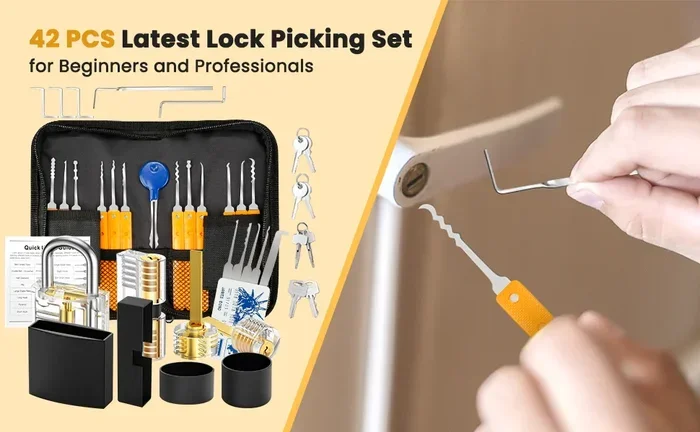
Most beginner lock picking tools sets include both a hook and a rake, along with a tension wrench. That gives you everything you need to start practicing right away.
You might also hear people mention lock bumping as a technique. Bump keys work differently from traditional picks, but they are another way to open pin tumbler locks. However, bumping requires a special key, not a pick, so it’s a separate topic entirely.
Different Types of Lock Pick Sets for Beginners
When you start shopping for lock picking tools, you’ll find dozens of sets on the market. They range from cheap beginner kits to professional-grade sets that cost a lot more. Here’s what you need to know about the different types.
Basic Beginner Sets
Entry-level lock pick sets usually cost between $10 and $30. They include a handful of picks, a couple of tension wrenches, and sometimes a practice lock. These sets are perfect for learning the basics. They give you enough variety to try different techniques without overwhelming you with options.
Look for sets that include at least three picks and two tension wrenches. A practice lock with transparent housing is a huge bonus because it lets you see what’s happening inside the cylinder as you work.
Intermediate and Professional Sets
Intermediate sets cost between $30 and $80. They include more picks, specialty tools, and sometimes tools for different lock types. Professional sets can go well above $100 and include everything a working locksmith would need.
As a beginner, you don’t need an expensive set. Start with a basic kit and upgrade later if you find the hobby genuinely interesting. Buying a $150 professional set before you’ve practiced with a $20 beginner set is like buying a professional-grade air compressor before you’ve ever used one – it’s unnecessary at that stage.
Custom vs. Pre-Made Sets
Some lock pickers prefer to build their own collection of tools one by one. This approach lets you choose exactly what you need. Others prefer pre-made sets because they come with everything organized in a carrying case.
For your first set, go with a pre-made beginner kit. It saves time and gives you a balanced collection of tools. Once you know what styles work best for you, you can start building a custom set later.
Additional Tools That Make Lock Picking Easier
Once you have your basic picks and tension wrench, a few extra tools can make your practice sessions much more productive. These aren’t strictly necessary, but they help a lot.
A Practice Lock
This is arguably the most important tool you can buy besides the picks themselves. A practice lock lets you see the pins inside as you work. It removes the guesswork and helps you understand what each pin feels like when it reaches the shear line.
You can find clear practice locks for under $20 online. They are an excellent investment for anyone serious about learning. Without one, you’re basically trying to learn a sport blindfolded.
Lock Lubricant
Old or dirty locks can be stubborn. A small amount of lock lubricant or compressed air can help clean out debris and make the pins move more smoothly. If you’re using compressed air to clean a lock mechanism, you might already have a can with a hose attachment. Attaching a hose to an air compressor properly ensures you get the right pressure for cleaning without damaging the lock internals.
A Lockout Kit
A lockout kit combines picks, tension wrenches, and other specialty tools in one portable package. These kits are great for people who want to carry their tools with them. They also tend to include tools for different lock types, which broadens your capabilities.
Pin Gauges
Pin gauges help you measure the size of lock pins. This is useful if you want to understand how different lock manufacturers build their cylinders. It’s a more advanced tool, but it helps you develop a deeper understanding of lock mechanics.
How to Choose Your First Lock Pick Set
Choosing the right set can feel overwhelming when you’re just starting out. Here are some practical tips to help you make a smart decision.
Start Simple
Don’t go for the biggest set available. A basic set with 5 to 10 picks and 2 to 3 tension wrenches is plenty for the first few months of practice. You can always add more tools later as you develop your skills.
Look for Quality Materials
Cheap picks made from flimsy metal will bend and break easily. Look for sets made from stainless steel or hardened steel. These last longer and perform better. A lock pick set that costs around $15 to $25 usually offers the best balance of quality and affordability for beginners.
Check for a Practice Lock Inclusion
Some sets come bundled with a clear practice lock. This is a huge value add. If you’re choosing between two sets at similar prices, pick the one that includes a practice lock.
Read Reviews Before Buying
Take a few minutes to read customer reviews before you buy. Look for feedback about tool durability, ease of use, and whether the set works well for beginners. Avoid sets with lots of complaints about flimsy tools or poor quality control.
Consider Your Learning Style
Some people learn better with video tutorials, while others prefer written guides. If you’re a visual learner, look for a set that comes with access to online tutorials or a detailed instruction booklet. The right lock picking tools paired with good learning materials will accelerate your progress dramatically.
Getting Started with Practice and Patience
Now that you have your tools, it’s time to start practicing. But here’s the most important advice I can give you: be patient. Lock picking is a skill that develops over time. You will not open your first lock in five minutes, and that is completely normal.
Start with a clear practice lock so you can see the pins moving. Apply light tension with your wrench and gently push each pin up with your pick. Focus on feeling the slight give when a pin reaches the shear line. Once you can feel that moment consistently, you’ll start to develop what locksmiths call “lock feel.”
Set aside 15 to 20 minutes per day for practice. Short, focused sessions work better than long frustrating ones. Over a few weeks, you’ll notice real improvement. After a month or two, you should be able to open most standard pin tumbler locks with confidence.
Remember that lock picking is a legitimate skill with many practical applications. It’s useful for locksmiths, security professionals, hobbyists, and people who occasionally get locked out of their own homes. Always use your skills ethically and legally. Picking locks that you own or have permission to pick is perfectly fine in most places.
The journey of learning lock picking is rewarding in itself. You’ll develop fine motor skills, patience, and a deeper appreciation for lock security. Start with the basics, invest in decent lock picking tools, and enjoy the process of getting better every day.
Frequently Asked Questions
What tools do you need to pick a lock as a beginner?
As a beginner, you need a basic lock pick set, a tension wrench, and a hook pick to get started. These three essential tools give you everything you need to practice on standard pin tumbler locks safely and effectively.
What is a tension wrench and why is it a must-have tool?
A tension wrench applies gentle pressure to the lock cylinder while you work the pins into place. Without it, you cannot create the slight rotation needed to open the lock, making it one of the most important lock picking tools you will ever use.
Can beginners use affordable lock picking tool sets?
Yes, many affordable beginner lock pick sets include all the essential tools you need to start learning. These kits usually come with a variety of lock picks, tension wrenches, and sometimes even practice locks so you can build your skills right away.
What other tools besides a pick set make lock picking easier?
In addition to a lock pick set, tools like a raking pick, ball pick, and lock pick gun can speed up the process significantly. A practice lock is also one of the best locksmith tools you can have to improve your technique without risking damage to real locks.
Are the tools used for lock picking legal to own?
In most places, owning lock picking tools for educational or hobby purposes is perfectly legal. However, it is important to understand your local laws, as using these tools to enter a lock without permission can lead to serious legal consequences.
How do I choose the right lock picking tools for my skill level?
Start with a basic lock pick set that includes a few hook picks, a rake pick, and a couple of tension wrenches in different sizes. As your confidence grows, you can expand your collection with more specialized locksmith tools like half diamond picks or turning tools for advanced techniques.