How a Portable Air Compressor Works and Why It Matters
A portable air compressor draws in ambient air, compresses it with a pump and motor, and stores it in a tank for later use. Understanding the basic mechanics helps you choose the right compressor for your needs and use it safely. This guide explains how a portable air compressor works in simple terms, covering every component and practical application.
A portable air compressor is one of the most versatile tools you can own. It turns ordinary electricity or gasoline into high-pressure air that powers a wide range of pneumatic tools. Whether you are a weekend DIYer or a professional contractor, knowing how does a portable air compressor work gives you a real advantage. You will understand what is happening inside the tank and why certain features matter. This knowledge helps you pick the right machine and use it safely every single day.
Many people think compressors are complicated. In reality, the basic idea is simple. A pump pulls in air from the room, squeezes it into a smaller space, and sends it into a storage tank. The pressure builds until a switch turns the motor off. When you pull the trigger on a nail gun or inflate a tire, the stored air rushes out. That is the core cycle that makes everything work.
Portable compressors come in many shapes and sizes. Some are small pancake units that fit on a garage shelf. Others are wheeled twin-stack models that can run impact wrenches all day. No matter the size, they all follow the same basic principles. Let us walk through each part of the process so you can see exactly what is happening inside your machine.
Key Takeaways
- How Compression Works: A portable air compressor uses a motor-driven pump to pull in air and force it into a smaller space, building pressure.
- Key Components: The pump, motor, air tank, pressure switch, and regulator are the essential parts that make the system function.
- Power Source Matters: Electric compressors are quiet and clean, while gas-powered models offer mobility for remote jobs. If you use a generator, learn how a generator works to match the power requirements.
- Performance Metrics: CFM (cubic feet per minute) and PSI (pounds per square inch) determine what tools the compressor can run effectively.
- Maintenance Is Simple: Regular draining, oil checks, and filter cleaning keep your compressor running smoothly for years.
- Safety First: Always release tank pressure after use and never exceed the maximum PSI rating.
- Right Tool for the Job: Choose between pancake, hot dog, or twin-stack designs based on your workspace and tool demands.
📑 Table of Contents
How Does a Portable Air Compressor Work?
The question how does a portable air compressor work comes down to one simple action: reducing the volume of air to increase its pressure. A motor drives a pump that takes in atmospheric air and forces it into a tank. As more air enters the tank, the pressure rises. A pressure switch monitors this level and shuts the motor off when the set limit is reached. When you use a tool, air leaves the tank and the pressure drops. The switch then turns the motor back on to refill the tank.
The Basic Compression Cycle
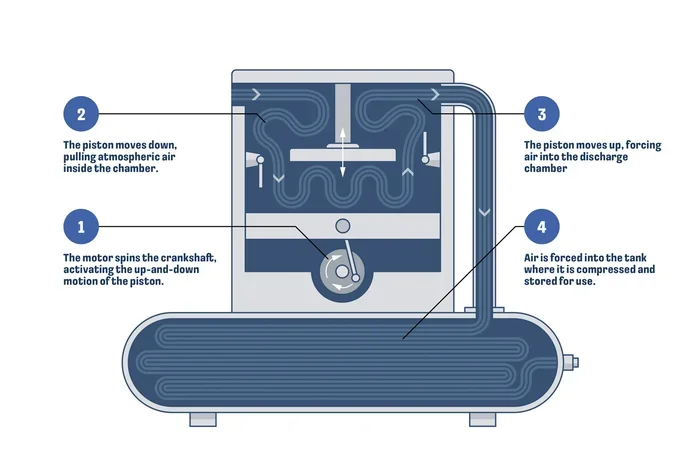
The compression cycle has four clear stages. First, the intake valve opens and the pump draws in a volume of air. Second, the piston or vane moves to reduce that volume. Third, the compressed air passes through a discharge valve and enters the tank. Fourth, the tank stores the air until you need it. This cycle repeats many times per minute. The speed of the cycle depends on the motor size and the pump design.
Most portable units use a reciprocating piston pump. The motor spins a crankshaft that moves the piston up and down. On the downstroke, air is pulled in through a filter. On the upstroke, the air is squeezed out and pushed into the tank. Some newer models use a rotary vane pump, which is quieter and smoother. Both types achieve the same goal: turning loose air into a powerful, stored energy source.
The Role of the Air Tank
The air tank is the reservoir that holds the compressed air. It is usually made of steel or aluminum. The tank size determines how much air you can store before the motor kicks back on. A larger tank means the motor runs less often, which reduces wear and saves energy. For quick tasks like spraying paint or firing a few nails, a small tank works fine. For continuous tools like sanders or grinders, a bigger tank keeps the air supply steady.
Every tank has a safety valve that releases pressure if it gets too high. This is a critical protection feature. Never block or modify this valve. The tank also has a drain valve at the bottom. Moisture from the compressed air collects there. Draining the tank after each use prevents rust and keeps the system clean.
How the Pump and Motor Work Together
The motor provides the muscle. It converts electrical energy or fuel into rotational motion. That motion drives the pump. The pump then does the actual work of compressing air. The horsepower of the motor determines how fast the pump can operate. A higher horsepower motor can compress air more quickly, which means the tank fills faster. For most home garage tasks, a 1 to 2 horsepower motor is plenty.
Electric motors are common in portable compressors. They are quiet, clean, and easy to start. Gas-powered motors are used in heavy-duty models that need to run away from electrical outlets. If you pair a gas compressor with a generator, you need to know how a generator works to ensure it can handle the motor’s power draw. The generator must supply enough voltage and amperage to keep the compressor running at full capacity.
Core Components of a Portable Compressor
Every portable air compressor has a set of core parts. Each part plays a specific role in the compression process. Understanding these components helps you troubleshoot problems and perform basic maintenance. Here are the main parts you will find inside or attached to your machine.
The Pump
The pump is the heart of the system. It is the assembly that actually compresses the air. Most portable units use a piston pump with one or two cylinders. Single-cylinder pumps are simpler and lighter. Twin-cylinder pumps deliver smoother air delivery and run cooler. The pump has intake and discharge valves that open and close at the right times. These valves must stay clean and free of debris to work properly.
The Motor
The motor spins the pump. Electric motors are rated in horsepower and voltage. A 120-volt motor can plug into a standard household outlet. A 240-volt motor needs a dedicated circuit. Gas motors are rated in horsepower too and run on gasoline or propane. The motor also includes a thermal overload protector. This safety feature shuts the motor off if it overheats. Let the motor cool down before restarting it.
The Air Tank and Pressure Switch
The tank stores the compressed air. The pressure switch is the brain that controls the motor. It monitors the tank pressure and turns the motor on when the pressure drops to a set low level. It turns the motor off when the pressure reaches the set high level. You can usually adjust the pressure switch to match your tool requirements. Always follow the manufacturer’s recommended settings.
The Regulator, Hose, and Fittings
The regulator sits between the tank and the outlet hose. It lets you set the output pressure to match the tool you are using. Not all tools need the full tank pressure. A nail gun might need only 90 PSI, while an impact wrench might need 100 PSI. The regulator ensures you deliver the right amount. The hose carries the air from the compressor to the tool. Quick-connect fittings make it easy to swap tools without leaking air. Always check the hose for cracks and the fittings for tightness before each use.
Electric vs. Gas-Powered Compressors
Choosing between an electric compressor and a gas-powered compressor is one of the first decisions you will make. Each type has clear strengths. Your choice depends on where you will use the compressor and what tools you will run.
Electric Compressors
Electric compressors are the most popular choice for home garages and indoor workshops. They are quiet, produce no exhaust fumes, and start with the push of a button. You just plug them into a wall outlet. They require less maintenance than gas models. The trade-off is that they need a reliable power source. If you experience frequent power outages, an electric compressor may not be practical. Also, a long extension cord can reduce the voltage and cause the motor to overheat.
Gas-Powered Compressors
Gas-powered compressors are built for job sites where electricity is not available. They deliver high CFM and PSI, making them ideal for heavy-duty pneumatic tools. These units are louder and produce exhaust, so they must be used outdoors or in well-ventilated areas. They also require more maintenance, including fuel mixing, oil changes, and spark plug checks. If you use a gas compressor, you might need a generator to power other tools. In that case, it is important to know how much propane does a generator use if you are considering a propane-powered setup, so you can plan your fuel supply.
How a Generator Fits In
Many contractors use a generator to power their compressors on remote job sites. If you plan to do this, you need to understand the power requirements. A compressor motor draws a surge of electricity when it starts. The generator must be able to handle that surge. Always check the starting wattage of the compressor and the running wattage of the generator. If you are using a generator, it helps to understand how a generator works so you can match the compressor’s needs correctly. Never overload the generator, as this can damage both the generator and the compressor motor.
When starting the generator, follow the proper steps to avoid damage. Always start the generator before you connect the compressor. This prevents a power surge that can trip the generator’s breaker. You can follow our guide on how to start a generator to ensure a safe and smooth startup every time.
| Feature | Electric Compressor | Gas-Powered Compressor |
|---|---|---|
| Power Source | Wall outlet or generator | Gasoline or propane |
| Portability | Lightweight, easy to carry | Heavier, often wheeled |
| Noise Level | Quiet to moderate | Loud |
| Maintenance | Low (no fuel or oil changes) | Higher (fuel, oil, spark plugs) |
| Best For | Home garage, indoor work | Outdoor job sites, heavy tools |
| Running Cost | Low (electricity) | Higher (fuel) |
Understanding Performance: CFM and PSI
Two numbers define the performance of any compressor: CFM and PSI. CFM stands for cubic feet per minute. It measures the volume of air the compressor can deliver. PSI stands for pounds per square inch. It measures the pressure of that air. Together, these numbers tell you what tools the compressor can run.
What Is CFM?
CFM is the most important metric for tool compatibility. Each pneumatic tool has a CFM requirement listed in its manual. A brad nailer might need only 0.3 CFM. A sandblaster might need 10 CFM or more. The compressor must be able to supply the required CFM continuously. If the CFM is too low, the tool will not operate at full power. The tank size helps bridge the gap. A larger tank stores more air, so the motor does not need to run constantly. However, the pump must still be able to deliver the required CFM to keep up with the tool.
What Is PSI?
PSI tells you how forcefully the air is delivered. Most common air tools operate between 70 and 120 PSI. Some applications, like sandblasting or spray painting, may require higher pressure. The compressor’s maximum PSI rating should exceed the tool’s requirement. The regulator lets you dial down the pressure to match the tool precisely. Never exceed the tank’s rated maximum PSI. The safety valve will release air if the pressure goes too high, but you should avoid pushing the system to that limit.
Matching Compressor Output to Tools
To match a compressor to your tools, add up the CFM requirements of all the tools you plan to use at the same time. Then choose a compressor that delivers at least 1.5 times that total CFM. This extra capacity gives the motor a buffer and prevents it from overheating. For example, if you run a nail gun (0.5 CFM) and a sander (5 CFM) at the same time, you need a compressor that can deliver at least 8 CFM. A compressor rated for 10 CFM will handle this job comfortably.
Practical Uses for a Portable Compressor
A portable air compressor opens up a world of possibilities. It is not just for mechanics. Homeowners and DIY enthusiasts use compressors for a surprising variety of tasks. Here are some of the most common and practical uses.
DIY and Home Garage Tasks
In a home garage, a compressor is a game-changer. You can use it to power a nail gun for trim work and framing. An air ratchet makes removing lug nuts and engine bolts fast and easy. A paint sprayer gives you a smooth, professional finish on furniture and walls. You can also use the compressor to clean dust out of hard-to-reach places. A simple blow nozzle turns the compressor into a powerful cleaning tool. For the weekend warrior, a small pancake compressor is often all you need to handle these tasks.
Construction and Automotive Work
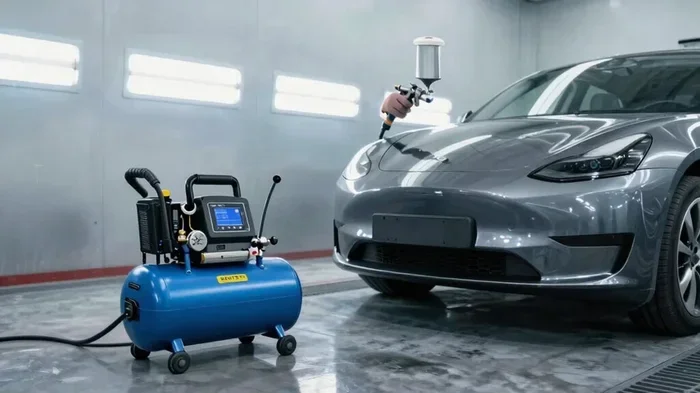
On a construction site, compressors power impact wrenches, sanders, and spray guns. The high CFM requirements of these tools mean contractors often use larger wheeled compressors or twin-stack models. In automotive shops, compressors run impact wrenches, air ratchets, and paint sprayers. The ability to work without cords gives mechanics freedom of movement. A compressor with a large tank and high CFM rating can keep multiple tools running without the motor constantly cycling on and off.
Inflation and Outdoor Jobs
Inflating tires, boats, air mattresses, and sports equipment is one of the simplest uses for a compressor. A compressor with a direct-drive motor and a preset pressure gauge makes this task quick and foolproof. Outdoor jobs like powering a nail gun for fence building or a sprayer for deck staining also benefit from a portable compressor. The mobility of a wheeled model means you can move it around the yard with ease.
Maintenance and Safety Tips
Keeping your compressor in good shape is easy with a regular routine. Proper maintenance extends the life of the machine and keeps it running safely. Here is a quick checklist and some common mistakes to avoid.
Quick Maintenance Checklist
- Drain the tank: Open the drain valve after each use to release moisture. Do this while the tank is still warm.
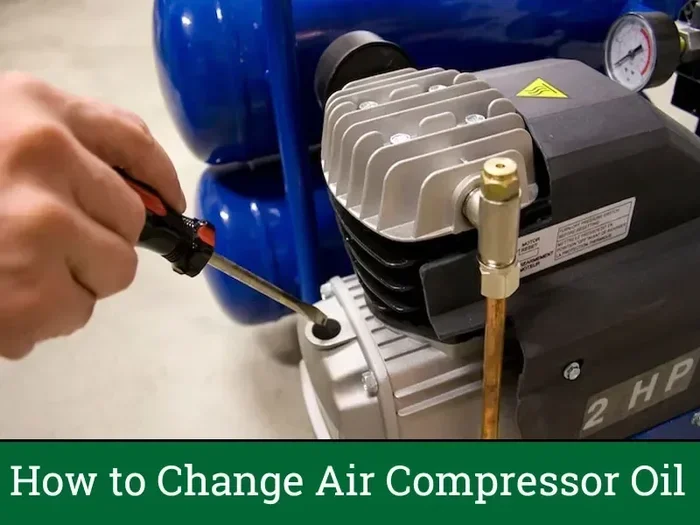
- Check the oil level: For oil-lubricated models, check the oil before each use. Change the oil every 100 to 200 hours of operation.
- Clean the air filter: A dirty filter restricts airflow and makes the motor work harder. Clean or replace it every few months.
- Inspect the hose and fittings: Look for cracks, leaks, or loose connections. Replace any damaged parts immediately.
- Test the pressure switch: Listen for the motor to turn on and off at the correct pressure levels. If it does not, the switch may need adjustment or replacement.
- Store properly: Keep the compressor in a dry, clean area. Cover it to prevent dust buildup.
Common Mistakes to Avoid
One of the biggest mistakes is running the compressor beyond its duty cycle. Most portable compressors are designed for intermittent use. They need time to cool down between cycles. Running them continuously can cause the motor to overheat and burn out. Another mistake is ignoring moisture. Water in the tank can rust the inside and clog the valves. Always drain the tank. Also, never use the compressor indoors if it is a gas-powered model. The exhaust contains carbon monoxide, which is deadly in enclosed spaces.
Expert Insights on Longevity
Experienced users agree that the key to a long-lasting compressor is simple care. Keep the intake filter clean. Use the right oil for the pump. Do not skip the drain step. If you notice the compressor taking longer to build pressure, check for leaks in the hose or fittings. A small leak can waste a lot of compressed air and strain the motor. Addressing small issues early prevents costly repairs later.
Why a Portable Air Compressor Is Worth It
Understanding how does a portable air compressor work helps you appreciate the value this tool brings to any workspace. It turns a simple electric motor or gas engine into a powerful source of pressurized air. That air powers nail guns, sanders, sprayers, and inflators with ease. The right compressor saves you time, reduces physical effort, and opens up projects you might have avoided before.
Whether you choose an electric model for the garage or a gas-powered unit for the job site, the basic principles remain the same. The pump compresses air, the tank stores it, and the regulator delivers it at the right pressure. With proper maintenance and safe operation, your compressor will serve you for many years. Start with the basics, match the machine to your needs, and enjoy the freedom that comes with a reliable portable air compressor.
Frequently Asked Questions
How long does a portable air compressor last?
With proper maintenance, a quality portable compressor can last 10 to 15 years or more. Regular oil changes, tank draining, and filter cleaning make a big difference. The motor and pump are the main wear items, and keeping them clean and lubricated extends their life significantly.
Can I use a portable air compressor indoors?
Electric compressors are safe for indoor use because they produce no exhaust. Gas-powered compressors must never be used indoors. The exhaust contains carbon monoxide, which is a serious health risk. Always operate gas compressors in open, well-ventilated areas.
What is the difference between a pancake and a twin-stack compressor?
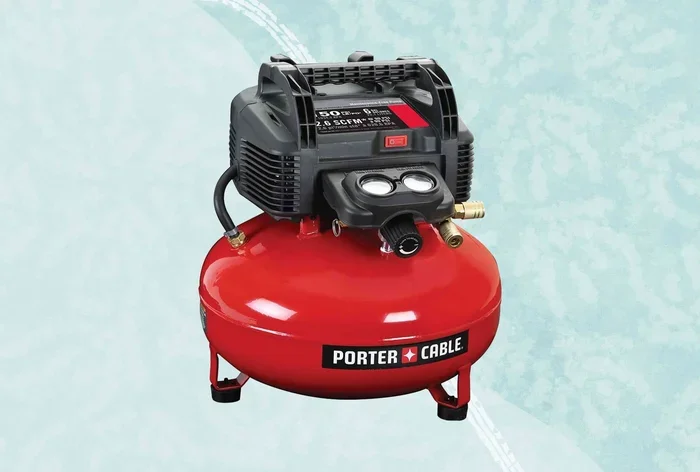
A pancake compressor has a flat, round tank that sits low to the ground. It is lightweight and compact. A twin-stack compressor has two vertical tanks stacked on top of each other. This design holds more air in a smaller footprint, making it great for jobs that need a steady air supply without frequent motor cycling.
Do I need to oil my compressor if it is labeled oil-free?
Oil-free compressors come pre-lubricated with a special coating inside the pump. You do not need to add oil. However, they still require basic maintenance like filter cleaning and tank draining. Over time, the internal coating can wear, so treat an oil-free compressor with care and avoid running it beyond its rated duty cycle.
How do I know what size compressor I need?
Add up the CFM requirements of all the tools you will use at the same time. Choose a compressor that delivers at least 1.5 times that total CFM. Also consider the PSI requirements of your tools. A compressor with a higher tank volume will run the motor less often, which reduces wear and noise.
Why does my compressor keep tripping the circuit breaker?
This usually happens because the motor is drawing too much current. It could be a clogged air filter, a low voltage supply, or a failing motor. Check the filter and make sure you are plugging the compressor into a dedicated outlet. If the problem continues, the motor may need professional repair or replacement.