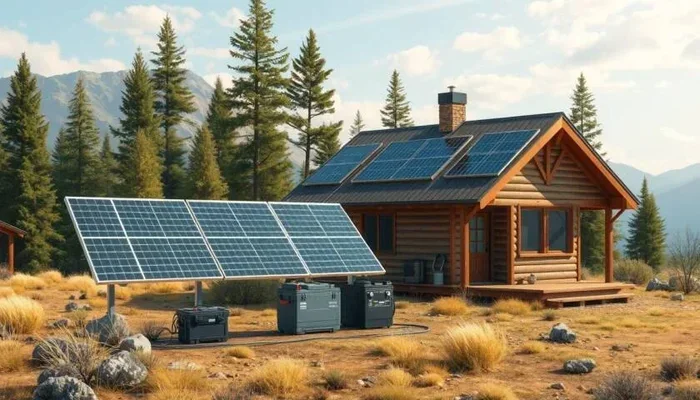
Best Solar Generator for Off-Grid Living – Top Picks
Finding the best solar generator for off-grid living means matching your energy needs to the right portable power system. Whether you live in an off-grid cabin or just want backup power for emergencies, a reliable solar generator delivers clean energy independence. In this guide, we break down the top picks, key features, and practical tips to help you choose wisely.
Key Takeaways
- Right sizing matters: Matching your solar generator’s wattage to your daily energy use prevents underpowered setups and wasted money.
- Battery capacity is king: Lithium-ion batteries offer longer life, lighter weight, and better charge retention than traditional lead-acid options.
- Portability vs. power: Compact units suit lightweight off-grid setups, while higher-output models handle heavier loads like refrigerators and heating systems.
- Solar charging speed varies: Panel wattage, sunlight exposure, and angle all affect how quickly your generator refuels each day.
- Top brands stand out: Brands like Jackery, EcoFlow, Bluetti, and Goal Zero lead the market with proven reliability and strong warranties.
- Maintenance is minimal: Solar generators have fewer moving parts, making them one of the simplest power solutions for self-sufficient living.
📑 Table of Contents
- Best Solar Generator for Off-Grid Living: Top Picks That Actually Deliver
- Why You Need a Solar Generator for Off-Grid Living
- How to Size Your Solar Generator Correctly
- Top Picks for the Best Solar Generators
- Comparing the Top Solar Generators
- Solar Generator Maintenance Tips for Long-Term Use
- Common Mistakes When Choosing a Solar Generator
- Expert Insights: What to Look For in 2024
- Quick Tips for Maximizing Your Solar Generator
- Final Verdict: Choosing Your Best Solar Generator
- Conclusion
- Frequently Asked Questions
Best Solar Generator for Off-Grid Living: Top Picks That Actually Deliver
Living off the grid is one of the most rewarding lifestyle choices you can make. But without access to the main power grid, you need a dependable energy source. That is where a solar generator for off-grid living comes in. These portable power systems harvest sunlight, store it in batteries, and deliver clean electricity wherever you go.
Whether you are building an off-grid cabin, traveling in an RV, or simply preparing for power outages, the right solar generator makes all the difference. But not all units are created equal. Some pack enough punch to run your refrigerator and heating system, while others are best suited for charging phones and small devices. This guide walks you through everything you need to know to pick the perfect portable solar generator for your needs.
We have reviewed dozens of models, compared specifications, and looked at real-world performance. Here are our top picks and the key factors that set them apart. Let us dive in.
Why You Need a Solar Generator for Off-Grid Living
Off-grid living means you generate your own renewable energy source and rely less on public utilities. A solar generator is one of the most practical ways to achieve energy independence. Unlike gas-powered generators, solar units run silently, produce zero emissions, and require very little upkeep.
Here is why more off-grid enthusiasts are choosing solar power:
- Free fuel: Sunlight costs nothing. Once you install your solar panel system, the energy it produces is essentially free forever.
- Quiet operation: No rattling engines or loud fans. Solar generators run almost silently, which is a big plus for off-grid cabins and campsites.
- Low maintenance: Fewer moving parts mean fewer things that break. You mainly need to keep your panels clean and batteries charged.
- Clean energy: No fumes, no carbon monoxide risk, and no environmental damage. Solar power is truly a green energy solution.
- Portability: Many modern units are lightweight and easy to move, making them ideal for off-grid setups that change locations.
Whether you are living full-time off-grid or just want reliable backup power, a solar generator fits the bill beautifully.
How to Size Your Solar Generator Correctly
One of the biggest mistakes people make is buying a unit that is either too small or way too large. Sizing your solar generator correctly saves you money and ensures you have enough power when you need it most. Here is how to get it right.
Calculate Your Daily Energy Needs
Start by listing every device you plan to power. Write down the wattage of each item and estimate how many hours you use them daily. Then multiply wattage by hours to get watt-hours (Wh). Add everything up, and you have your daily energy requirement.
For example:
- LED lights (10W x 5 hours) = 50 Wh
- Smartphone (15W x 2 hours) = 30 Wh
- Refrigerator (100W x 8 hours) = 800 Wh
- Laptop (50W x 4 hours) = 200 Wh
- Total daily need: 1,080 Wh
In this case, you would want a solar generator with at least 1,200 Wh of battery capacity to cover your needs comfortably with some margin.
Consider Your Off-Grid Setup
Your living situation plays a big role. An off-grid cabin with basic needs requires a different system than an RV with a full kitchen. If you plan to run heavy appliances like a furnace or well pump, check out our guide on what size generator to run furnace and refrigerator for helpful sizing advice.
Also think about your location. Areas with abundant sunshine will charge your solar generator faster than cloudy regions. Plan accordingly by adding extra capacity if you live in a less sunny area.
Top Picks for the Best Solar Generators
Now let us look at the best solar generators for off-grid living on the market right now. We have grouped them by use case so you can find the right match quickly.
Best Overall: EcoFlow Delta 2
The EcoFlow Delta 2 is a powerhouse that balances portability and output. With a 1024 Wh battery capacity (expandable to 2048 Wh), it can handle most off-grid household appliances. It charges from empty to full in about 80 minutes with X-Stream technology, which is incredibly fast.
- Output: 1800W AC (3600W surge)
- Weight: 31 lbs
- Best for: Small to medium off-grid setups
- Standout feature: Ultra-fast charging and smart app control
This unit hits the sweet spot between power and portability. It is our top recommendation for most off-grid living situations.
Best Budget Pick: Jackery Explorer 1000 Plus
For those watching their wallet, the Jackery Explorer 1000 Plus delivers solid performance without breaking the bank. It offers a 1268 Wh capacity and enough outlets to charge multiple devices at once. The build quality is reliable, and the brand has a strong track record in the solar generator space.
- Output: 2000W AC
- Weight: 31 lbs
- Best for: Budget-conscious off-grid users
- Standout feature: Excellent price-to-performance ratio
It will not power a full cabin, but for charging essentials and running smaller appliances, it gets the job done well.
Best for Heavy Use: Bluetti AC200MAX
If you need serious power, the Bluetti AC200MAX is a beast. It sports a 2048 Wh battery that is expandable up to 8192 Wh with additional battery modules. That means it can run heavy loads for extended periods, making it perfect for larger off-grid lifestyle setups.
- Output: 2200W AC (4800W surge)
- Weight: 62 lbs
- Best for: Full-time off-grid homes and heavy appliance use
- Standout feature: Massive expandable capacity
The trade-off is weight and size. This is not a unit you carry on camping trips, but for a permanent off-grid cabin, it is hard to beat.
Best Portable Option: Goal Zero Yeti 1500X
Portability is the name of the game with the Goal Zero Yeti 1500X. Despite its manageable size, it delivers a 1516 Wh capacity with multiple charging options including solar, wall, and car charging. It is a favorite among RV travelers and those who need solar electricity on the move.
- Output: 2000W AC
- Weight: 37 lbs
- Best for: RVs, camping, and mobile off-grid setups
- Standout feature: Versatile charging methods and rugged build
Comparing the Top Solar Generators
To make your decision easier, here is a side-by-side comparison of our top picks:
| Model | Battery Capacity | AC Output | Weight | Best For |
|---|---|---|---|---|
| EcoFlow Delta 2 | 1024 Wh (expandable) | 1800W | 31 lbs | Small-medium setups |
| Jackery Explorer 1000 Plus | 1268 Wh | 2000W | 31 lbs | Budget buyers |
| Bluetti AC200MAX | 2048 Wh (expandable) | 2200W | 62 lbs | Heavy off-grid use |
| Goal Zero Yeti 1500X | 1516 Wh | 2000W | 37 lbs | Portable/mobile use |
Each model has its strengths. Think about your daily power consumption, how much you can carry, and what your off-grid energy priorities are before choosing.
Solar Generator Maintenance Tips for Long-Term Use
One of the biggest advantages of a solar generator is its simplicity. But like any equipment, it benefits from proper care. Here are practical tips to keep your unit running strong for years.
Keep Your Solar Panels Clean
Dust, bird droppings, and pollen can reduce your panel efficiency by up to 25%. Wipe them down with a soft cloth and water every few weeks. In dusty off-grid areas, a quick cleaning schedule goes a long way toward maintaining solar charging speed.
Store Batteries Properly
If you are not using your generator for an extended period, do not leave the battery completely empty. Aim to store it at around 50-80% charge. Extreme heat and extreme cold both harm battery health. A cool, dry storage spot is ideal for preserving battery capacity.
Check Your Connections Regularly
Loose or corroded connections reduce power transfer and can damage your equipment. Inspect cables, plugs, and terminals monthly. Tighten anything that feels loose and replace frayed wires immediately. This simple habit prevents most common issues.
Use the Right Charging Setup
Not all solar panel systems are compatible with every generator. Check your manufacturer recommendations for compatible panel wattage and charging methods. Using mismatched equipment can slow charging or even cause damage. If you are unsure about compatibility, consult the product manual or reach out to the brand’s support team.
For those considering a more permanent off-grid setup, understanding how long your system will last is important. Learn more about how long a whole house generator lasts to plan for long-term durability and replacement timelines.
Common Mistakes When Choosing a Solar Generator
Buying the wrong solar generator is frustrating and expensive. Here are the most common errors people make and how to avoid them.
- Ignoring surge wattage: Many appliances draw more power when starting up. A refrigerator, for example, can surge to 2-3 times its running wattage. Always check surge ratings, not just continuous output.
- Underestimating energy needs: People often calculate their needs too low. Add a 20% buffer to your daily total to account for unexpected usage and inefficiencies.
- Overlooking charge time: A big battery means nothing if it takes days to recharge. Look for models with fast-charging features or pair them with higher-wattage panels.
- Skipping warranty coverage: Some budget units come with very short warranties. A good solar generator should have at least a 2-5 year warranty covering the battery and electronics.
- Forgetting expansion options: Your energy needs may grow over time. Choosing a system that supports additional battery modules or extra panels gives you room to scale up without buying a whole new unit.
Expert Insights: What to Look For in 2024
We spoke with off-grid energy specialists to get their take on what matters most this year. Here is what they emphasized:
Lithium-ion is the standard now. Lead-acid batteries are fading. Modern lithium solar generators are lighter, last longer (often 3000+ charge cycles), and hold their charge much better over time. If you see a unit still using lead-acid, keep shopping.
App integration is a game-changer. The best units now connect to smartphone apps, letting you monitor charge levels, track energy use, and even update firmware remotely. This is especially helpful for self-sufficient living where you want to keep tabs on your system without walking over to the unit every time.
Think about your future needs. If you plan to add more appliances or expand your off-grid cabin, choose a system that grows with you. Investing a little more upfront in an expandable system saves you from replacing everything later. Also consider pairing your setup with a mini generator as a backup for cloudy stretches when solar charging slows down significantly.
Quick Tips for Maximizing Your Solar Generator
- Position your solar panels at the optimal angle based on your latitude for maximum sun exposure.
- Use energy-efficient appliances like LED lights and low-wattage fans to stretch your battery life.
- Charge your generator during midday when sunlight is strongest for the fastest solar charging results.
- Keep your firmware updated if your unit supports app-based controls.
- Pair your generator with a small wind turbine if your off-grid location has consistent wind for hybrid off-grid energy production.
Final Verdict: Choosing Your Best Solar Generator
Picking the best solar generator for off-grid living comes down to understanding your energy needs, budget, and lifestyle. For most people, the EcoFlow Delta 2 hits the sweet spot of power, portability, and price. Budget buyers will appreciate the Jackery Explorer 1000 Plus, while heavy users should look at the Bluetti AC200MAX. Travelers and RV owners will love the Goal Zero Yeti 1500X for its versatility.
No matter which model you choose, a solar generator is one of the smartest investments for anyone pursuing an off-grid lifestyle. It gives you clean, quiet, and reliable electricity powered by nothing but the sun. With proper care and the right sizing, your solar generator will serve you well for many years to come. Take the time to plan, do your research, and enjoy the freedom that comes with true energy independence.
Conclusion
A solar generator for off-grid living is more than just a gadget. It is your lifeline to modern convenience without relying on the grid. Whether you are building a cabin in the woods, living on the road, or simply preparing for the unexpected, the right solar power system delivers peace of mind and real-world performance.
Start by calculating your daily energy needs, choose a reputable brand, and invest in a system that can grow with you. The sun is your fuel, and with the right setup, you will never be left in the dark. Embrace the power of renewable energy and enjoy the independence that off-grid living promises.
Frequently Asked Questions
How long does a solar generator last for off-grid use?
Most quality solar generators last between 10 to 25 years depending on battery type and usage. Lithium-ion batteries typically handle 3000 or more charge cycles, which translates to several years of daily use. Proper storage and maintenance can significantly extend your unit’s lifespan.
Can a solar generator power my entire off-grid home?
It depends on the system size and your energy consumption. Smaller units can handle essentials like lighting, charging, and small appliances. For full-home power, you need a high-capacity system like the Bluetti AC200MAX or a custom solar power system with multiple battery banks and a robust solar inverter.
How many solar panels do I need to charge a solar generator?
Typically, two to four 200W solar panels are enough to charge most portable generators in a full day of strong sunlight. The exact number depends on your panel wattage, local sun conditions, and the battery capacity of your generator. Higher-wattage panels charge faster with fewer units.
Is a solar generator better than a gas generator for off-grid living?
Yes, for most off-grid scenarios, solar generators are the better choice. They are quieter, cleaner, require less maintenance, and use free fuel. Gas generators are louder, need fuel storage, and produce harmful emissions. However, gas units may still be useful as backup during extended cloudy periods when solar electricity production drops.
What is the average cost of a good solar generator for off-grid use?
Budget models range from $500 to $1,000, while mid-tier units cost between $1,500 and $3,000. Premium systems with large battery storage and expandable features can exceed $5,000. Prices vary based on battery capacity, output power, and brand reputation. Think of it as a long-term investment in renewable energy for your home.
Can I use my solar generator during a power outage even if I am not off-grid?
Absolutely. Many people use portable solar generators as backup power during storms, grid failures, and emergencies. They keep your essentials running without the noise and hassle of a traditional gas generator. Just make sure your unit has enough capacity to handle the loads you want to keep powered.