Warning Signs Your AC Compressor Clutch Is Failing
Knowing the ac compressor clutch symptoms early can save you hundreds in repairs and keep your car cool on hot days. A failing AC compressor clutch shows clear signs like clicking noises, warm air, and the clutch not engaging at all. This guide walks you through every symptom, cause, and fix in simple, easy-to-understand language.
Your car’s AC compressor clutch works hard every summer. It engages and disengages the compressor thousands of times during a drive. When it starts to fail, you will notice clear warning signs. Ignoring these signs can lead to a full compressor breakdown. That kind of repair costs a lot more than fixing the clutch early.
This article covers every ac compressor clutch symptom you should know. We will talk about what causes clutch failure, how to diagnose it yourself, and what to do next. Whether you are a car owner or a DIY mechanic, this guide has you covered. Let us get into it.
Key Takeaways
- Strange noises from the AC compressor are one of the most common ac compressor clutch symptoms.
- A clutch that won’t engage means your AC system cannot cool your car.
- Wiring issues, low refrigerant, and worn bearings often cause clutch failure.
- You can diagnose many clutch problems at home with basic tools.
- Replacing the clutch early prevents expensive damage to the full compressor.
- Regular AC system maintenance greatly extends clutch life.
📑 Table of Contents
- What Is an AC Compressor Clutch and How Does It Work?
- Top AC Compressor Clutch Symptoms to Watch For
- Why Does an AC Compressor Clutch Fail?
- How to Diagnose AC Compressor Clutch Problems at Home
- AC Compressor Clutch Repair and Replacement Options
- How to Prevent AC Compressor Clutch Failure
- Expert Insights on AC Compressor Clutch Maintenance
- Common Mistakes People Make with AC Clutch Problems
- When Should You Replace the AC Compressor Clutch?
- Conclusion
What Is an AC Compressor Clutch and How Does It Work?
The AC compressor clutch is a small but vital part of your car’s air conditioning system. It connects the compressor to the engine’s power. When you turn on the AC, the clutch engages. This tells the compressor to start pumping refrigerant. When you turn the AC off, the clutch disengages. The compressor stops working and saves engine power.
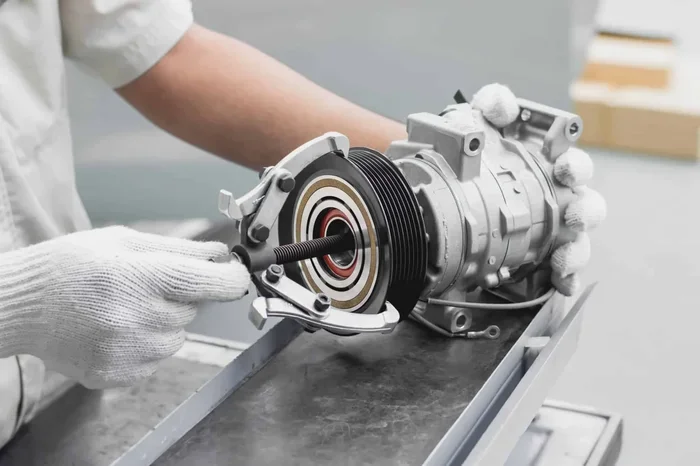
Think of the clutch like a bridge between the engine and the compressor. Without it, the compressor would spin all the time. That would waste fuel and strain the engine. The clutch uses an electromagnetic coil to pull a plate. This plate connects the compressor pulley to the compressor shaft. When the coil gets power, the clutch engages. When power stops, springs pull the plate away.
Most modern cars use this design. It is simple, reliable, and efficient. But like any part, it wears out over time. Understanding how it works helps you spot problems faster.
Top AC Compressor Clutch Symptoms to Watch For
Your car will tell you when something is wrong. The key is knowing what to look for. Here are the most common ac compressor clutch symptoms.
1. Warm Air Coming From the Vents
This is the most obvious sign. If your AC blows warm or lukewarm air, the clutch may not be engaging. When the clutch fails, the compressor does not spin. No spinning means no refrigerant flow. No refrigerant flow means no cold air. This is one of the first ac compressor clutch symptoms drivers notice.
But warm air can also come from low refrigerant or a clogged condenser. So do not jump to conclusions yet. Check other symptoms on this list before assuming the worst.
2. Clicking or Rattling Noises
Do you hear a clicking sound when you turn the AC on? That could be the clutch trying to engage but failing. A worn clutch coil or a bad clutch relay can cause this. The clicking happens because the electromagnetic part of the clutch is struggling.
Some drivers also hear rattling noises. This often means the clutch bearing is worn out. The bearing helps the pulley spin smoothly. When it goes bad, you get metal-on-metal noise. This is a clear ac compressor clutch symptom that needs attention fast.
3. Clutch Not Engaging at All
Sometimes the clutch simply stops working. You turn on the AC, but nothing happens. The compressor stays idle. This is a full clutch failure. It can happen suddenly or get worse over time.
Common reasons include a blown clutch fuse, bad wiring, or a dead clutch coil. Low refrigerant can also cause the clutch to stay off. Many modern cars have a safety feature that prevents the clutch from engaging when refrigerant is low.
4. Clutch Keeps Cycling On and Off
A healthy AC clutch cycles on and off at normal intervals. But if it cycles too fast, something is wrong. This is called short cycling. It puts extra stress on the compressor and clutch.
Short cycling often happens when the clutch is slipping. The electromagnetic coil gets weak over time. It cannot hold the plate firmly. So the clutch engages, slips, disengages, and repeats. This constant cycling is one of the ac compressor clutch symptoms that is easy to overlook.
5. Visible Wear or Damage on the Clutch
You can often see clutch problems with your own eyes. Open the hood and look at the AC compressor. Spin the pulley by hand. It should spin freely when the clutch is off. When you turn on the AC, the pulley should lock to the compressor shaft.
Look for worn friction plates. Check for cracks in the clutch disc. If the clutch plate is glazed or shiny, it has been slipping a lot. Any of these visual signs mean the clutch needs attention.
6. Burning Smell From the Engine Bay
A burning smell is never a good sign. If you smell something burning near the AC compressor, the clutch may be overheating. A worn clutch bearing or a slipping clutch plate can create heat. Over time, this heat can damage surrounding components.
If you ever smell something burning, pull over safely. Turn off the AC and let the engine cool. Then inspect the area. A burning smell combined with any other symptom on this list points to clutch failure.
Why Does an AC Compressor Clutch Fail?
Understanding the causes helps you prevent future problems. Here are the most common reasons an ac compressor clutch fails.
Low Refrigerant Levels
Low refrigerant is one of the top causes of clutch problems. When refrigerant drops too low, the compressor does not build enough pressure. The clutch relies on pressure signals to engage. Low pressure means the clutch stays off. Over time, running the AC with low refrigerant damages the clutch coil.
Always check refrigerant levels if you notice AC problems. A simple recharge can often fix the issue before it harms the clutch.
Worn Clutch Coil
The clutch coil is the electromagnetic part that makes the clutch work. It sends a magnetic field to pull the clutch plate. Over time, the coil wears out. It loses strength and cannot engage the clutch fully.
A worn clutch coil is one of the most common ac compressor clutch failure causes. Replacing the coil is much cheaper than replacing the whole compressor.
Bad Clutch Wiring or Fuse
The clutch needs a steady electrical connection. If a wire is frayed or a fuse is blown, the clutch loses power. This is a simple fix but often overlooked.
Before replacing the clutch, always check the wiring and fuse. You may save yourself a lot of money with a quick inspection.
Clutch Bearing Failure
The clutch pulley spins on a bearing. This bearing takes a lot of wear over the years. When it fails, you get noise, vibration, and eventually clutch failure.
A bad bearing can also damage the clutch plate. Once the bearing goes, the whole clutch assembly usually needs replacement.
Contamination and Debris
Dirt, debris, and metal particles can get into the clutch assembly. This happens when the compressor internal parts wear out. Contamination causes the clutch to slip or grab unevenly.
Keeping the engine bay clean helps reduce this risk. But eventually, all compressors need a full flush or replacement.
Electrical Issues in the AC System
The AC system relies on many electrical parts working together. The clutch relay, pressure switches, and control module all play a role. If any of these fail, the clutch will not engage.
Diagnosing electrical issues takes a bit more effort. But a multimeter and a wiring diagram can help you track down the problem.
How to Diagnose AC Compressor Clutch Problems at Home
You do not need to be a professional mechanic to check your AC clutch. With a few basic tools, you can diagnose most ac compressor clutch symptoms yourself.
Step 1: Check the AC Clutch Fuse
Start with the easiest check. Find your fuse box and locate the AC clutch fuse. A blown fuse is the most common reason a clutch will not engage. Replace the fuse and test the AC again. If the new fuse blows right away, you have a wiring short that needs more investigation.
Step 2: Test the Clutch Coil
The clutch coil gets power when you turn on the AC. Use a multimeter to check for voltage at the coil connector. You should see around 12 volts. If you see zero, check the wiring and relay. If you see power but the clutch still does not engage, the coil is bad.
You can also check the coil’s resistance. A healthy coil reads between 3 and 5 ohms. If the reading is way off, replace the coil.
Step 3: Inspect the Clutch Plate and Bearing
Remove the clutch pulley if you can. Look at the clutch plate for wear. A worn plate looks shiny or glazed. Check the bearing by spinning the pulley. It should spin smoothly with no grinding or roughness.
Any visible damage means the clutch needs replacement. Do not wait too long. A bad bearing can damage the compressor shaft.
Step 4: Check Refrigerant Pressure
Use a manifold gauge set to check the AC system pressure. Low pressure on both sides often means a refrigerant leak. The clutch will not engage if the pressure is too low. This is a safety feature designed to protect the compressor.
Recharge the system if needed. Then test the AC again. If the clutch engages after recharging, the problem was low refrigerant, not the clutch itself.
Quick Tips for Diagnosis
- Always check the simplest things first. Fuses and relays are cheap and easy to replace.
- Use a multimeter. It takes the guesswork out of electrical checks.
- Listen carefully. Clicking, rattling, and grinding noises tell you a lot about clutch health.
- Do not ignore warning lights. Some cars have an AC warning light on the dashboard.
- Take notes. Write down when symptoms happen. This helps you and your mechanic diagnose faster.
AC Compressor Clutch Repair and Replacement Options
Once you confirm the clutch is the problem, you need to decide how to fix it. There are a few options depending on the damage.
Clutch Coil Replacement
If the coil is the only bad part, replacing it is the cheapest option. A new clutch coil costs between $30 and $80. Labor is simple and takes about one to two hours. This fix works great when the clutch plate and bearing are still in good condition.
Clutch Kit Replacement
A clutch kit includes the coil, plate, and bearing. This is a better option if multiple parts are worn. A full clutch kit costs between $100 and $300 for parts. Labor runs about $200 to $500 depending on your vehicle.
Many mechanics recommend replacing the whole clutch kit at once. It saves time and money in the long run. You avoid the risk of the other parts failing soon after.
Full Compressor Replacement
If the compressor itself is damaged, you need a full replacement. This is the most expensive option. A new compressor plus clutch can cost $500 to $1,200 for parts. Add labor, and the total can reach $1,000 to $2,000.
Some shops offer remanufactured compressors. These cost less but may not last as long. Always ask about warranty before choosing this route.
Clutch Repair Cost Comparison
| Repair Type | Parts Cost | Labor Cost | Total Estimate |
|---|---|---|---|
| Clutch Coil Only | $30 – $80 | $100 – $200 | $130 – $280 |
| Full Clutch Kit | $100 – $300 | $200 – $500 | $300 – $800 |
| Full Compressor | $500 – $1,200 | $500 – $800 | $1,000 – $2,000 |
As you can see, fixing the clutch early saves a lot of money. Do not let a small problem turn into a big repair bill.
How to Prevent AC Compressor Clutch Failure
Prevention is always better than repair. Here are simple steps to keep your AC compressor clutch healthy for years.
- Check refrigerant levels regularly. Low refrigerant is the number one cause of clutch stress. Have your AC system inspected at least once a year.
- Run the AC in winter. This sounds strange, but it keeps the seals and clutch lubricated. Run it for 10 minutes once a month during winter.
- Keep the engine bay clean. Dirt and debris accelerate wear on the clutch. Hose out the engine bay regularly.
- Address strange noises early. Do not ignore clicking or rattling sounds. They often get worse over time and lead to bigger problems.
- Replace worn parts promptly. If a mechanic finds a worn clutch bearing, replace it right away. Waiting only makes the damage worse.
- Use quality refrigerant and oil. Cheap refrigerant and oil can contaminate the system. Stick with manufacturer-recommended products.
Following these tips can add years to your AC compressor clutch life. It also keeps your AC system running efficiently all year long.
Expert Insights on AC Compressor Clutch Maintenance
We asked a certified automotive technician about the most common mistakes he sees with AC clutch problems. Here is what he shared.
“The biggest mistake I see is drivers ignoring early symptoms,” says Mike Torres, an ASE-certified mechanic with 15 years of experience. “A clicking noise or slight warm air seems minor. But those are the ac compressor clutch symptoms that tell you something is starting to go wrong. Catching it early saves the whole compressor.”
He also stresses the importance of electrical checks. “So many people replace the clutch when the real problem is a bad relay or corroded wiring,” he explains. “Always do a full electrical diagnosis before replacing parts.”
His final advice is simple. “Treat your AC system like any other part of your car. Regular maintenance prevents most clutch failures. It is much cheaper and easier than a full compressor replacement.”
Common Mistakes People Make with AC Clutch Problems
Avoid these common mistakes to protect your AC system.
- Ignoring the problem. Many drivers just deal with warm air and hope it fixes itself. It never does. The problem only gets worse.
- Adding refrigerant without finding the leak. If your system is low on refrigerant, there is a leak. Adding refrigerant without fixing the leak is a temporary fix at best.
- Replacing parts without proper diagnosis. A bad relay can mimic clutch failure. Always diagnose the root cause first.
- Using non-OEM parts. Cheap aftermarket parts may save money upfront. But they often fail faster and cause more damage.
- Trying DIY repairs without knowledge. AC systems involve refrigerant handling. In many areas, it is illegal to vent refrigerant without certification. Leave this to licensed professionals.
Knowing these mistakes helps you make smarter decisions about your AC repair. It also keeps you from wasting money on unnecessary work.
When Should You Replace the AC Compressor Clutch?
Not every clutch problem means you need a full replacement. Here is how to decide.
If the clutch coil is bad, replace just the coil. If the clutch plate is worn but the bearing is good, replace the plate. If both are worn, go with a full clutch kit.
But if the compressor shaft is damaged or the clutch bearing has seized, you need a full compressor replacement. Trying to repair a badly damaged compressor usually leads to more problems down the road.
Listen to your mechanic and get a second opinion if needed. A good shop will explain exactly what needs to be replaced and why.
Conclusion
Your AC compressor clutch plays a huge role in keeping you comfortable on the road. The ac compressor clutch symptoms we covered in this article are your early warning system. Warm air, clicking noises, a clutch that will not engage, and short cycling are all signs that something is wrong.
Do not ignore these symptoms. The sooner you diagnose and fix the problem, the less it costs. A simple clutch coil replacement costs a fraction of a full compressor replacement. And regular maintenance keeps your AC system running strong for years.
Use the diagnostic steps in this guide to check your clutch at home. And if you are not comfortable with DIY repairs, take your car to a trusted mechanic. Either way, staying on top of ac compressor clutch symptoms is the best thing you can do for your vehicle and your comfort.
Keep your cool this summer. Your AC compressor clutch will thank you for it.
Frequently Asked Questions
What are the first ac compressor clutch symptoms I should look for?
The first signs are warm air from the vents, clicking noises when you turn on the AC, and the clutch not engaging at all. These symptoms usually appear before the clutch completely fails. Catching them early saves you from a costly compressor replacement.
Can I still drive my car if the AC compressor clutch is not engaging?
Yes, you can still drive. The clutch only affects the AC system. Your engine and transmission will work normally. However, you will not have cold air, and running the AC in hot weather can be uncomfortable and even unsafe on long trips.
How much does it cost to replace an AC compressor clutch?
A clutch coil replacement costs $130 to $280. A full clutch kit costs $300 to $800. A complete compressor replacement runs $1,000 to $2,000. The exact cost depends on your vehicle model and where you live.
What causes an AC compressor clutch to slip?
Clutch slipping is usually caused by a worn friction plate, low refrigerant, or a weak electromagnetic coil. The plate loses its grip over time and cannot hold the compressor shaft firmly. This causes the clutch to engage and slip repeatedly.
Is it safe to drive with a bad AC compressor clutch bearing?
It is safe in the short term, but not recommended. A bad bearing can cause the pulley to wobble and damage the compressor shaft. It can also seize up and stall the engine. Have the bearing replaced as soon as possible.
Can low refrigerant cause the AC compressor clutch to fail?
Yes. Low refrigerant prevents the clutch from engaging because the system does not build enough pressure. Running the AC with low refrigerant also damages the clutch coil over time. Always check refrigerant levels when you notice AC problems.