Who Invented Tools A Journey Through Human Innovation
Who invented tools? The answer stretches back millions of years to early humans who first shaped stones and sticks into useful instruments. This journey through human innovation covers everything from prehistoric stone tools to modern digital solutions that power industries today. Understanding the history of tool invention helps us appreciate the creativity and problem-solving that built civilizations.
Who invented tools? That question opens a door to one of the most incredible stories in human history. Tools are not just objects. They are extensions of human imagination and problem-solving ability. From the first sharpened stone to today’s advanced software, every tool tells a story of need, creativity, and progress.
The invention of tools is what set humans apart from other species. Early humans looked at nature and saw possibilities. A sharp rock could cut. A sturdy stick could dig. A curved bone could hook. These simple ideas sparked a revolution that would eventually build cities, launch rockets, and connect the entire world through the internet.
In this article, we will walk through the full journey of tool invention. We will explore when and how early humans first created tools, how ancient civilizations refined them, and how modern innovation continues to push the boundaries of what tools can do. Whether you are a history lover, a maker, or simply curious about human progress, this journey through tool invention will give you a new appreciation for the objects you use every day.
Key Takeaways
- Early humans invented the first tools: Stone tools date back over 3 million years and mark the beginning of human innovation.
- Ancient civilizations advanced tool design: Egyptians, Romans, and Greeks developed specialized tools for construction, warfare, and daily life.
- The Industrial Revolution transformed manufacturing tools: Steam power and mass production changed how tools were made and used forever.
- Modern tools are digital and automated: Software and smart devices now drive productivity in ways early inventors never imagined.
- Tool invention follows human needs: Every new tool solves a specific problem, showing how creativity drives progress.
- Future tools will rely on AI and robotics: The next wave of innovation is already reshaping industries worldwide.
📑 Table of Contents
- The Dawn of Tool Making
- Ancient Civilizations and Tool Innovation
- The Middle Ages and Mechanical Tools
- The Industrial Revolution: A Turning Point in Tool History
- Modern Tools and Digital Innovation
- The Future of Tool Invention
- Common Mistakes People Make When Learning About Tool History
- Expert Insights on Tool Innovation
- Conclusion
The Dawn of Tool Making
When Did Humans First Start Using Tools?
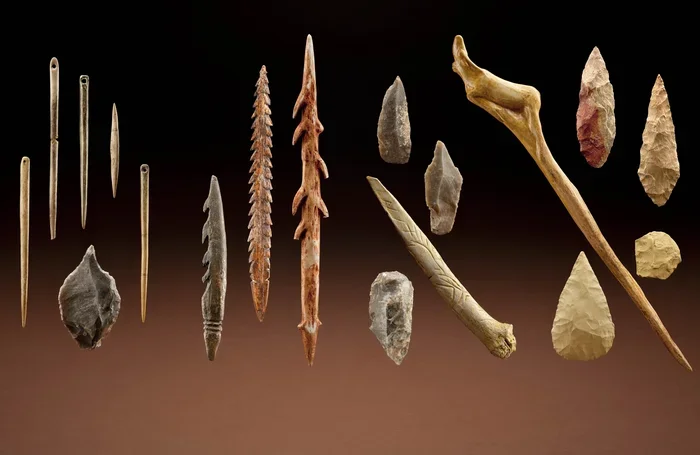
The story of who invented tools begins in the distant past. Scientists believe that early humans, or even our pre-human ancestors, started using simple tools more than 3 million years ago. The earliest known tools were basic stone implements called Oldowan tools. These were simple rocks chipped into sharp edges that could cut meat, scrape hides, and crack open bones.
These primitive tools were not fancy. They had no handles or refined shapes. But they represented something profound. A human mind had looked at a rock and seen a purpose beyond what nature intended. That moment of insight changed everything.
Over time, tool making became more sophisticated. Around 1.7 million years ago, early humans developed the Acheulean hand axe. This was a teardrop-shaped stone tool that was carefully shaped on both sides. It was sharper, more balanced, and more useful than the earlier Oldowan tools. The hand axe shows that early humans were already thinking about design and function.
The Role of Tool Making in Human Evolution
Tool making did more than help humans survive. It actually shaped human evolution itself. The act of shaping stones required fine motor skills and hand-eye coordination. These activities helped develop the parts of the brain responsible for planning, problem-solving, and creativity.
Studies show that the same brain regions activated during modern tool making are involved in language development. This suggests that tool invention and language may have evolved together. As humans got better at making tools, they also became better at communicating complex ideas. This combination of skills fueled further innovation.
Primitive tools also allowed humans to access new food sources. Sharp stone blades made it possible to hunt large animals more effectively. Scraping tools helped process animal skins for warmth. These advances gave early humans a survival advantage that helped them spread across the globe.
Ancient Civilizations and Tool Innovation
Tools of the Egyptian Empire
As human societies grew more complex, so did their tools. Ancient Egypt is a perfect example of how tool innovation drove civilization forward. The Egyptians developed copper and bronze tools that were far sharper and more durable than stone. They created specialized tools for farming, building, and writing.
The construction of the pyramids would not have been possible without advanced engineering tools. The Egyptians used copper chisels, stone hammers, and wooden sleds to move massive limestone blocks. They also invented the shaduf, a lever-based device for lifting water, which revolutionized irrigation in the Nile River valley.
Egyptian tool innovation extended to writing as well. The development of hieroglyphics and papyrus paper gave humans a new kind of tool. A writing tool is just as important as a physical tool. It allows knowledge to be stored and shared across generations.
Greek and Roman Contributions to Tool Design
The Greeks and Romans took tool invention to the next level. Greek thinkers like Archimedes studied simple machines and developed principles of leverage, pulleys, and screws. These concepts became the foundation of mechanical tool design that we still use today.
The Romans excelled at practical tool application. Roman engineers built aqueducts, roads, and buildings using advanced surveying tools, cranes, and concrete mixers. The Roman drill, the vitruvian crane, and the hand plow were all innovations that improved productivity and quality of life.
One of the most important Roman contributions was the development of standardized tools. Roman soldiers carried standardized equipment, and Roman workshops produced consistent, interchangeable parts. This concept of standardization is something we take for granted today in manufacturing and even in business process optimization tools that help modern organizations work more efficiently.
Tools in Ancient China and the Far East
Ancient China also played a huge role in tool invention. The Chinese developed paper, the compass, gunpowder, and printing. Each of these was a tool in its own way. The compass transformed navigation. Paper transformed communication. Printing transformed education.
Chinese ironworking was centuries ahead of Europe. The Chinese invented the blast furnace, which produced cast iron much earlier than other civilizations. They also developed advanced agricultural tools like the iron plow and the seed drill. These tools allowed Chinese farmers to feed larger populations and support growing cities.
The Middle Ages and Mechanical Tools
The Rise of the Waterwheel and Windmill
The Middle Ages brought a new era of mechanical tool development. The waterwheel and windmill were among the most important inventions of this period. These devices harnessed natural energy to perform work that previously required human or animal muscle.
Waterwheels powered grain mills, sawmills, and textile workshops. Windmills pumped water and ground grain across Europe and the Middle East. These mechanical tools multiplied human effort and laid the groundwork for the Industrial Revolution that would follow centuries later.
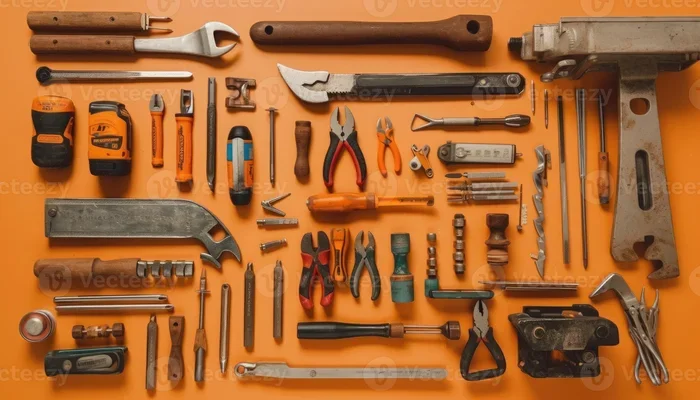
During this period, blacksmiths and craftsmen developed a wide range of hand tools. The hammer, the anvil, the chisel, and the file all became essential workshop tools. These tools were refined over centuries and many are still used in their basic form today. Even modern building maintenance tools share roots with medieval designs.
Medieval Innovations That Shaped Modern Tool Use
The medieval period also saw the invention of the mechanical clock, the printing press, and the telescope. Each of these tools transformed society in profound ways. The mechanical clock gave people a way to measure time precisely. The printing press made knowledge accessible to ordinary people. The telescope expanded our understanding of the universe.
These inventions show that tool making was not just about physical objects. The Middle Ages proved that ideas themselves are tools. A new concept or a new way of thinking can be just as powerful as a hammer or a saw.
Guilds during the medieval period also played a key role in preserving and improving tool-making knowledge. Master craftsmen trained apprentices in the art of tool design and use. This system of knowledge transfer ensured that tool-making skills were passed down and continuously improved over generations.
The Industrial Revolution: A Turning Point in Tool History
How Steam Power Changed Everything
The Industrial Revolution, which began in the late 1700s, was the biggest turning point in tool history since the first stone hand axe. Steam power replaced muscle power. Factories replaced workshops. Mass production replaced individual craftsmanship.
James Watt’s improved steam engine made it possible to power machines that could do the work of hundreds of people. Machine tools like the lathe, the milling machine, and the planer allowed parts to be made with unprecedented precision. These machines could make other machines. This was a revolutionary concept that fueled rapid technological progress.
The Industrial Revolution also gave us the concept of the assembly line. Henry Ford popularized this approach in the early 1900s, but the idea of breaking work into simple, repeatable steps had roots in earlier manufacturing. The assembly line made tools and products cheaper and more accessible to ordinary people.
New Materials and New Possibilities
The Industrial Revolution brought new materials that transformed tool design. Steel replaced iron in many applications because it was stronger and more durable. Cast iron became cheap and widely available. Rubber and other synthetic materials opened up entirely new categories of tools.
Interchangeable parts, pioneered by Eli Whitney and others, made tool repair and manufacturing much simpler. Instead of crafting each part by hand, factories could produce identical parts that fit together perfectly. This concept is still central to modern manufacturing and is reflected in how modern process workflow tools standardize business operations for consistency and efficiency.
Electricity added another dimension to tool invention. Electric motors replaced steam engines in many factories. Electric hand tools like drills, saws, and grinders gave workers more power and precision. The electric drill alone transformed construction, manufacturing, and home improvement.
Modern Tools and Digital Innovation
The Computer Age and Smart Tools
The 20th century brought the computer, and with it, a new kind of tool. Digital tools are not physical objects you can hold. They are software programs that help people think, organize, and create. The invention of the computer was as transformative as the invention of the wheel.
CAD (Computer-Aided Design) software allowed engineers to design tools and machines on screen before building them. CNC (Computer Numerical Control) machines could cut, drill, and shape materials with perfect precision based on digital instructions. These digital tools blurred the line between design and manufacturing.
Today, we have access to an incredible range of digital and smart tools. Cloud-based platforms help teams collaborate from anywhere in the world. Project management software keeps complex projects on track. Automated systems handle repetitive tasks so humans can focus on creative and strategic work. These tools are the direct descendants of the first sharpened stones, just infinitely more advanced.
How Field Service and Management Tools Evolved
Modern industries rely heavily on specialized tools. Field service management tools, for example, help technicians diagnose and repair equipment in the field using mobile devices and real-time data. These tools have transformed industries like telecommunications, utilities, and healthcare.
In the same way, work order management tools help organizations track, assign, and complete maintenance and service tasks efficiently. These digital tools replaced paper-based systems and reduced errors, saving time and money across industries.
The evolution from physical tools to digital tools shows that the human drive to invent never stops. Each generation builds on the tools of the previous generation, adding new capabilities and solving new problems. This cycle of innovation is the engine of human progress.
The Role of Automation and AI in Tool Development
Artificial intelligence is the latest chapter in the story of tool invention. AI-powered tools can analyze data, recognize patterns, and make decisions faster than any human. Machine learning algorithms help companies optimize their operations, predict equipment failures, and automate complex workflows.
Robotics is another area where tool innovation is accelerating. Robots can now perform tasks that were once thought to require human skill and judgment. From assembling cars to performing surgery, robotic tools are expanding what humans can achieve.
These advances raise important questions about the future of work and tool use. As tools become smarter and more autonomous, what role will humans play? Most experts agree that tools will always need human creativity and oversight. The best tools augment human abilities rather than replace them entirely.
The Future of Tool Invention
What Comes Next?
The future of tool invention is exciting and uncertain. Emerging technologies like 3D printing, quantum computing, and biotechnology are creating entirely new categories of tools. A 3D printer can create physical objects from digital designs. Quantum computers can solve problems that would take traditional computers millions of years. Biotechnology tools are editing genes and creating new materials at the molecular level.
These tools are still in their early stages, but they are already changing the world. Just as the first stone tools enabled early humans to survive and thrive, these new tools may help humanity solve its biggest challenges, from climate change to disease to resource scarcity.
The journey of tool invention shows no signs of slowing down. Every new tool opens the door to new possibilities. The creativity that drove a prehistoric human to chip a sharp edge from a rock is the same creativity that drives a modern engineer to design a smart factory or a medical device that saves lives.
Why Understanding Tool History Matters
Learning about who invented tools and why is more than just interesting history. It helps us understand the patterns of human innovation. Every tool is born from a need. Every invention builds on what came before. And every new tool creates opportunities we could not have imagined.
By studying the history of tool invention, we can become better innovators ourselves. We can learn to identify needs, think creatively, and build solutions that make life better for everyone. The story of tools is the story of human progress, and it is a story that is still being written.
The tools we use today, from simple hand tools to complex digital platforms like automated business process discovery tools, are all part of this long and fascinating journey. Each one represents a moment of human insight and a step forward in our shared quest to understand and improve the world.
Common Mistakes People Make When Learning About Tool History
When exploring the history of tools, many people focus only on famous inventions and overlook the everyday innovations that mattered just as much. The development of the simple plow or the wheelbarrow changed daily life for millions of people. These humble tools deserve as much attention as grand inventions like the steam engine.
Another common mistake is assuming that tool invention was a linear, steady process. In reality, progress was often slow and uneven. Civilizations advanced, then declined, and sometimes had to rediscover old knowledge. Understanding this non-linear path gives a more accurate and honest picture of human innovation.
People also tend to underestimate the role of cultural exchange in tool development. Tools and techniques spread across borders through trade, conquest, and migration. Many of the tools we associate with one civilization actually have roots in another. Recognizing this interconnected history gives a richer understanding of how tools evolved over time.
Expert Insights on Tool Innovation
Historians and engineers agree that the key driver behind tool invention is always a human need. Whether it is the need to cut, lift, measure, or communicate, every tool starts with a problem that needs solving. The most successful tools are those that address real, practical needs in simple and elegant ways.
Modern innovators also emphasize the importance of iteration. Very few tools are perfect the first time. The best inventions come from continuous improvement, feedback, and adaptation. This process of trial and error is what makes tool innovation a living, evolving practice rather than a static achievement.
Experts also highlight the growing importance of user-centered design. The best modern tools are not just powerful. They are intuitive and accessible. A tool that is too complex to use will not be adopted, no matter how advanced it is. This principle applies to everything from a hand axe to a software platform.
Conclusion
The question of who invented tools has no single answer. Tools were invented by countless individuals across thousands of years and dozens of civilizations. From the earliest stone flakes to today’s AI-powered platforms, every tool represents a moment of human creativity and a step forward in our collective journey.
The history of tool invention is the history of human progress itself. Every breakthrough in tool design made it possible for humans to achieve more, live better, and understand the world more deeply. The tools we use today are the result of millions of small innovations, each building on the last.
As we look to the future, one thing is clear. The human drive to invent and improve tools will not stop. New challenges will demand new solutions, and new tools will emerge to meet those needs. The story of tool invention is far from over. It is one of the greatest stories ever told, and it is still being written.
Whether you are using a simple hand tool or a sophisticated digital platform, remember that you are participating in a tradition that stretches back millions of years. The spirit of invention lives in all of us, and it will continue to shape our world for generations to come.
Frequently Asked Questions
Who is considered the first person to invent tools?
No single person invented the first tools. Early humans and pre-human ancestors developed the first stone tools over 3 million years ago. These tools evolved gradually as different groups of people experimented with shapes, materials, and techniques across thousands of generations.
What was the first tool ever invented?
The first known tools were simple stone implements called Oldowan tools, dating back over 3 million years. These were sharpened rocks used for cutting, scraping, and breaking open bones. They were basic but represented a major leap in human cognitive ability.
How did ancient civilizations improve upon early tools?
Ancient civilizations like Egypt, Greece, Rome, and China developed new materials like copper, bronze, and iron. They also invented specialized tools for farming, construction, and warfare. These advances allowed civilizations to grow, build monumental structures, and develop complex societies.
What role did the Industrial Revolution play in tool development?
The Industrial Revolution transformed tool manufacturing by introducing steam power, machine tools, and mass production. Factories could now produce tools faster, cheaper, and with greater precision. This era made tools widely available and set the stage for modern manufacturing.
How are digital tools changing the way we work?
Digital tools like project management software, cloud platforms, and automated systems are making work more efficient and collaborative. They reduce manual tasks, improve accuracy, and allow teams to work together from anywhere in the world, much like process workflow tools streamline business operations.
Will AI replace human tool makers in the future?
AI will likely transform how tools are designed and used, but it will not replace human creativity entirely. Tools still need human insight to identify real problems and create meaningful solutions. AI serves as a powerful assistant that enhances human capability rather than replacing it.