Can You Write Off Tools for Work and Claim the Deduction
Yes, you can write off tools for work if they are required for your job and not reimbursed by your employer. Whether you are a contractor, tradesperson, or remote worker, understanding the tax rules helps you save real money. This guide covers what qualifies, how to claim it, and common mistakes to avoid.
Can you write off tools for work? The short answer is yes. If you use tools to do your job and you are not reimbursed, the tax deduction for tools can lower your tax bill. But the full story is a bit more detailed. The IRS has specific rules about what qualifies, how much you can claim, and what paperwork you need to keep.
Whether you are a carpenter, a graphic designer, or a field technician, the right tools are essential. And if you pay for them out of your own pocket, you should not have to eat that cost. This guide walks you through everything you need to know about claiming the work tools deduction without running into trouble.
We will cover who qualifies, what tools count, how to calculate your deduction, and the most common pitfalls. By the end, you will feel confident about filing your taxes and claiming every dollar you deserve.
Key Takeaways
- Tax Deduction Eligibility: Most tools you need for your job can be written off if you pay for them yourself and your employer does not reimburse you.
- Self-Employed vs. Employee: Self-employed workers deduct tools on Schedule C, while employees claim them on Form 2106 or through the new clean vehicle and tool deduction rules.
- De Minimis Safe Harbor: Small tools under a certain cost threshold can be deducted immediately instead of being depreciated over time.
- Documentation Is Key: Keep receipts, records of use, and proof that the tools are directly related to your work.
- Common Mistakes: Claiming personal tools, missing receipts, or double-dipping with employer reimbursements can trigger IRS audits.
- Related Work Tools: Productivity tools for work and process workflow tools also fall into deductible categories when used for business purposes.
📑 Table of Contents
- Who Can Write Off Tools for Work?
- What Tools Qualify for the Deduction?
- How to Calculate Your Tool Deduction
- How to Claim the Deduction on Your Tax Return
- Common Mistakes to Avoid When Writing Off Tools
- Tips to Maximize Your Tool Deduction
- How Process and Workflow Tools Fit Into Your Deduction Strategy
- Expert Insights on Writing Off Work Tools
- Conclusion
Who Can Write Off Tools for Work?
The ability to write off tools for work depends largely on your employment status. The IRS treats self-employed individuals and employees differently. Let us break it down.
Self-Employed Workers
If you run your own business or work as an independent contractor, you can deduct the full cost of work tools on Schedule C. This includes hand tools, power tools, software, and even protective gear. The key rule is that the tool must be ordinary and necessary for your trade or business.
For example, a plumber buying a pipe cutter can deduct that cost. A freelance writer purchasing a laptop can also write it off. The deduction reduces your taxable income, which means you pay less in taxes at the end of the year.
Employees Who Pay for Their Own Tools
Employees can also deduct work tools, but the process is a bit different. You must use Form 2106 to report employee business expenses. This form calculates the deduction and passes it to your main tax return.
However, there is a catch. If your employer already reimburses you for tools, you cannot claim the deduction. The IRS views reimbursement as payment for the expense, so claiming it again would be double-dipping. Always check with your employer first.
For union workers, things can get even more specific. Many union contracts cover tool costs. If your union pays for your tools, you likely cannot also claim the deduction on your personal taxes.
What Tools Qualify for the Deduction?
Not every tool you own qualifies. The IRS wants to see a clear connection between the tool and your job. Here is what typically counts.
Hand Tools and Power Tools
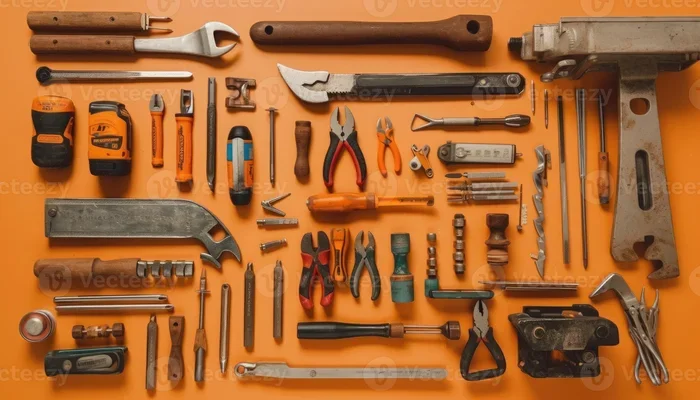
Basic hand tools like wrenches, screwdrivers, hammers, and pliers are generally deductible. Power tools such as drills, saws, and grinders also qualify. These are considered trade tools and are essential for many skilled trades.
The cost matters here. If a single tool costs less than the de minimis safe harbor threshold (currently $2,500 per item), you can deduct the full amount in the year you buy it. For more expensive tools, you may need to depreciate the cost over several years.
Protective Gear and Safety Equipment
Hard hats, safety goggles, gloves, steel-toed boots, and harnesses all qualify. These items protect you on the job and are considered work-related safety equipment. The IRS views them as necessary expenses, so they are fully deductible.
Software and Digital Tools
Digital tools are just as deductible as physical ones. If you use productivity tools for work like project management software, design programs, or communication apps, you can write them off. Subscription services count too, as long as they are used for business purposes.
Similarly, process workflow tools that help you manage tasks, track time, or organize projects are deductible business expenses. The key is that these tools must serve a business function, not a personal one.
Vehicles and Heavy Equipment
If your job requires a vehicle or heavy equipment, you may be able to deduct the cost or claim a mileage deduction. This is a bigger-ticket item and often involves more complex calculations. Consulting a tax professional is a smart move here.
Tools That Do Not Qualify
Some tools do not qualify for the deduction. Personal items you use for both work and home, like a basic smartphone, are tricky. The IRS only allows you to deduct the business-use percentage. If you use your phone 60% for work and 40% personally, you can only write off 60% of the cost.
How to Calculate Your Tool Deduction
Calculating your tool expenses deduction is simpler than it sounds. The method you use depends on the type and cost of the tool.
The Immediate Deduction Method
For tools under $2,500, you can deduct the full cost in the year of purchase. This is the simplest method. Just keep your receipt and note the date of purchase, the price, and how you used the tool for work.
For example, if you buy a $150 angle grinder for your construction job, you write off $150 on your taxes that same year. No depreciation needed.
The Depreciation Method
For tools over $2,500, you spread the deduction over several years. This is called depreciation. Each year, you deduct a portion of the cost until the full amount is claimed.
The IRS provides specific recovery periods for different types of property. Most tools fall into a 5- or 7-year recovery category. A tax software program or professional can help you navigate this.
The Section 179 Deduction
Section 179 allows businesses to deduct the full cost of qualifying equipment in the year of purchase, even if the item costs more than $2,500. This is a powerful tool for small business owners who invest in field service management tools or heavy equipment.
However, there are limits. The total deduction cannot exceed your business income for the year, and there is a cap on the total amount you can claim under Section 179. Check the current IRS limits each tax year.
How to Claim the Deduction on Your Tax Return
Filing your deduction correctly matters. A mistake can delay your refund or trigger an audit. Here is how to do it right.
For Self-Employed Filers
Fill out Schedule C (Profit or Loss from Business). List your tools under the Supplies or Other Expenses section. Attach your receipts and a simple log showing how each tool relates to your work.
If you use process optimization tools or digital platforms for your business, include those subscription costs here as well. Every legitimate business expense adds up to a bigger deduction.
For Employees
Complete Form 2106 (Employee Business Expenses). List each tool, its cost, and the business use percentage. The form total flows into your main tax return as a miscellaneous deduction.
Note that under the Tax Cuts and Jobs Act, miscellaneous deductions for employees were suspended from 2018 to 2025. However, certain employee expenses, including tools, may still be deductible if they are not reimbursed and are documented properly. Check the latest IRS guidance each year.
Documentation You Must Keep
The IRS requires proof. Keep these records for at least three years after filing:
- Original receipts or invoices
- Bank or credit card statements showing the purchase
- A log or journal showing how each tool is used for work
- Photos of the tool in use, if possible
- Warranty or registration documents
Good record-keeping protects you if the IRS ever questions your return. It also makes filing easier and faster each year.
Common Mistakes to Avoid When Writing Off Tools
Many people make avoidable errors when claiming the tax write off for tools. Here are the most common ones.
Claiming Personal Tools
Do not claim tools you use for personal projects and work. The IRS can audit you if the connection is too thin. Only deduct tools that are primarily used for your job.
Double-Dipping with Reimbursements
If your employer pays for your tools, do not claim the deduction too. This is considered fraud and can result in penalties. Always confirm your reimbursement status before filing.
Missing Receipts
Without a receipt, the IRS may disallow your deduction. Get in the habit of saving every purchase receipt. A simple folder or digital scan can save you a lot of headaches.
Forgetting About Small Accessories
Small items like drill bits, blades, sandpaper, and replacement parts add up. Many people forget to include these in their deduction. They are just as deductible as the big-ticket items.
Not Tracking Business vs. Personal Use
For shared tools, you must track the business-use percentage. A simple spreadsheet or app can help you stay organized and accurate.
Tips to Maximize Your Tool Deduction
Want to get the most out of your deductible tools strategy? Here are some expert tips.
Buy Tools Before Year-End
Purchasing tools in December can give you a deduction for the current tax year. This is a smart move if you know you will need the tools for work in the coming months.
Bundle Purchases
If you need several small tools, buying them together in one transaction keeps things simple. You can deduct the total cost in one line item on your tax return.
Consider the De Minimis Safe Harbor
This rule lets you deduct items under $2,500 immediately. Take advantage of it for smaller purchases instead of spreading the deduction over years.
Use Tax Software or a Professional
Tax software can guide you through the deduction process step by step. For complex situations, a certified tax professional can help you find deductions you might miss on your own.
Stay Updated on Tax Law Changes
Tax laws change every year. The rules around employee deductions, depreciation, and Section 179 can shift. Staying informed ensures you never miss an opportunity.
How Process and Workflow Tools Fit Into Your Deduction Strategy
Digital tools are a growing part of every industry. If you use process work tools or field service management tools for your business, these costs are deductible. Whether it is a monthly subscription or an annual license, the IRS treats them as ordinary business expenses.
Similarly, if your business relies on business process orchestration tools or automation platforms, you can write off those costs too. The key is that the tool must have a clear business purpose and be used regularly for work.
Keeping your digital and physical tool expenses organized in one place makes tax time much easier. A dedicated folder or spreadsheet for all work-related purchases is a simple habit that pays off.
Expert Insights on Writing Off Work Tools
Tax professionals agree that the tool deduction is one of the most overlooked deductions for workers. Many eligible people leave money on the table simply because they do not know the rules. The IRS allows a wide range of tools to be deducted, from basic hand tools to advanced digital platforms.
According to tax advisors, the biggest factor in a successful deduction is documentation. Keep every receipt, track your usage, and categorize your expenses clearly. When in doubt, consult a professional. The cost of a tax advisor is often far less than the deductions they help you find.
Conclusion
Can you write off tools for work? Yes, you absolutely can. Whether you are self-employed or an employee who pays for your own tools, the tax deduction for tools is available to you. The key is understanding the rules, keeping proper records, and claiming every eligible expense.
From hand tools to digital productivity tools for work, the deduction covers a wide range of items. Avoid the common mistakes, stay organized, and take full advantage of what the law allows. Your tax return will thank you.
Start today. Gather your receipts, review your purchases, and prepare to claim the deduction you deserve. A little effort now can save you a significant amount of money when tax season arrives.
Frequently Asked Questions
Can I write off tools for work if my employer gives me a small stipend?
It depends on how the stipend is structured. If the stipend is a general allowance and not tied to specific tool purchases, you may still be able to deduct the actual cost of the tools you buy. However, if the stipend is meant to cover tool expenses, you cannot claim the deduction on top of it. Check with a tax professional for your specific situation.
What is the de minimis safe harbor rule for tools?
The de minimis safe harbor allows businesses to deduct items costing less than $2,500 per item in the year of purchase. This means you do not need to depreciate small tools. Instead, you can deduct the full cost immediately, which simplifies your taxes and saves you time.
Can I deduct tools I bought for a side hustle?
Yes, if the side hustle is a legitimate business, you can deduct the tools on Schedule C. The IRS allows deductions for any tool that is ordinary and necessary for your side business. Keep your receipts and records of how the tools are used for that business.
Do I need to prove that I use the tools for work?
Yes, the IRS requires proof that the tools are used primarily for business purposes. Keep receipts, usage logs, and any other documentation that shows the connection between the tool and your job. This protects you in case of an audit.
Can I write off tools for work if I work from home?
Absolutely. If you work from home and need specific tools to do your job, those tools are deductible. This includes computers, software, office supplies, and any other equipment required for your work. The home office deduction and tool deductions can often be claimed together.
Are protective work clothes and tools both deductible?
Yes, both are deductible as long as they are required for your job and not suitable for everyday wear. Protective clothing like steel-toed boots and high-visibility vests count as work gear. Tools like gloves, helmets, and safety glasses are also fully deductible as business expenses.