What Size Air Compressor to Paint a Car Like a Pro
Choosing the right size air compressor to paint a car can make or break your finish. You need enough CFM and PSI to keep your paint gun running smoothly without interruptions. This guide breaks down everything you need to know about compressor sizing, tank capacity, and the best options for automotive painting projects at home or in the shop.
You have your paint gun. You have your automotive paint. You have the perfect color matched for your ride. But if your what size air compressor to paint a car choice is wrong, none of that matters. A compressor that is too small will leave you with sputtering, uneven coats. One that is too big wastes money and takes up space you do not need.
Finding the right compressor for car painting is one of the most important decisions you will make before you start a paint job. It affects your finish quality, your efficiency, and even how much enjoyment you get from the process. This guide walks you through everything you need to know. We cover the numbers, the types of compressors, and the best picks for different situations.
Whether you are a weekend warrior working in a home garage or a detailer running a professional shop, this article has you covered. Let us get into it.
Key Takeaways
- CFM and PSI are king: Most paint guns need 15-25 CFM at 40-60 PSI for a smooth automotive finish.
- Tank size matters too: A larger tank reduces compressor cycling and keeps your airflow consistent during long spray sessions.
- Two-stage compressors are ideal: They deliver more air, run cooler, and handle continuous painting better than single-stage models.
- Don’t undersize your compressor: Running a compressor below your paint gun’s requirements leads to uneven coats and frustrating rework.
- Oil-free models work well: For most home car painters, an oil-free compressor keeps maintenance simple and prevents oil contamination in your paint.
- Consider your workspace: Garage painters need different compressors than full professional auto body shops.
📑 Table of Contents
- Why the Right Size Air Compressor Matters for Car Painting
- Single-Stage vs Two-Stage Compressors for Automotive Painting
- Tank Size: Why It Matters More Than You Think
- Best Air Compressor Sizes for Different Car Painting Projects
- Common Mistakes When Choosing a Compressor for Car Painting
- Final Thoughts on Choosing the Right Compressor
Why the Right Size Air Compressor Matters for Car Painting
You might wonder why compressor size is such a big deal. Can you not just grab any compressor and start spraying? The short answer is no. Air tools and paint guns have specific air demands. If your compressor cannot keep up, you will notice it immediately.
Here is what happens when your compressor is too small. The pressure drops as soon as you pull the trigger on your paint gun. Your spray pattern becomes inconsistent. You get orange peel, runs, and dry spots that ruin the finish. Then you have to sand it all back and start over. That is wasted paint, wasted time, and wasted money.
On the other hand, a properly sized compressor delivers steady, consistent airflow. Your paint gun sprays smoothly. Your coats go on evenly. You cover more area with less effort. The whole process becomes faster and more enjoyable. A well-matched compressor also runs less often, which means less noise and a longer machine life.
Many people also use a generator to power their compressor when working outdoors or at a remote location. If you plan to do this, understanding how much power your setup needs is essential. You can learn more about how a generator works to make sure your power source can handle the job.
Understanding CFM and PSI
Two numbers define every paint gun’s air needs. CFM stands for cubic feet per minute. It measures how much air your gun uses. PSI stands for pounds per square inch. It measures the pressure needed to atomize the paint properly.
Most automotive paint guns fall into these ranges:
- HVLP guns: 10-18 CFM at 25-30 PSI
- Conventional guns: 15-25 CFM at 40-60 PSI
- LVLP guns: 8-15 CFM at 20-35 PSI
HVLP stands for High Volume Low Pressure. These guns are popular because they transfer more paint to the surface and waste less. LVLP stands for Low Volume Low Pressure. They use even less air and work well on smaller compressors. Conventional guns offer the most power but consume the most air.
Your compressor must deliver at least the CFM your gun requires. Always check your paint gun’s manual for its specific air consumption numbers. And remember, it is better to have a little extra CFM than to fall short.
Single-Stage vs Two-Stage Compressors for Automotive Painting
When shopping for a compressor, you will see two main types. Each has its strengths for car painting. Understanding the difference helps you choose wisely.
Single-Stage Compressors
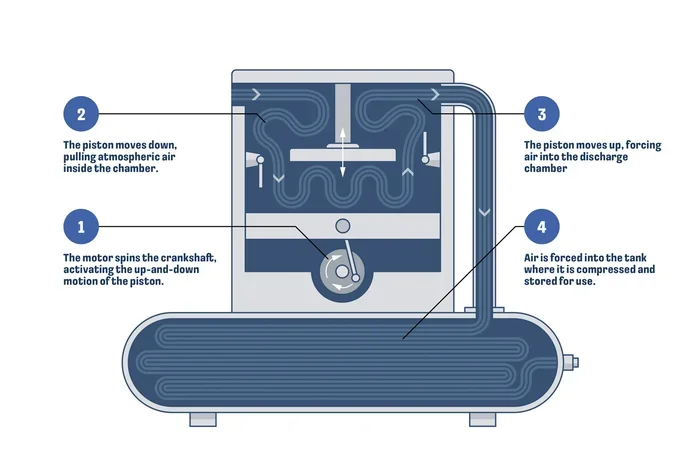
Single-stage compressors have one piston that compresses the air in a single stroke. They are simpler in design and usually more affordable. For light automotive work like touch-ups or small panels, a single-stage compressor can do the job.
However, single-stage models tend to cycle on and off more frequently. This means more downtime between spray passes. They also run hotter, which can affect air quality over long sessions. If you are doing a full car paint job, a single-stage compressor may struggle to keep up.
Two-Stage Compressors
Two-stage compressors use two pistons in sequence. The first stage compresses the air, and the second stage compresses it further. This delivers more air at higher pressures with less effort. Two-stage compressors run cooler and last longer under heavy use.
For anyone serious about car painting, a two-stage compressor is the better choice. It handles continuous spraying with ease. The airflow stays consistent, so your coats go on smooth. The higher upfront cost pays for itself in better results and less frustration.
If you are also running other pneumatic tools in your shop, consider how much total air you need. A compressor powerful enough to paint a car can also help you understand your overall power needs. Check out our guide on how many watts a generator needs to run a house for insights on power planning.
Tank Size: Why It Matters More Than You Think
Tank size is the volume of air your compressor stores. Measured in gallons, it plays a big role in your painting experience. A larger tank does not mean more air pressure. It means your compressor runs less often.
Here is why that matters for car painting. When you spray a large panel, your paint gun pulls air continuously. A small tank fills up fast and then the compressor kicks on to catch up. That on-off cycling creates pressure fluctuations. Your paint spray changes slightly with each cycle, leading to an uneven finish.
A larger tank holds more compressed air ready to go. It smooths out those pressure fluctuations. You get a steady stream of air from start to finish. This means smoother coats, fewer passes, and a better final result.
For car painting, we recommend tanks of at least 60 gallons for a single-stage compressor and 30-60 gallons for a two-stage model. If you are painting a full car in one session, a bigger tank gives you more uninterrupted spray time.
Quick Tip: Duty Cycle
Duty cycle tells you how long a compressor can run before it needs to rest. Look for a compressor with a 50% duty cycle or higher for painting. A 50% duty cycle means the compressor can run for 10 minutes out of every 20. For continuous automotive work, aim for 100% duty cycle compressors. They can run all day without stopping.
Best Air Compressor Sizes for Different Car Painting Projects
Not all car painting projects are the same. A quick touch-up needs different equipment than a full respray. Here is a breakdown of compressor sizes for common painting scenarios.
| Project Type | Minimum CFM | Tank Size | Compressor Type |
|---|---|---|---|
| Touch-up and spot repair | 5-10 CFM | 20-30 gallons | Single-stage, small |
| Single panel repaint | 10-15 CFM | 30-60 gallons | Single-stage or two-stage |
| Full car respray | 15-25 CFM | 60+ gallons | Two-stage, 5HP+ |
| Professional auto body shop | 25-40 CFM | 80+ gallons | Two-stage, industrial |
For a typical home garage painter doing a full car, look for a compressor in the 15-25 CFM range with at least a 60-gallon tank. This gives you enough air to spray an entire car without the compressor constantly cycling on and off.
If you are on a tighter budget or working on smaller projects, a 5-10 CFM compressor can handle spot repairs and minor touch-ups. Just be honest about what you plan to do. Buying a small compressor and then wishing you had a bigger one is a common mistake.
Portable vs Stationary Compressors
Portable compressors offer flexibility. You can move them around your garage or take them to a friend’s driveway. They work well for smaller projects and touch-ups. However, they usually have smaller tanks and lower CFM ratings.
Stationary compressors are built for heavy, continuous use. They stay in your shop and deliver consistent power. For a serious car painting setup, a stationary two-stage compressor is the way to go. It stays ready, runs strong, and handles full-body jobs without breaking a sweat.
Common Mistakes When Choosing a Compressor for Car Painting
Even experienced DIYers make mistakes when picking a compressor for automotive work. Here are the most common ones to avoid.
Undersizing the Compressor
The biggest mistake is buying a compressor that is too small. People see a good deal and grab it without checking the CFM requirements of their paint gun. Then they wonder why their finish looks terrible. Always match your compressor to your gun’s air demands. It is that simple.
Ignoring the Duty Cycle
A compressor with a low duty cycle will overheat if you try to paint a full car. It shuts off in the middle of a panel, leaving you with an inconsistent finish. Always check the duty cycle rating and choose one that can handle continuous operation.
Forgetting About Moisture
Compressors produce moisture in the air. That moisture can contaminate your paint and cause blemishes in your finish. Always use a moisture trap or air dryer between your compressor and paint gun. This is especially important for automotive work where a flawless finish matters.
Skipping the Oil-Free Option
Oil-lubricated compressors can deliver great air, but they carry a risk of oil contamination. If oil enters your paint gun, it creates fish eyes and imperfections in your finish. Oil-free compressors eliminate this risk entirely. For most home car painters, an oil-free model is the safer and easier choice.
Final Thoughts on Choosing the Right Compressor
Picking the right what size air compressor to paint a car comes down to three things. Match the CFM to your paint gun. Choose an appropriate tank size for your project. And pick a compressor type that fits your workflow and budget.
A two-stage compressor with a 60-gallon tank and 15-25 CFM output covers most home car painting needs beautifully. It gives you the power, the consistency, and the reliability to achieve professional-looking results in your own garage.
Do not rush this decision. Take the time to research your paint gun’s requirements. Compare compressor models. Read reviews. The right compressor transforms a frustrating paint job into a smooth, satisfying experience. Your car deserves a great finish, and the right compressor is the tool that makes it possible.
Also, if you are planning to use a generator as a backup or primary power source for your compressor, understanding your power needs is crucial. Visit our page on home generator costs to budget properly for your entire setup. A solid power plan ensures you never have to stop mid-project because of an underpowered system.
Start with the right equipment. Do the prep work. And enjoy the satisfaction of painting your car with confidence. You have got this.
Frequently Asked Questions
What size air compressor do I need to paint a car at home?
For most home car painting projects, a compressor delivering 15-25 CFM at 40-60 PSI with a 60-gallon tank works well. This setup handles HVLP and conventional paint guns comfortably and gives you enough air for a full car respray without constant cycling.
Can I paint a car with a small 5-gallon compressor?
A 5-gallon compressor can handle small touch-ups and spot repairs, but it is not ideal for a full car paint job. The tank is too small to provide consistent airflow over large surfaces, which leads to uneven coats and frustration. Invest in a larger tank if you plan to do serious automotive painting.
Do I need a two-stage compressor to paint a car?
You do not absolutely need one, but a two-stage compressor is highly recommended for car painting. It delivers more air, runs cooler, and handles continuous spraying much better than a single-stage model. For a full car respray, the difference is very noticeable in your finish quality.
How much CFM does an HVLP paint gun need?
Most HVLP paint guns require 10-18 CFM at 25-30 PSI. Check your specific gun’s manual for exact numbers. Always choose a compressor that meets or slightly exceeds your gun’s CFM requirement for the best results.
Is an oil-free compressor good for car painting?
Yes, oil-free compressors are excellent for car painting. They eliminate the risk of oil contamination in your paint, which can cause fish eyes and surface imperfections. They also require less maintenance, making them a great choice for home garage painters.
What happens if my compressor is too small for my paint gun?
If your compressor cannot keep up with your paint gun’s air demand, the pressure drops as you spray. This causes an inconsistent spray pattern, uneven coats, orange peel texture, and paint runs. You may need to stop and wait for the compressor to catch up, which slows your progress and ruins your finish.
=== CONCLUSION ===
Choosing the right what size air compressor to paint a car is one of the most impactful decisions you will make for your automotive paint job. The CFM, PSI, tank size, and compressor type all work together to determine how smooth and professional your finish will look. Take the time to match your compressor to your paint gun and your project scope. A well-chosen compressor makes every spray pass count and turns a challenging task into an enjoyable one. Start with the right tool, and your car will thank you with a flawless finish.