What Will a 10000 Watt Generator Run During Power Outages
A 10000 watt generator is one of the most versatile backup power options for homes. It can run essential appliances like refrigerators, air conditioners, and sump pumps all at once. This guide explains exactly what a 10000 watt generator can handle, how to size it correctly, and how to use it safely during an outage. You will learn about running watts, starting watts, and which appliances matter most when the lights go out.
Power outages happen when you least expect them. A storm rolls in. A tree limb falls on a line. The grid fails for reasons you may never fully understand. When the lights go out, the first thing most people think about is their generator. And if you are shopping for one, a 10000 watt generator probably caught your eye.
But here is the big question. What will a 10000 watt generator actually run? Can it keep your entire house going? Or should you pick and choose which appliances get power? The answer depends on a few key factors. And once you understand them, you will feel confident making the right choice.
This guide breaks down everything you need to know. We will cover wattage basics, common appliances, safety tips, and how to pick the right portable generator for your home. By the end, you will know exactly what a 10000 watt generator can handle during your next power outage.
Key Takeaways
- A 10000 watt generator can power most essential household appliances simultaneously.
- Understanding running watts vs. starting watts is critical for avoiding overloads.
- Common appliances it handles include refrigerators, AC units, and sump pumps.
- Proper placement, fuel choice, and maintenance ensure safe and reliable operation.
- A 10000 watt generator strikes a balance between power capacity and portability.
- Using a wattage calculator helps you plan your electrical load accurately.
- Never backfeed into your home’s electrical panel without a proper transfer switch.
📑 Table of Contents
- Understanding Wattage: Running Watts vs. Starting Watts
- What Can a 10000 Watt Generator Power?
- Common Appliances: What a 10000 Watt Generator Can Run All at Once
- How to Choose the Right 10000 Watt Generator for Your Home
- Safety Tips for Operating a 10000 Watt Generator
- 10000 Watt Generator vs. Smaller Generators: Which Do You Need?
- Common Mistakes People Make With Generators
- Final Thoughts
Understanding Wattage: Running Watts vs. Starting Watts
Before we list what a 10000 watt generator can power, you need to understand two important terms. These are running watts and starting watts. They are the foundation of everything related to generator sizing.
What Are Running Watts?
Running watts are the continuous power a generator supplies. Every appliance needs a steady stream of electricity to keep running. Your refrigerator, for example, draws a consistent amount of power once it kicks on. That is its running wattage. A 10000 watt generator can supply up to 10000 watts of continuous power at any given time.
What Are Starting Watts?
Starting watts are the extra burst of power an appliance needs to start up. Motors need this boost. Think about your air conditioner compressor or a well pump. When they first turn on, they pull significantly more electricity for a few seconds. This is called the surge wattage or starting wattage.
Here is why this matters. A 10000 watt generator can handle 10000 watts of running power. But it can also handle a temporary surge above that number. Most generators allow a brief spike of 10 to 25 percent above their rated wattage. So your 10000 watt unit might handle up to 12500 watts for a few seconds. That surge capacity is crucial for starting heavy appliances.
Why the Difference Matters
If you do not account for starting watts, you will run into problems. Your generator might stall or trip its breaker when you try to start a refrigerator or air conditioner. Always add up both running and starting watts before you plug anything in. This simple step prevents frustrating shutdowns during an outage.
What Can a 10000 Watt Generator Power?
Now for the fun part. What can you actually run on a 10000 watt generator? The short answer is a lot. The long answer depends on which appliances you run at the same time. Let us break it down by category.
Kitchen Appliances
The kitchen is often the heart of the home during a power outage. You need to keep food safe and maybe even prepare meals. Here are common kitchen loads a 10000 watt generator can handle:
- Refrigerator: About 600 to 800 running watts, with a starting surge of around 1200 to 1500 watts.
- Freezer: Around 500 to 600 running watts with a similar starting surge.
- Microwave: Uses 1000 to 1200 watts depending on the model.
- Coffee Maker: Around 800 to 1200 watts.
- Toaster: About 800 to 1500 watts.
- Dishwasher: Roughly 1200 to 2400 watts during a cycle.
Running a refrigerator, freezer, and microwave at the same time is very doable. That combination draws around 2400 to 3500 watts total. You still have plenty of room left on your 10000 watt generator.
Climate Control
Temperature control becomes critical during outages, especially in extreme weather. A 10000 watt generator can handle most central air conditioning units and space heaters.
- Central Air Conditioner (3 ton): Requires about 3000 to 3500 running watts and a starting surge of 4500 to 5000 watts.
- Window Air Conditioner (10,000 BTU): Uses around 1500 running watts with a 2000 watt surge.
- Portable Space Heater: Draws about 1500 watts.
- Ceiling Fan: Uses 50 to 100 watts.
If you run a 3 ton central AC unit along with a refrigerator and a few lights, you are looking at roughly 5000 to 6000 watts total. A 10000 watt generator handles this easily. Just be mindful of the starting surge when the AC kicks in.
Home Comfort and Electronics
Beyond the kitchen and climate control, you can keep your home comfortable in other ways too.
- Lights: A standard LED bulb uses 8 to 15 watts. Even 20 LED bulbs only draw 160 to 300 watts total.
- Television: Modern TVs use 80 to 400 watts depending on size.
- Laptop: Around 50 to 100 watts.
- Phone Chargers: Each uses 5 to 20 watts.
- Wi-Fi Router: About 5 to 20 watts.
- Sound System: 50 to 200 watts depending on the setup.
These loads add up, but they remain modest. You could run a TV, a laptop, several lights, and a router all at once for less than 700 watts. That leaves the bulk of your 10000 watt generator capacity for larger appliances.
Laundry and Workshop Tools
If you need to run laundry equipment or power tools during an outage, a 10000 watt generator can manage that too.
- Washing Machine: About 500 to 1000 watts.
- Dryer (Electric): This is a big draw. Electric dryers use 4000 to 5000 watts. A 10000 watt generator may struggle if you run a dryer alongside other major appliances.
- Drill Press: Around 500 to 1000 watts.
- Table Saw: Uses 1500 to 2000 watts with a starting surge of around 3000 watts.
- Air Compressor: 1000 to 2000 running watts with surges up to 3000 to 4000 watts.
For workshop tools, a 10000 watt generator works well. Just avoid running an electric dryer at the same time as other heavy loads. Gas dryers are a better choice if you need to preserve generator capacity.
Common Appliances: What a 10000 Watt Generator Can Run All at Once
Let us put it all together. Here is a realistic scenario of what a 10000 watt generator can power simultaneously during a power outage.
| Appliance | Running Watts | Starting Watts |
|---|---|---|
| Refrigerator | 700 | 1500 |
| Freezer | 500 | 1200 |
| Central AC (3 ton) | 3500 | 5000 |
| Microwave | 1200 | 1500 |
| Lights (10 LED bulbs) | 150 | 0 |
| Television | 200 | 0 |
| Laptop | 100 | 0 |
| Total | 6350 | 9200 |
This example uses about 6350 running watts and peaks at 9200 starting watts. A 10000 watt generator handles this load comfortably. You would even have room to add a few more smaller devices.
Here is another scenario. What if you skip the AC and add a washing machine instead?
- Refrigerator: 700 running
- Freezer: 500 running
- Microwave: 1200 running
- Washing Machine: 700 running
- Lights (10 LED): 150 running
- Television: 200 running
- Laptop: 100 running
That totals about 3550 running watts. You would have over 6000 watts of spare capacity. You could add a window AC unit or even run a shop tool without any issues.
How to Choose the Right 10000 Watt Generator for Your Home
Not all 10000 watt generators are the same. Different models offer different features, fuel types, and runtimes. Here is what you should consider before buying.
Fuel Type
Most 10000 watt generators run on gasoline, propane, or natural gas. Some dual-fuel models can switch between gasoline and propane. Here is a quick look at each option:
- Gasoline: Easy to find and store. Most portable generators use gasoline. However, gas has a shorter shelf life and lower energy density.
- Propane: Burns cleaner and stores indefinitely. Propane is a popular choice for standby and backup generators.
- Natural Gas: Requires a permanent connection to a gas line. Great for whole-house standby units.
- Dual-Fuel: Offers flexibility. You can use gasoline or propane depending on availability.
Portability vs. Standby
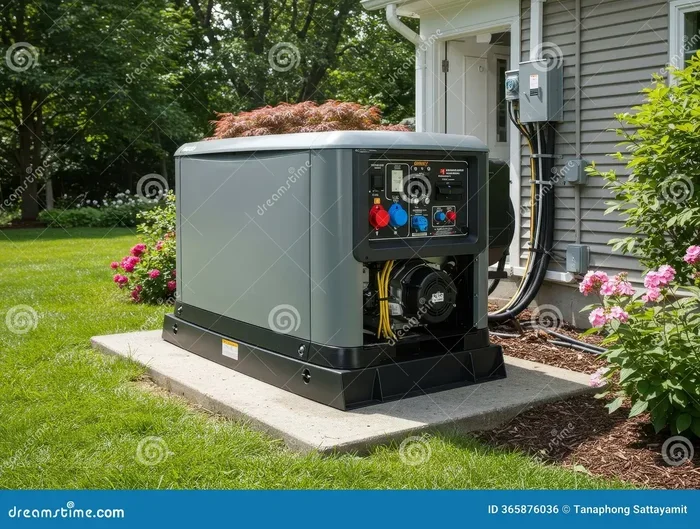
A 10000 watt generator can be portable or standby. Portable models are easier to move and store. They typically run on gasoline or propane. Standby generators are permanent installations that turn on automatically during an outage. A 10000 watt standby unit is a great middle-ground option for homeowners who want automatic backup without going to a larger and more expensive whole-house system.
Runtime and Fuel Tank Size
Runtime matters more than you might think. A generator that only runs for three hours on a tank of gas will not get you through a long outage. Look for models with large fuel tanks or options to connect an external propane tank. Some 10000 watt generators can run for 10 to 12 hours on a single tank of gas at half load.
Noise Level
Nobody wants a generator that sounds like a jet engine. Newer models from brands like Honda, Generac, and Champion offer inverter technology that significantly reduces noise. If you live in a neighborhood or have close neighbors, consider an inverter generator or a model with a low decibel rating.
Safety Tips for Operating a 10000 Watt Generator
A generator is a powerful machine. It provides essential backup power, but it also comes with risks. Follow these safety guidelines to protect yourself, your family, and your home.
Never Operate Indoors
Generators produce carbon monoxide. This invisible gas is deadly. Always run your 10000 watt generator outdoors in a well-ventilated area. Never use it in a garage, basement, or enclosed porch, even with the door open.
Use a Transfer Switch
A transfer switch connects your generator directly to your home’s electrical panel. It prevents backfeed, which can endanger utility workers and damage your generator. A licensed electrician should install the transfer switch. This is one of the most important safety steps you can take.
Keep It Dry
Operate your generator on a dry surface under a canopy or generator tent. Never touch it with wet hands. Water and electricity do not mix, and using a generator in wet conditions can cause electrocution.
Let It Cool Before Refueling
Always turn off the generator and let it cool down before adding fuel. Hot engine parts can ignite gasoline fumes. This simple habit prevents fires and serious injuries.
Use the Right Extension Cords
If you plug appliances directly into the generator, use heavy-duty extension cords rated for outdoor use. Check the cord’s amp rating to make sure it can handle the load. Undersized cords can overheat and create a fire hazard.
10000 Watt Generator vs. Smaller Generators: Which Do You Need?
A 10000 watt generator is a popular choice, but it is not the only option. Let us compare it to a few other sizes so you can make the best decision.
5000 to 7500 Watt Generators
A smaller generator in the 5000 to 7500 watt range works well for basic needs. It can run a refrigerator, a few lights, a phone charger, and a small window AC unit. But it struggles with central air conditioning and large appliances. If you live alone or in a small apartment, a 5000 to 7500 watt unit might be enough.
10000 Watt Generators
A 10000 watt generator hits the sweet spot for most households. It covers the essentials and has room for a few extras. You can run a central AC, keep food cold, charge devices, and maintain basic comfort. For a family home of 1500 to 2500 square feet, 10000 watts is often the ideal size.
12000 to 20000 Watt Generators
Larger generators can power an entire house, including electric water heaters, dryers, and multiple AC units. But they cost more, use more fuel, and are harder to move. Unless you have a large home with high electrical demand, a 12000 watt or larger unit may be overkill.
The bottom line. A 10000 watt generator gives you the most value for most homeowners. It is powerful enough to handle essentials and flexible enough to adapt to different situations.
Common Mistakes People Make With Generators
Even experienced homeowners make mistakes when using generators. Here are a few to avoid.
Overloading the Generator
Plugging in too many appliances at once is the most common mistake. It trips the breaker, damages the generator, and can harm connected devices. Always add up your total wattage before you start plugging things in.
Ignoring the Starting Watt Surge
Many people only look at running watts and forget about starting watts. This leads to surprise overloads when a motor kicks on. Always account for the surge wattage of any appliance with a motor.
Skipping Regular Maintenance
A generator sitting unused for months will not start when you need it most. Run your generator under load for at least 15 minutes every month. Change the oil, replace the air filter, and keep fresh fuel on hand.
Using the Wrong Fuel
Always check your owner’s manual for fuel requirements. Using the wrong fuel type can damage the engine and void your warranty. If you store gasoline for months, use a fuel stabilizer to keep it fresh.
Forgetting About Electrical Load Management
Not all circuits in your home are equal. Prioritize essential loads like refrigeration, heating or cooling, and medical devices. Non-essential loads like a gaming console or a hot tub can wait until the grid comes back.
Final Thoughts
A 10000 watt generator is a reliable, powerful, and practical choice for backup power during outages. It can run your refrigerator, air conditioner, sump pump, lights, and electronics all at the same time. Understanding the difference between running watts and starting watts helps you plan your electrical load correctly and avoid overloading.
Safety should always come first. Use your generator outdoors, install a transfer switch, and follow all manufacturer guidelines. With proper care and smart usage, a 10000 watt generator will keep your home running smoothly when the power goes out.
Take the time to plan ahead. Know your essential loads. Choose the right fuel type. And invest in regular maintenance. When the next outage hits, you will be glad you did. A 10000 watt generator gives you peace of mind, comfort, and the power to keep going no matter what.
Frequently Asked Questions
What household appliances can a 10000 watt generator run?
A 10000 watt generator can run most household essentials. This includes a refrigerator, freezer, microwave, coffee maker, lights, television, laptop, and a window or central air conditioning unit. You can also power a sump pump, washing machine, and several smaller electronics all at once.
Can a 10000 watt generator run a central air conditioner?
Yes. A 10000 watt generator can run a 3 ton central air conditioner. A typical 3 ton AC unit draws about 3500 running watts and a starting surge of around 5000 watts. The generator handles this easily, but make sure you do not overload it with other heavy appliances at the same time.
How long can a 10000 watt generator run continuously?
Runtime depends on the fuel tank size and load. Most 10000 watt generators run for 8 to 12 hours on a full tank of gasoline at half load. Models with larger tanks or propane connections can run even longer. Check the specifications of your specific model for exact runtime numbers.
Is a 10000 watt generator enough for a whole house?
It depends on your home size and electrical needs. A 10000 watt generator can power most essential circuits in a mid-sized home. It covers refrigeration, climate control, lighting, and electronics. However, if you have a large home with electric heating, a hot tub, or multiple AC units, you may need a larger generator.
What is the difference between a 10000 watt portable generator and a standby generator?
A portable 10000 watt generator is movable and typically runs on gasoline or propane. You set it up manually during an outage. A standby generator is a permanent installation that connects to your home’s gas line and turns on automatically when power is lost. Standby units cost more but offer greater convenience.
How do I calculate my total wattage needs for a generator?
Add up the running watts of all the appliances you want to run at the same time. Then check each appliance’s starting wattage and use the highest surge number. Always keep your total starting watts below the generator’s surge capacity. Using a wattage calculator online simplifies this process greatly.