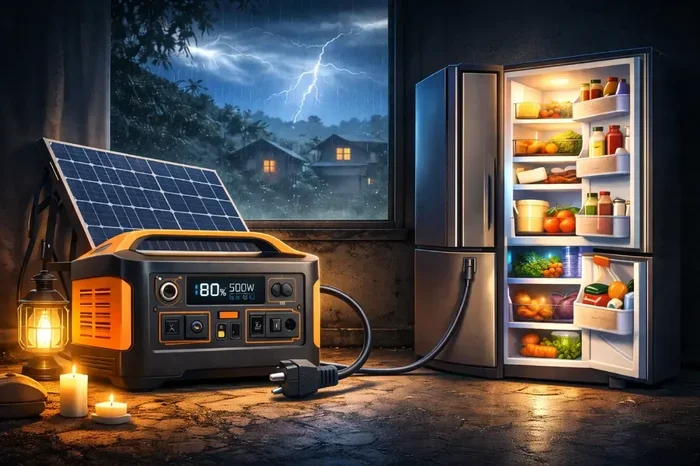
What Size Generator Do I Need for a Refrigerator Now
What size generator do I need for a refrigerator? is the key question before any power outage. You need enough running watts to keep the fridge running and extra starting watts to handle the compressor kick-on. This guide shows you how to calculate the right generator size in minutes, so your food stays cold and your family stays safe.
Power outages can strike without warning. A storm, a downed tree, or a tripped breaker can leave you in the dark for hours. When the lights go out, the first thing you worry about is your refrigerator. A full fridge holds hundreds of dollars in food, and spoilage starts fast. Knowing what size generator do I need for a refrigerator is the first step to protecting your groceries and your peace of mind.
The answer is simpler than you think. You just need to understand a few basic numbers. Every fridge has two power ratings: running watts and starting watts. The running watts keep the compressor humming. The starting watts give the compressor the boost it needs to kick on. If your generator can’t handle that startup spike, the fridge won’t run. This guide walks you through the exact steps to pick the right generator size for your fridge, no matter what model you own.
By the end, you will know your fridge’s wattage, how to match it to a generator, and which mistakes to avoid. You will also see real examples and a handy comparison table. Let’s get started.
Key Takeaways
- Match the generator to your fridge’s starting watts: The compressor startup spike is the biggest factor.
- Add a safety buffer: Always choose a generator with 20-30% more capacity than your fridge needs.
- Inverter generators are ideal: They provide clean, stable power for sensitive fridge electronics.
- Don’t forget other loads: If you run lights or a microwave, you must increase the total wattage.
- Fuel type matters for runtime: Propane and dual-fuel models can keep your fridge running for days.
- Check the label or manual: The exact wattage is printed on your fridge’s data plate.
📑 Table of Contents
How Many Watts Does a Refrigerator Actually Use?
Before you can choose a generator size, you need to know your fridge’s power needs. The numbers are printed on a metal plate inside the fridge, usually on the side wall or behind the vegetable drawer. That plate lists the voltage, amperage, and wattage. If you can’t find it, check the owner’s manual or search the model number online.
Understanding Running Watts vs Starting Watts
Running watts (also called rated watts) are the continuous power the fridge uses to keep the interior cold. A typical fridge runs on about 100 to 400 watts. The compressor cycles on and off to maintain the set temperature. When it cycles off, the draw drops to near zero. When it cycles on, it needs a brief burst of extra power.
Starting watts (also called surge watts or peak watts) are the extra power needed for a split second when the compressor kicks in. This spike can be 2 to 3 times the running watts. For example, a fridge that uses 200 running watts might need 600 starting watts. That spike is the reason many people buy the wrong generator. They only look at running watts and ignore the surge.
Average Wattage by Fridge Type
Not all fridges are the same. The size, age, and style change the power draw. Here are some common examples:
- Mini fridge: 50 to 100 running watts, 100 to 300 starting watts.
- Standard top-freezer fridge: 100 to 200 running watts, 300 to 600 starting watts.
- Side-by-side fridge-freezer: 200 to 300 running watts, 600 to 900 starting watts.
- French door fridge: 250 to 400 running watts, 700 to 1200 starting watts.
- Large bottom-freezer fridge: 200 to 350 running watts, 600 to 1000 starting watts.
These numbers are averages. Your fridge might be higher or lower. Always check your own data plate for the exact appliance wattage.
Where to Find Your Fridge’s Wattage
The data plate is the best source. Look for a sticker or metal tag on the inside wall of the fridge compartment. It will list the volts (V), amps (A), and sometimes watts (W). If it lists amps, you can calculate watts by multiplying volts times amps. In the US, standard outlets are 120 volts. So a fridge drawing 2 amps uses 240 running watts. If the plate only lists amps, use a load calculation to get the full picture.
What Size Generator Do I Need for a Refrigerator
Now that you know your fridge’s numbers, you can pick the right generator size. The simple rule is: your generator must handle both the running watts and the starting watts. You need enough headroom so the generator does not overload when the compressor kicks in.
The Simple Rule of Thumb
Take the fridge’s starting watts and add 20% to 30% as a safety buffer. Then choose a generator that meets or exceeds that total. For example, if your fridge needs 600 starting watts, you add 30% (180 watts) and get 780 watts. A 1000-watt generator would be a perfect fit. A 800-watt generator would be too tight and might trip off.
Always look at the generator’s surge rating (also called peak rating). Many generators list two numbers: the running wattage and the surge wattage. The surge rating must be higher than your fridge’s starting watts. The running rating must be higher than the fridge’s running watts. Both numbers matter.
Matching Generator Size to Fridge Size
Here is a quick guide based on common fridge sizes:
- Mini fridge (50-100W running): A 1000-watt generator is more than enough.
- Small standard fridge (200W running): A 2000-watt generator works well.
- Full-size side-by-side (300W running): A 3000-watt generator gives comfortable headroom.
- Large French door fridge (400W running): A 3500-watt to 4000-watt generator is ideal.
These numbers assume the fridge is the only load on the generator. If you also run lights, a phone charger, or a small TV, you must add those watts too. A power management plan keeps your total load under the generator’s limit.
Expert Insight: Many homeowners make the mistake of buying a generator based only on the fridge’s running watts. They forget the starting surge. This causes the generator to shut down right when the compressor starts. Always design your backup power setup around the starting watts first, then add your other loads.
Surge vs Running Power: Why This Matters
The difference between surge and running power is the most important concept in generator sizing. A fridge compressor is a motor. When a motor starts, it needs extra torque to overcome inertia. That torque comes from a brief, high-power draw. If the generator cannot supply that burst, the voltage drops, and the generator’s surge protector or circuit breaker trips.
The Startup Spike Problem
Think of it like pushing a heavy swing. The hardest part is the first push. Once the swing is moving, it takes less effort to keep it going. The fridge compressor works the same way. The first push (starting) needs the most power. The ongoing push (running) needs less. If your generator is too small, it stalls on that first push. The fridge never starts, and the compressor stays off. Your food begins to warm up immediately.
How to Avoid Tripping the Generator
Use a generator with a high surge wattage rating. Look for models that clearly state both running and surge watts on the nameplate. Inverter generators are especially good for this. They use a clean sine wave that is gentle on compressor motors. They also adjust the engine speed to match the load, which saves fuel and reduces noise. A 2000-watt inverter generator can often handle a standard fridge with room to spare.
What Happens If You Undersize?
Undersizing is a common common mistake. An undersized generator will run but trip off every time the compressor starts. This can damage the generator’s engine and the fridge’s compressor. It also wastes fuel. The generator runs hard, shuts down, restarts, and repeats. You get no cooling, and you burn through your fuel supply fast. Always add that 20-30% buffer to avoid this problem.
Best Generator Sizes for Different Refrigerators
The right generator size depends on your fridge type and your other power needs. Here is a breakdown of the best generator sizes for common fridge categories, plus a comparison table for quick reference.
Small Fridges and Mini Fridges
Mini fridges are very efficient. They draw as little as 50 to 100 watts while running. The starting surge is around 100 to 300 watts. Almost any portable generator can handle a mini fridge. A 1000-watt generator is more than enough. These are perfect for dorm rooms, offices, or garage workshops. They are also great for camping trips where you want to keep drinks cold.
Standard Full-Size Refrigerators
A standard top-freezer or bottom-freezer fridge is the most common model. It uses about 150 to 250 watts while running. The starting surge is typically 400 to 800 watts. A 2000-watt generator is the sweet spot for this size. It handles the fridge easily and leaves room for a few other small devices. If you have an older fridge with a less efficient compressor, it might draw closer to 300 running watts. A 2500-watt generator gives you a safe margin.
Large French Door and Side-by-Side Models
Large refrigerators with ice makers and water dispensers need more power. A French door fridge might draw 300 to 400 running watts. The starting surge can reach 1000 to 1200 watts. A 3500-watt generator is a solid choice. A 4000-watt generator gives you extra capacity for the ice maker, a kitchen light, or a phone charger. These larger units are ideal for families who need to keep the whole kitchen running during an outage.
Generator Size Comparison Table
| Fridge Type | Running Watts | Starting Watts | Recommended Generator Size |
|---|---|---|---|
| Mini Fridge | 50-100 | 100-300 | 1000W |
| Standard Top-Freezer | 100-200 | 300-600 | 2000W |
| Side-by-Side | 200-300 | 600-900 | 3000W |
| French Door (Large) | 250-400 | 700-1200 | 3500W-4000W |
| Fridge + Small Loads (lights, charger) | +100-200 | +200-400 | Add 500W to the base size |
This table assumes the fridge is the only major load. If you also run a microwave, a coffee maker, or several lights, you must add those watts. A load calculation adds up all the devices you plan to run at the same time. Always keep the total under 80% of the generator’s rated running wattage for safety.
Quick Tips for Running a Fridge on a Generator
Once you have the right generator size, proper setup makes all the difference. These quick tips help you run your fridge safely and efficiently.
Placement and Ventilation
Never run a generator indoors. Carbon monoxide is deadly. Place the generator outside, at least 20 feet from your home, with the exhaust pointing away from windows and doors. Set it on a level, dry surface. Keep it covered from rain but ensure air can flow around it. A generator cover or canopy works well. Proper ventilation prevents overheating and keeps the engine running smoothly.
Fuel Type and Runtime
Gasoline is the most common fuel for portable generators. It is easy to find and store. Propane is another great option. It burns cleaner and has a longer shelf life. Dual-fuel generators let you switch between gasoline and propane. Propane tanks can be larger, which means longer runtime. If you want to keep your fridge running for multiple days, a propane or dual-fuel model is a smart choice. Look for generators with large fuel tanks and an eco-mode that adjusts the engine speed to save fuel.
Connecting Your Fridge Safely
Use a heavy-duty extension cord rated for outdoor use. The cord should be at least 12-gauge for short runs and 10-gauge for longer runs. Never daisy-chain cords. Plug the fridge directly into the generator’s outlet. If your generator has a 30-amp or 20-amp outlet, use a proper adapter. Avoid plugging the fridge into a power strip. The fridge’s compressor draw is too high for most power strips. A direct connection is safest.
Common Mistakes When Sizing a Generator for a Fridge
Even with the best intentions, people make errors when choosing a generator size. Knowing these mistakes helps you avoid them.
Ignoring the Surge Wattage
This is the number one mistake. Many people look only at the fridge’s running watts and pick a generator that matches. When the compressor starts, the surge demand spikes, and the generator shuts down. Always check the starting watts on your fridge’s data plate. The generator’s surge rating must exceed that number by at least 20%.
Overloading the Generator
Overloading happens when you connect too many devices. A fridge, a microwave, a TV, and a laptop can easily exceed a small generator’s capacity. The generator will trip its breaker or overheat. Stick to the fridge and a few essential devices. If you need to run more, step up to a larger generator or use a load management system that cycles devices on and off.
Forgetting About Other Appliances
Some fridges share a circuit with other kitchen appliances. If the fridge is on the same circuit as a toaster or a coffee maker, the total draw goes up. You must account for all devices on that circuit. A power management plan ensures you do not accidentally overload the generator. Map out your loads before you buy a generator.
Buying a Generator Based on Price Alone
A cheap generator might seem like a good deal. But low-quality generators often have unstable voltage output. Fridge compressors are sensitive to voltage fluctuations. A dirty power signal can damage the fridge’s control board over time. Invest in a reputable brand with a clean sine wave output. Inverter generators are the best choice for sensitive electronics like modern fridges with digital controls.
Conclusion
Figuring out what size generator do I need for a refrigerator does not have to be complicated. Start by finding your fridge’s running and starting watts. Add a 20-30% safety buffer. Choose a generator that meets or exceeds that total. Inverter generators are the best option for clean, reliable power. Follow the quick tips for placement, fuel, and safe connections. Avoid the common mistakes like ignoring surge watts and overloading the unit.
The right generator size keeps your food safe, your fridge running, and your family comfortable during any power outage. Take a few minutes today to check your fridge’s data plate and pick the right unit. A little planning now saves you from a major headache later. Your fridge and your groceries will thank you.
Frequently Asked Questions
Can a 2000 watt generator run a refrigerator?
Yes, a 2000 watt generator can run most standard full-size refrigerators. A typical fridge uses about 150 to 200 running watts and 600 to 800 starting watts. The 2000 watt generator has plenty of headroom for both the running and surge demands. Just make sure you do not plug in other high-wattage devices at the same time.
What is the difference between running watts and starting watts?
Running watts are the continuous power the fridge uses to keep the compressor cycling. Starting watts are the brief extra power needed when the compressor kicks on. The starting watts are always higher than the running watts, often 2 to 3 times higher. Your generator must handle both numbers to work properly.
Do I need a whole house generator for a refrigerator?
No, you do not need a whole house generator just for a fridge. A portable generator or a standby generator sized for the fridge’s wattage is enough. Whole house generators are great if you want to power the entire home, but for a single fridge, a smaller portable unit is more cost-effective and easier to use.
How long can a generator run a refrigerator?
Runtime depends on the generator’s fuel tank size and the load. A typical 2000 watt generator with a 1-gallon gas tank can run a fridge for about 8 to 12 hours. Propane tanks can extend runtime significantly. A 20-pound propane tank can keep a fridge running for several days. Always monitor fuel levels and refill as needed.
Is an inverter generator better for a refrigerator?
Yes, inverter generators are ideal for refrigerators. They produce a clean, stable sine wave that is gentle on the fridge’s compressor and digital controls. Conventional generators can have voltage spikes that may damage sensitive electronics over time. Inverter models are also quieter and more fuel-efficient, which makes them a great choice for backup power.
What happens if the generator is too small for the fridge?
If the generator is too small, it will trip its breaker or shut down every time the fridge compressor tries to start. This causes the fridge to warm up and your food to spoil. It can also damage the generator’s engine from repeated hard starting. Always choose a generator with enough surge capacity to handle the fridge’s starting watts.