Best Honda Propane Generator for Reliable Home Backup Power
A Honda propane generator offers clean, reliable backup power for your home during outages. These units are known for their fuel efficiency, quiet operation, and long runtime. Whether you need a portable option or a whole-house solution, Honda has a propane model that fits. This guide covers the top models, key features, sizing advice, and maintenance tips to help you choose the right unit for your household’s needs.
This is a comprehensive guide about honda propane generator.
Key Takeaways
- Honda propane generators deliver clean, efficient power: They produce fewer emissions than gasoline models, making them safer for indoor-adjacent use and better for the environment.
- Fuel efficiency is a standout feature: Honda propane generators can run for extended periods on a single tank, saving you money and reducing refill frequency.
- Multiple models suit different home sizes: From compact portable units to higher-wattage options, there is a Honda propane generator for every household need.
- Quiet operation is a hallmark of Honda: These generators run at lower decibel levels, which is ideal for residential neighborhoods.
- Proper sizing matters: Matching your generator to your home’s power needs prevents overload and ensures reliable performance during outages.
- Regular maintenance extends generator life: Simple tasks like oil changes, filter cleaning, and fuel storage practices keep your Honda running smoothly for years.
[FEATURED_IMAGE_PLACEHOLDER]
Why a Honda Propane Generator Is a Smart Choice for Home Backup
Power outages happen when you least expect them. Storms hit, grids fail, and suddenly your refrigerator, lights, and heating system go dark. A Honda propane generator solves this problem quietly and efficiently. Unlike gasoline-powered units, propane burns cleaner and stores longer without degrading.
Honda has built a reputation for durable, user-friendly generators. Their propane models carry that same reliability forward. Homeowners trust Honda because these generators start easily, run smoothly, and last for many years with basic care. If you are searching for a dependable backup power system, a Honda propane unit deserves serious consideration.
Propane is also widely available. You can store it in tanks for months without worrying about fuel breakdown. This makes propane generators ideal for emergency preparedness. Whether you live in a hurricane zone, a rural area with unreliable power, or simply want peace of mind, a Honda propane generator delivers.
Top Honda Propane Generator Models to Consider
Honda offers several propane-compatible generators. Each model targets a different need and budget. Here are the most popular options homeowners look at when shopping for a portable generator or home backup solution.
Honda EU3000iS Portable Generator
The EU3000iS is one of Honda’s best-selling portable generators. It runs on both gasoline and propane, giving you fuel flexibility. With 2800 running watts and 3000 starting watts, it can handle essential household loads. The inverter technology produces clean, stable power safe for sensitive electronics like laptops and TVs.
This model is also remarkably quiet. It operates around 48 to 57 decibels, which is softer than a normal conversation. The fuel economy is impressive too. On propane, you can expect roughly 20 hours of runtime at 25% load. For families needing a compact backup power source, the EU3000iS hits the sweet spot.
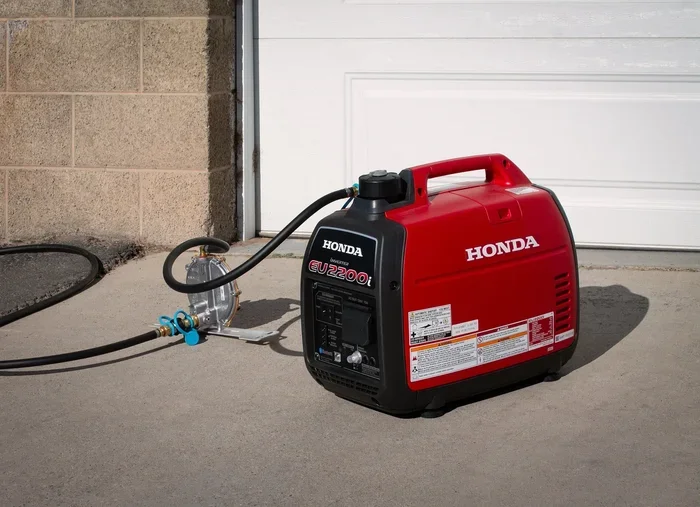
Honda EU2200i Portable Generator
The EU2200i is a smaller, lighter alternative. It delivers 1200 running watts and 1800 starting watts. This makes it perfect for camping, tailgating, or powering a few essential circuits during an outage. It also runs on gasoline and propane with a compatible adapter.
Weighing just 47 pounds, the EU2200i is easy to move around. The runtime on a standard 20-pound propane tank is around 18 hours at eco mode. If you need a quiet generator for basic home essentials, this model is hard to beat.
Honda EB series (Larger Frame Models)
For homeowners who need more power, Honda’s EB series offers higher-wattage options. These open-frame generators are designed for heavier loads. They work well for running multiple appliances simultaneously, including HVAC systems and water heaters.
The EB models are not as portable as the EU series but offer greater durability. They are built for frequent use and longer runtime sessions. If you need a whole house generator alternative that runs on propane, the EB series is worth exploring.
How Propane Generators Compare to Gasoline and Other Fuels
Choosing the right fuel type is one of the most important decisions. Propane has distinct advantages over gasoline and diesel, especially for home backup use.
Fuel Storage and Shelf Life
Gasoline degrades within three to six months. Propane, on the other hand, does not expire. You can store propane tanks for years without fuel quality loss. This makes propane ideal for emergency preparedness. You do not need fuel stabilizers or frequent tank replacements.
Emissions and Environmental Impact
Propane burns significantly cleaner than gasoline. It produces fewer carbon monoxide emissions and particulate matter. This is a major safety advantage, especially if you need to place the generator near your home during use. Cleaner combustion also means less maintenance on internal engine parts over time.
Cost and Availability
Propane prices fluctuate but generally remain stable. A 20-pound propane tank costs less than equivalent gasoline over long periods. Propane is also available at most gas stations, hardware stores, and propane suppliers nationwide. This makes refueling convenient and affordable.
| Feature | Propane | Gasoline |
|---|---|---|
| Shelf Life | Indefinite | 3-6 months |
| Emissions | Lower | Higher |
| Fuel Cost (long-term) | Lower | Higher |
| Storage Safety | Safer | Moderate |
| Runtime Efficiency | Good | Good |
How to Size the Right Honda Propane Generator for Your Home
Sizing your generator correctly is critical. Too small, and you risk overloading the unit. Too large, and you waste money on unused capacity. Here is how to determine the right size for your home backup needs.
Calculate Your Essential Load
Start by listing the appliances and systems you want to power during an outage. Common essentials include:
- Refrigerator: 700 starting watts, 200 running watts
- Furnace blower: 600 starting watts, 400 running watts
- Lights (5-10 rooms): 300-500 running watts
- Television: 100-200 running watts
- Phone/laptop charging: 50-100 running watts
- Sump pump: 1300 starting watts, 800 running watts
Add up the starting watts of all devices you plan to run simultaneously. Then add the running watts. The total gives you the minimum wattage your generator must handle. For most homes, a unit in the 3000-5000 watt range covers essential circuits well.
If you are unsure about your specific needs, check out this guide on what size generator to run furnace and refrigerator. It helps you match your generator to your most critical home appliances.
Match the Generator to Your Lifestyle
Think about how you will use the generator. Do you need power for a few hours during short outages, or do you need days of continuous runtime? Honda propane generators excel at both scenarios. The EU3000iS, for example, provides enough power for a full evening of essentials and then some. Larger models can sustain entire households for extended periods.
Installing and Running Your Honda Propane Generator at Home
Proper installation ensures safety and optimal performance. While Honda generators are designed for ease of use, a few setup steps make a big difference.
Placement and Ventilation
Always place your generator outdoors. Propane combustion produces carbon monoxide, which is dangerous in enclosed spaces. Position the unit at least 20 feet from your home, with the exhaust pointing away from windows and doors. Never run a generator in a garage, even with the door open.
Connecting to Your Home Electrical System
There are two main ways to connect a generator to your home. The first is using extension cords run through windows or doors. This is the simplest method and works well for portable models. The second is a transfer switch, which safely connects the generator to your home’s electrical panel.
A transfer switch prevents backfeeding, which can endanger utility workers. It also allows you to power hardwired systems like your furnace and water heater. If you want step-by-step guidance, this article on how to run generator to house walks you through the process clearly and safely.
Fuel Connection Tips
Honda portable generators typically use a propane adapter kit. These kits connect your generator’s gasoline inlet to a standard propane tank. Always use a regulator rated for your tank size. A 20-pound tank is the most common choice for home use and works seamlessly with Honda adapter kits.
Fuel Consumption and Runtime: What to Expect
One of the biggest questions homeowners ask is how long a Honda propane generator will run and how much fuel it uses. The answer depends on the model and the load you place on it.
At 25% load, most Honda propane generators consume roughly 0.5 to 0.8 pounds of propane per hour. On a standard 20-pound tank, this translates to approximately 25 to 40 hours of runtime. At full load, consumption increases significantly, but most homeowners run their generators at partial load during outages.
For a detailed breakdown of propane consumption rates across different generator sizes, check out this resource on how much propane does a 20kw generator use per hour. It provides useful data that applies to Honda models as well.
Runtime also depends on the eco-throttle feature found in most Honda units. This technology automatically adjusts engine speed based on the electrical load. When demand is low, the engine slows down, saving fuel and reducing noise. When demand spikes, the engine speeds up to deliver the needed power.
Maintenance Tips to Keep Your Honda Propane Generator Running Strong
Honda generators are built to last, but regular maintenance keeps them performing at their best. Here are the essential maintenance steps every owner should follow.
Oil Changes
Change the oil every 100 to 150 hours of operation, or at least once per season. Use Honda-recommended 10W-30 oil for best results. Fresh oil keeps the engine lubricated and prevents overheating during extended use.
Air Filter and Spark Plug
Check the air filter monthly during heavy use. Clean or replace it when it looks dirty. The spark plug should be inspected every 100 hours and replaced annually. A clean spark plug ensures reliable starts every time.
Fuel System Care
If you store your generator for long periods, drain the fuel system or use a fuel stabilizer. Even though propane does not degrade, gasoline residue in the carburetor can cause starting problems. Run the generator on propane for a few minutes after each use to clear the carburetor of gasoline.
Long-Term Storage
When storing your Honda propane generator for the off-season, keep it in a dry, covered area. Disconnect the propane tank and store it upright. If you plan to leave gas in the system for extended periods, learn more about safe fuel storage practices in this guide on how long can you leave gas in a generator.
Common Mistakes to Avoid with Honda Propane Generators
Even the best generators can cause problems if used incorrectly. Here are common mistakes homeowners make and how to avoid them.
- Undersizing the generator: Many people buy a generator based on running watts alone. Always account for starting watts, which can be two to three times higher than running watts.
- Running the generator indoors: This is extremely dangerous. Carbon monoxide from any generator can be fatal within minutes. Always operate outdoors with proper ventilation.
- Overloading the circuits: Plugging in too many devices at once trips breakers or damages the generator. Prioritize essential loads and add devices gradually.
- Neglecting oil changes: Skipping oil changes leads to engine wear and reduced lifespan. Stick to the maintenance schedule your owner’s manual provides.
- Using the wrong propane regulator: Always use a regulator compatible with your tank size and the generator’s fuel input requirements. An incompatible regulator can cause pressure issues and unsafe operation.
Final Thoughts: Is a Honda Propane Generator Worth It?
A Honda propane generator is one of the best investments you can make for home preparedness. It combines Honda’s legendary reliability with the clean, efficient burning of propane fuel. The result is a backup power source that starts when you need it, runs quietly, and lasts for many years.
Whether you choose the compact EU2200i or the more powerful EU3000iS, you get a generator that delivers real value. The fuel efficiency, low emissions, and long runtime make propane an excellent choice for home backup power. Pair your Honda generator with proper sizing, correct installation, and regular maintenance, and you will have reliable electricity whenever the grid fails.
Take the time to assess your home’s power needs, compare the models, and invest in a unit that fits your lifestyle. A Honda propane generator gives you peace of mind that no amount of preparation can fully replace. Start your search today and make sure your home is ready for whatever comes next.
Frequently Asked Questions
Can a Honda propane generator power my entire house?
It depends on the model and your home’s power needs. Honda portable propane generators like the EU3000iS can handle essential circuits, including the refrigerator, furnace, lights, and electronics. For full-house coverage, you may need a larger standby unit or multiple generators. Calculate your total wattage needs before purchasing.
How long does a Honda propane generator run on a 20-pound tank?
At 25% load, most Honda propane generators run for 25 to 40 hours on a standard 20-pound propane tank. At higher loads, runtime decreases significantly. The eco-throttle feature helps extend runtime by adjusting engine speed based on demand.
Is propane safer than gasoline for home generators?
Yes, propane is generally safer than gasoline. It has a higher ignition threshold, meaning it is less likely to ignite accidentally. Propane also does not produce the harmful fumes that gasoline does in the same quantities. Plus, propane stores indefinitely without degrading, unlike gasoline which spoils within months.
How often should I change the oil in my Honda propane generator?
Change the oil every 100 to 150 hours of operation, or at least once per season. If you use the generator frequently during storm season, consider changing the oil more often. Always use Honda-recommended oil weight for best engine protection.
Can I use a Honda propane generator with my existing propane tank?
Yes, most Honda portable generators work with standard 20-pound propane tanks using a compatible adapter kit. Make sure your tank is in good condition and use a regulator rated for the tank size. Never use a damaged or expired propane tank with any generator.
What is the difference between a Honda portable generator and a standby generator?
A portable Honda generator like the EU3000iS is movable and requires manual setup during an outage. A standby generator is permanently installed and automatically kicks in when power is lost. Portable propane units are more affordable and flexible, while standby generators offer full automation and higher power output.