How to Drain Gas Out of a Generator Without Any Hassle
Learning how to drain gas out of a generator is one of the most important generator maintenance tasks you can do. Stale fuel causes starting problems, clogs your carburetor, and leads to expensive repairs. This guide walks you through every method, from using a drain plug to siphoning, so you can store your unit safely for months or even years.
Key Takeaways
- Draining gas prevents stale fuel damage: Old gasoline breaks down quickly and harms your fuel system.
- Multiple methods work for every generator type: Use a drain plug, siphon pump, or fuel line disconnect depending on your model.
- Safety always comes first: Work in a ventilated area, away from sparks, and use proper containers.
- Fuel stabilizer extends gas life: If you don’t drain fully, adding a stabilizer buys you time.
- Storage preparation goes beyond draining: Change oil, remove the spark plug, and keep the unit dry.
- Common mistakes cause costly repairs: Forgetting to close the drain plug or using the wrong container are top errors.
- Winterizing your generator starts with fuel removal: Proper fuel management protects your unit during off-seasons.
📑 Table of Contents
- Why Draining Gas From Your Generator Matters
- Tools and Materials You Will Need
- Step-by-Step Guide to Draining Gas From Your Generator
- Alternative Methods for Draining Gas
- Common Mistakes People Make When Draining Gas
- What to Do With the Drained Gas
- Storing Your Generator After Draining
- Quick Tips for Hassle-Free Fuel Draining
- When to Seek Professional Help
- FAQ: Common Questions About Draining Gas From Generators
- Conclusion
Why Draining Gas From Your Generator Matters
Gasoline doesn’t last forever. In fact, old fuel starts breaking down in as little as 30 days. When gas sits inside your generator’s fuel tank and carburetor, it turns into a sticky, varnish-like substance. This gunk clogs jets, blocks fuel lines, and makes your engine hard or impossible to start.
Many people buy a generator, use it a few times, and then leave it sitting in the garage for months. That sounds harmless, but the fuel inside is quietly causing damage. By the time you need the generator again, you might face a carburetor rebuild or even a full fuel system replacement. Draining the gas takes just minutes and saves you hundreds of dollars in repair costs.
Whether you are storing your generator for the winter or simply between uses, removing the fuel is the single best thing you can do. It keeps your fuel system clean, protects the carburetor, and ensures your unit starts right when you need it most. Let’s walk through exactly how to do it.
Tools and Materials You Will Need
Before you start, gather everything you need. Having the right tools makes the process smooth and safe. Here is what you will want on hand:
- Gasoline-safe container: Use a certified fuel can rated for gasoline storage. Never use food containers or improvised vessels.
- Wrench or socket set: Most generators have a drain plug that requires a specific size wrench.
- Siphon pump or hand siphon: Useful for generators without a drain plug or when you need to remove fuel from the tank top.
- Rags or absorbent towels: Gas spills happen. Keep plenty of rags nearby to wipe up any mess.
- Fuel line disconnect tool: Some models need a small pair of pliers or a quick-disconnect tool for the fuel line.
- Work gloves and safety glasses: Protect your hands and eyes from gasoline contact.
- Fire extinguisher: Keep one nearby as a precaution, especially when working indoors or in garages.
Once you have these items ready, you are all set to move to the next step. Preparation is the key to a hassle-free experience.
Step-by-Step Guide to Draining Gas From Your Generator
Follow these steps carefully to safely remove all fuel from your generator. Each step is designed to protect you and your equipment.
Step 1: Turn Off the Fuel Valve
Before you do anything else, locate the fuel shutoff valve on your generator. This valve controls the flow of gasoline from the tank to the engine. Turn it to the OFF position. This stops fuel from moving through the system while you work, which prevents leaks and spills.
If your generator does not have a fuel valve, you can skip ahead, but you will need to work more carefully to avoid fuel flowing while you drain it.
Step 2: Let the Engine Cool Down
Never attempt to drain gas from a hot generator. Wait at least 15 to 20 minutes after the last use. Hot engine parts can ignite gasoline vapors, and a hot engine can also cause burns if you accidentally touch it. Let the unit cool completely before you proceed.
Step 3: Position Your Generator and Container
Place your generator on a flat, stable surface. Set your gasoline container directly under the drain plug or fuel line. If you are working in a garage, open the door and any windows to ensure good ventilation. Never work in an enclosed space because gasoline vapors can build up quickly and create a serious fire hazard.
Step 4: Locate the Drain Plug
Flip your generator gently to access the bottom of the fuel tank. Look for the drain plug or petcock valve. This is usually a small valve or bolt located at the lowest point of the tank. Place your container right beneath it.
If you cannot find a drain plug, do not worry. The next section covers alternative methods that work just as well.
Step 5: Open the Drain Plug and Let Gas Flow Out
Using your wrench, slowly open the drain plug. Gas will begin flowing into your container. Let it drain completely. You may need to tilt the generator slightly to get every last drop out. This usually takes about 5 to 10 minutes depending on how much fuel is in the tank.
Once the flow stops, close the drain plug tightly. Do not overtighten, as this can strip the threads or crack the plug.
Step 6: Drain the Carburetor Bowl
This step is often overlooked, but it is critical. The carburetor holds a small amount of fuel even after the tank is empty. Locate the carburetor drain bolt (usually a small screw at the bottom of the carburetor bowl). Open it and let the remaining fuel drain out.
Use a rag to catch any drips. This small amount of leftover fuel is what often causes starting problems months later. Draining the carburetor completely is one of the best things you can do for long-term storage.
Step 7: Disconnect the Fuel Line (Optional but Recommended)
For extra thoroughness, disconnect the fuel line from the carburetor. Use a small pair of pliers or a fuel line disconnect tool to release the quick-connect fitting. Let any remaining fuel in the line drain into your container. This ensures no fuel is left sitting in the line where it can degrade and cause blockages.
Step 8: Wipe Down and Inspect
Use clean rags to wipe up any spills around the tank, fuel lines, and carburetor area. Inspect the fuel filter for any signs of clogging or debris. If the filter looks dirty, consider replacing it before storage. A clean fuel system is the foundation of reliable generator performance.
Alternative Methods for Draining Gas
Not every generator has a convenient drain plug. Some older models, portable units, or compact generators may not include one at all. Here are three alternative methods that work well in these situations.
Method 1: Using a Siphon Pump
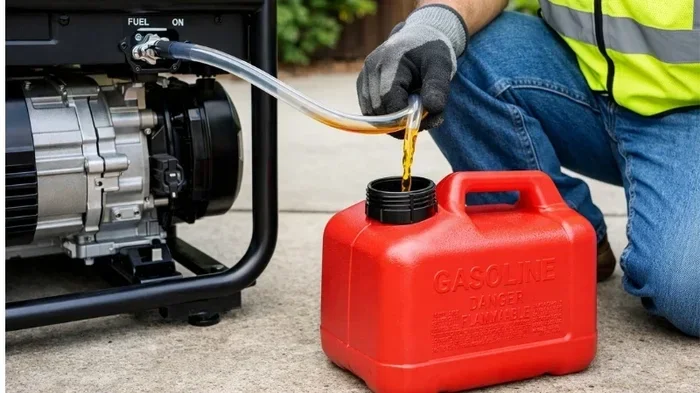
A siphon pump is one of the easiest and cleanest ways to remove gas without tilting or flipping your generator. You simply insert the pump tube into the fuel tank, pump the handle a few times, and the gas flows out through the other tube into your container.
Manual siphon pumps cost under fifteen dollars and work without batteries or electricity. They are a great addition to any generator owner’s toolkit. This method is ideal for generators where draining from the bottom is difficult or impossible.
Method 2: Disconnecting the Fuel Line at the Carburetor
With the fuel valve still off, disconnect the fuel line where it connects to the carburetor. Place a container underneath and then open the fuel valve briefly. The gas will flow out through the disconnected line and into your container.
This method works well for most generator models and gives you access to fuel that sits in the line and filter. Just be careful — fuel may spurt out when you first disconnect the line, so have your rags ready.
Method 3: Using a Turkey Baster or Hand Pump
For smaller generators with tight spaces, a turkey baster or hand suction pump can extract fuel from the top of the tank. This is a slower method, but it works when you cannot access the bottom of the tank easily. It is also useful for removing fuel from the carburetor bowl without fully disassembling anything.
| Method | Best For | Difficulty | Speed |
|---|---|---|---|
| Drain Plug | Generators with bottom drain valve | Easy | 5-10 minutes |
| Siphon Pump | No drain plug, clean setup | Easy | 10-15 minutes |
| Fuel Line Disconnect | Thorough draining of lines and filter | Moderate | 10-20 minutes |
| Turkey Baster | Small tanks, tight spaces | Moderate | 15-30 minutes |
Choose the method that fits your generator model best. The goal is the same: remove all fuel from the tank, lines, and carburetor.
Common Mistakes People Make When Draining Gas
Even simple tasks can go wrong if you are not careful. Here are the most common mistakes people make when learning how to drain gas out of a generator — and how to avoid them.
- Forgetting to turn off the fuel valve first: This causes fuel to keep flowing while you work, creating a mess and a potential fire risk.
- Using the wrong container: Never use milk jugs, water bottles, or any container not rated for gasoline. Gas can degrade plastic not designed for fuel storage, leading to leaks.
- Skipping the carburetor drain: Leaving fuel in the carburetor is the number one cause of hard starts after storage. Always drain the bowl completely.
- Not working in a ventilated area: Gasoline vapors are heavier than air and can accumulate on the floor. In a closed garage, this creates a serious explosion hazard.
- Overtightening the drain plug: Stripped threads mean a leaky fuel tank. Tighten just until snug — no more.
- Leaving fuel residue in the fuel filter: The filter traps debris and old fuel. If it is not drained or replaced, it can clog your entire fuel system.
- Draining gas near an open flame or spark: Even a small spark from a light switch or static electricity can ignite gasoline vapors. Keep all ignition sources far away.
Expert Insight
Seasoned generator technicians consistently say that neglecting fuel system maintenance is the leading cause of generator failure during the first year of ownership. Taking five extra minutes to drain the carburetor and fuel lines can double the lifespan of your unit. It is a small effort with an enormous payoff.
What to Do With the Drained Gas
Once you have successfully drained the gas, you might wonder what to do with it. You cannot just pour it down the drain or leave it sitting around.
Stored gasoline that is still good (less than 30 days old and properly sealed) can be reused in your car or other gas-powered equipment. Strain it through a coffee filter or clean cloth to remove any debris or water contamination before using it.
If the gas has been sitting for more than 30 days, it has likely gone stale. Do not use it in your car or generator. Instead, take it to a local hazardous waste disposal center or a community recycling event. Most hardware stores and fire stations also accept old gasoline for proper disposal.
Never dump old gasoline on the ground, into a storm drain, or in the trash. It is both illegal and harmful to the environment. Proper disposal protects your community and the planet.
Storing Your Generator After Draining
Draining the gas is only part of proper generator storage. To keep your unit in top shape, follow these additional storage tips:
- Change the engine oil: Fresh oil protects the engine internals during long storage periods. Old oil contains combustion byproducts that can corrode engine components.
- Remove the spark plug: Pull the spark plug and add a few drops of clean oil into the cylinder. Turn the engine a few times to distribute it. This prevents rust inside the combustion chamber.
- Clean the exterior: W down the generator with a damp cloth to remove dirt, dust, and debris. Check for any visible damage or loose connections.
- Store in a dry, cool place: Moisture and extreme temperatures both damage generator components. A climate-controlled garage or storage shed is ideal.
- Cover the unit: Use a fitted generator cover or a breathable tarp to keep dust and moisture out while allowing air circulation.
- Run the generator briefly before storage: After draining, run the engine for 30 seconds to burn off any remaining fuel in the system. Then turn it off and let it cool.
Following these steps ensures your generator is ready to go when you need it next. Proper storage preparation is just as important as draining the gas itself.
Quick Tips for Hassle-Free Fuel Draining
- Always refer to your owner’s manual first. Every generator model is slightly different, and the manual will show you exactly where the drain plug, fuel valve, and carburetor are located.
- Take photos before you start disassembly. This makes reassembly much easier, especially if you disconnect fuel lines or remove the carburetor bowl.
- Keep a fuel log. Write down the date you drained the gas and any observations about fuel condition. This helps you track maintenance intervals.
- Use fuel stabilizer if you cannot drain fully. Adding a fuel stabilizer to remaining gas extends its shelf life and prevents varnish buildup.
- Label your fuel container. Write the date and type of fuel on the container so you always know what is inside and how old it is.
- Perform a test run after refilling. After storage, add fresh fuel and run the generator for 10 minutes to ensure everything is working properly before you need it in an emergency.
When to Seek Professional Help
Most of the time, draining gas from a generator is a straightforward DIY task. However, there are situations where professional help makes sense:
- Your generator has a complex fuel system that is difficult to access without specialized tools.
- You notice significant corrosion inside the fuel tank or carburetor.
- The fuel filter is severely clogged and you are unsure how to replace it correctly.
- You have tried draining but the generator still will not start, suggesting deeper fuel system damage.
A certified generator technician can inspect the entire fuel system, clean or replace damaged components, and ensure your unit is safe and reliable. There is no shame in calling a professional — it can save you time and prevent costly mistakes.
FAQ: Common Questions About Draining Gas From Generators
How often should I drain gas from my generator?
You should drain gas every time you plan to store the generator for more than 30 days. If you use your generator regularly, drain and refill with fresh fuel at least once every three months. Stale fuel is the enemy of any small engine, and regular draining keeps your fuel system clean and your generator running strong.
Can I use a regular water bottle to store drained gas?
No. Always use a container specifically designed and certified for gasoline storage. Regular plastic bottles can degrade when exposed to gasoline, leading to leaks and dangerous fumes. A proper fuel can has a secure lid, proper venting, and materials that resist gasoline breakdown.
What happens if I leave gas in my generator for too long?
Old gasoline breaks down into a sticky varnish that clogs your carburetor jets, blocks fuel lines, and coats internal components. This leads to hard starting, poor performance, or a complete failure to start. In severe cases, the carburetor needs to be fully rebuilt or replaced, which can cost far more than the time it takes to drain the tank.
Is it safe to drain gas in my garage?
It is not recommended. Gasoline vapors are heavier than air and can accumulate on the floor, creating a serious fire and explosion hazard. Always drain gas outdoors or in a well-ventilated area. Keep the generator away from any ignition sources, including water heaters, furnaces, and power tools.
Do I need to drain gas if I use fuel stabilizer?
Fuel stabilizer extends the life of gasoline and can help prevent varnish buildup. However, it is still best practice to drain the tank for long-term storage of three months or more. Stabilizer is a good backup if you cannot drain the gas, but it does not replace the benefits of completely removing fuel from the system.
Can I reuse the drained gas in my car?
Yes, if the gas is less than 30 days old and has not been contaminated with water or debris. Strain it through a clean cloth or coffee filter before adding it to your car’s tank. If the gas is older than 30 days or looks discolored, take it to a hazardous waste disposal center instead of using it.
Conclusion
Learning how to drain gas out of a generator is a simple but essential skill for every generator owner. It protects your fuel system, prevents costly repairs, and ensures your unit starts reliably whenever you need it. Whether you use the drain plug method, a siphon pump, or fuel line disconnection, the process is straightforward and takes less than 30 minutes.
Pair fuel draining with proper storage practices like changing the oil, removing the spark plug, and keeping the unit in a dry location. These small efforts add up to a generator that lasts for years. Take five minutes today to drain your gas — your future self will thank you when you flip the switch and the generator starts right up.
Now that you know exactly what to do, there is no reason to let stale fuel ruin your generator. Gather your tools, follow the steps in this guide, and enjoy the peace of mind that comes with a properly maintained unit. Your generator is an investment, and treating it well pays off every single time you need it.