The Ultimate Guide to Generator Plug Adapter Selection
A generator plug adapter is a must-have for anyone who needs to power devices safely during outages or outdoor events. Choosing the wrong adapter can lead to electrical hazards, damaged equipment, or even fire risks. In this guide, you will learn how to match your generator’s output to your devices, pick the correct power conversion adapter, and avoid common mistakes that trip up most users.
Key Takeaways
- Match wattage carefully: Always calculate your total load before selecting a generator plug adapter to prevent overload.
- Know your outlet types: Different generators and appliances use different plugs, so identify outlet compatibility first.
- Safety comes first: Use grounding techniques and weatherproof enclosures when running outdoor setups.
- Consider portable vs. standby units: Your generator type determines which power conversion adapter you need.
- Use transfer switches for home backup: A hardwired backup power setup is safer than extension cords for whole-house use.
- Inspect adapters regularly: Frayed cords or loose connections are dangerous and should be replaced immediately.
📑 Table of Contents
- Why Choosing the Right Generator Plug Adapter Matters
- Understanding What a Generator Plug Adapter Does
- Types of Generator Plug Adapters You Will Encounter
- How to Match Wattage and Avoid Overloading
- Safety Tips for Using Generator Plug Adapters
- Portable vs. Standby Generators: Choosing the Right Adapter
- Common Mistakes When Selecting a Generator Plug Adapter
- Expert Tips for Long-Term Adapter Use
- Final Thoughts on Generator Plug Adapters
Why Choosing the Right Generator Plug Adapter Matters
Power outages hit without warning. Storms roll in. Grids fail. And suddenly, your fridge, your lights, and your Wi-Fi all depend on a single machine sitting outside your home. But here is the catch, you cannot just plug anything directly into a generator without the right setup. That is where a generator plug adapter becomes your best friend.
Getting this small but critical piece of equipment wrong can cause real damage. You could fry your TV. You could trip a breaker. Worse, you could create a fire hazard. Whether you are camping in the woods or keeping your house running during a blackout, the adapter you choose determines how safely and efficiently your devices receive power. This guide walks you through everything you need to know.
We will break down the different types of adapters, explain how to match wattage, and share practical tips that most guides skip. By the end, you will feel confident picking the right power conversion adapter for your specific situation. No guesswork, no guesswork, just clear answers.
Understanding What a Generator Plug Adapter Does
At its core, a generator plug adapter bridges the gap between your generator’s output outlets and your device’s input plug. Think of it as a translator. Your generator produces electricity at a certain voltage and frequency, and it sends that power through specific outlet types. Your appliances expect power in a different shape. The adapter makes the two speak the same language.
Without an adapter, you might try to force a three-prong plug into a two-slot outlet. That is dangerous and simply will not work. Adapters convert the physical shape of the plug, and in some cases, they also handle voltage regulation or power conversion between different electrical standards. They are not just plastic shapes, they are safety devices.
How Power Flow Works in a Generator Setup
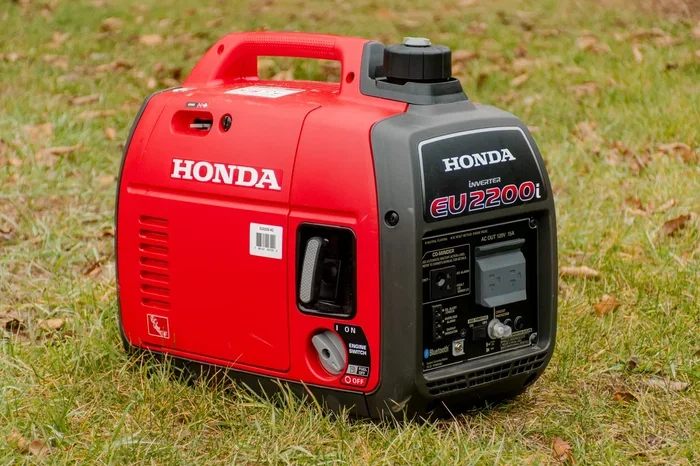
Your generator burns fuel or runs on solar energy to spin a turbine. That turbine generates alternating current, or AC power, typically at 120 volts in North America. The power travels from the generator through a control panel, out through designated outlets, and into your devices via cords and adapters. Every link in that chain matters.
The generator plug adapter sits between the outlet and the cord. If the adapter is low quality or mismatched, it becomes the weakest link. Heat builds up. Connections loosen. Insulation breaks down. That is why choosing a well-built adapter from a reputable brand is not optional, it is essential for any safe backup power system.
Types of Generator Plug Adapters You Will Encounter
Not all adapters are created equal. In fact, the variety can feel overwhelming at first. But once you understand the categories, the choices become much clearer. Here are the main types you will run into in the market today.
1. Standard Outlet Adapters
These are the most basic kind. They convert one outlet shape to another. For example, you might have a generator with a locking L5-30 outlet but your appliance uses a standard three-prong NEMA 5-15 plug. A simple generator plug adapter lets you connect the two safely. These adapters do not change voltage or wattage. They only change the physical connection. Popular brands like Generac and Honda sell these as companion accessories to their portable generators.
2. Voltage Converters and Transformers
If you are dealing with international travel or mismatched voltage standards, you need more than just a shape changer. A power conversion adapter steps voltage up or down, typically between 110V and 220V. These are heavier, often bulkier, and they handle a different job than a simple outlet adapter. Never confuse the two, because using a shape adapter where a converter is needed will likely destroy your appliance.
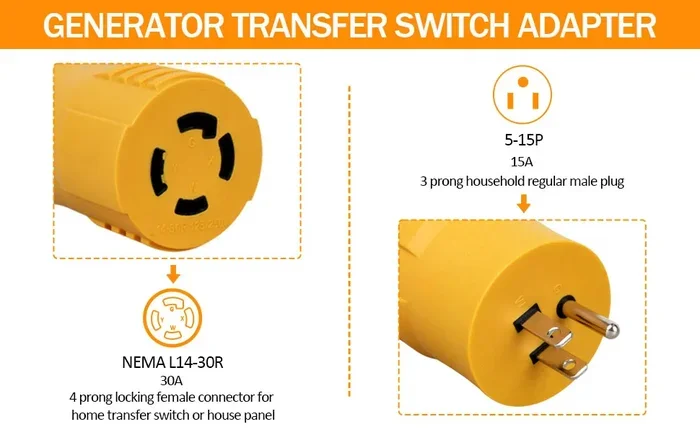
3. Transfer Switch Adapters
A transfer switch is a more advanced setup. It lets you hardwire your generator into your home’s electrical panel. Instead of running extension cords from the garage to the kitchen, the switch routes power through your existing circuits. This is the safest and most convenient way to get whole-house backup power. Adapters for transfer switches usually involve circuit breaker panels and interlock kits that match specific generator models.
4. Industrial and High-Amperage Adapters
For construction sites, outdoor events, or heavy-duty equipment, you will find locking connectors like L14-30 or CS6375. These handle high amperage and are designed to prevent accidental disconnection under load. If your work depends on reliable electricity, investing in quality industrial outlet compatibility adapters is a no-brainer.
How to Match Wattage and Avoid Overloading
This is where most people make mistakes. They assume any adapter will work as long as the plug fits. But fit is only the beginning. The real question is whether your generator can handle the total electrical load you are placing on it. That is where wattage matching comes in.
Every generator has a rated wattage, often listed as running watts and surge watts. Your devices each draw a certain number of watts. Add them up, and that gives you your total load. If your load exceeds your generator’s capacity, the adapter will overheat, the breaker will trip, or worse, the generator itself will sustain damage.
Quick Wattage Calculation Example
Let us say you have a portable generator rated at 3,500 running watts. You want to run the following during a storm:
- Refrigerator, 700 watts
- Lights, four bulbs at 60 watts each, totaling 240 watts
- Wi-Fi router, 15 watts
- Phone chargers, two at 10 watts each, totaling 20 watts
- Window air conditioner, 1,200 watts
Your total load is roughly 2,195 watts. That fits comfortably within your generator’s capacity. But if you also tried to run a microwave at 1,000 watts, you would hit 3,195 watts. You are getting close to the limit. Add anything else, and you risk tripping the breaker or damaging the generator plug adapter. Always leave a buffer of at least 20 percent.
What Is Surge Wattage and Why It Matters
Some appliances, like air conditioners and refrigerators, draw more power when they start up. That initial spike is called surge wattage. Your generator must handle both the running watts and the surge watts of all connected devices simultaneously. Check the surge rating on your generator before selecting a generator plug adapter for high-draw appliances. Ignoring surge power is one of the quickest ways to trip a breaker on startup.
Safety Tips for Using Generator Plug Adapters
Electricity demands respect. A generator plug adapter is safe when used correctly, but dangerous when handled carelessly. Here are the safety rules you should follow every single time.
Never Run Generators Indoors
This is the number one rule, and it is worth repeating. Generators produce carbon monoxide. Running one inside a garage, basement, or tent is lethal. Place your generator outdoors, at least 20 feet away from windows and vents. Use a weatherproof enclosure if rain is a concern. Never compromise on this, even for a few minutes.
Use Proper Grounding Techniques
Grounding directs excess electricity safely into the earth. Most portable generators have a grounding bolt. Connect a copper grounding rod to it, especially when using outdoor extension cords and adapters. This prevents electrical shock and protects your equipment. Skipping grounding might seem fine until a fault occurs, and then it is too late.
Inspect Cords and Adapters Before Each Use
Do not grab an adapter from a box and plug it in without looking it over. Check for frayed wires, cracked insulation, loose prongs, or burn marks. If anything looks damaged, replace it immediately. A faulty generator plug adapter is a fire waiting to happen. Keep your adapters in a dry, clean storage case between uses.
Avoid Daisy Chaining
Daisy chaining means plugging an extension cord into a power strip, then plugging another extension cord into that strip. This creates a tangled mess of connections and increases resistance, heat, and fire risk. Use a single heavy-duty cord from the generator to your devices, or invest in a proper power conversion setup with multiple outlets rated for your load.
Portable vs. Standby Generators: Choosing the Right Adapter
The type of generator you own directly impacts which adapter makes sense. Portable and standby units serve different purposes, and their adapter needs are very different.
Portable Generator Adapters
Portable generators are the ones most people use for camping, tailgating, or emergency backup. They typically output 120 volts through standard NEMA outlets. You will often find 5-15R, L5-20, or L5-30 outlets on these units. For most household appliances, a simple NEMA 5-15 to NEMA 5-15 generator plug adapter works perfectly. Just make sure the amperage rating on the adapter matches or exceeds your cord’s rating.
Standby Generator Adapters
Standby generators are permanently installed outside your home and kick on automatically during an outage. They connect to your electrical system through a transfer switch. You do not typically use handheld adapters with standby units. Instead, you rely on an electrician to install a compatible interlock kit or automatic transfer switch. If you want to add flexibility, some homeowners install additional backup power outlets specifically for portable cord connections.
| Feature | Portable Generator Adapters | Standby Generator Adapters |
|---|---|---|
| Installation | Plug and play | Professional installation required |
| Typical Use | Outdoors, temporary setups | Whole-house backup |
| Outlet Types | NEMA 5-15, L5-20, L5-30 | Hardwired circuits via transfer switch |
| Wattage Range | 1,000 to 5,000+ watts | 10,000 to 25,000+ watts |
| Best For | Individual appliances and devices | Full home systems |
Common Mistakes When Selecting a Generator Plug Adapter
Even experienced users make errors. Here are the most common pitfalls and how to avoid them.
Mistake 1: Assuming Plug Fit Means Compatibility
A plug might physically fit into an outlet, but that does not mean the adapter is rated for your load. Always check the amperage and voltage markings on both the adapter and the generator. If the adapter says 15 amps and your device draws 20 amps, you have a problem. Choose an adapter with a higher rating than your expected load.
Mistake 2: Ignoring Weather Conditions
Using a non-weatherproof adapter outdoors in the rain is asking for trouble. Moisture gets inside the connections, causing shorts and corrosion. Invest in a weatherproof enclosure or an adapter rated for outdoor use. Some adapters come with rubber covers or locking mechanisms that repel water naturally.
Mistake 3: Buying the Cheapest Option
You can find adapters for under ten dollars online, but cheap plastic and thin internal wiring are a gamble. Your safety is worth the extra five or ten dollars. Stick to well-known brands and look for UL or ETL certification on the product. These marks mean the adapter has been tested for electrical safety.
Mistake 4: Forgetting to Turn Off Before Connecting
Always switch off your generator before plugging in or removing an adapter. Hot connections can spark. They can also damage the internal contacts. Make it a habit to power down, unplug, connect, and then restart. This small routine extends the life of your equipment and keeps you safe.
Expert Tips for Long-Term Adapter Use
Once you have the right generator plug adapter, you want it to last. Here is some professional advice for keeping your setup in top shape.
- Label your adapters. If you own multiple generators or devices, label each adapter with its intended use. This prevents mix-ups during an emergency when everything is happening fast.
- Keep a spare. Adapters are inexpensive. Having a backup means you are never stuck without a solution if one gets damaged.
- Test your setup regularly. Run your generator for 15 minutes each month. Plug in your adapter and a small load to verify everything works. This keeps the generator in good condition and confirms your adapter is functional.
- Store properly. Keep adapters in a dry, temperature-controlled space. Extreme heat or cold degrades plastic and metal contacts over time.
- Upgrade when your needs change. If you add a new appliance or buy a more powerful generator, reassess your adapter. Technology improves, and newer models often offer better safety features and durability.
Final Thoughts on Generator Plug Adapters
Choosing the right generator plug adapter is not just a technical detail. It is a safety decision, a performance decision, and a comfort decision all rolled into one small piece of equipment. Whether you are powering a single refrigerator during a storm or running tools at a job site, the adapter you select determines how smoothly electricity flows from your generator to your devices.
Take the time to calculate your wattage needs, check your outlet types, and invest in quality hardware. Follow the safety tips outlined here, and you will enjoy reliable backup power without the headaches. Do not leave your home or your comfort to chance. Pick the right adapter, set up correctly, and let your generator do what it was built to do, keep you powered up when it matters most.
Frequently Asked Questions
Can I use any plug adapter with my generator?
No, not any adapter will work safely. You need to match the outlet type on your generator with the plug on your device. Always check the amperage and voltage ratings on both the adapter and your generator to ensure outlet compatibility. Using a mismatched adapter risks overheating, equipment damage, or electrical shock.
How do I know if my generator plug adapter is rated for high-wattage devices?
Check the amperage and voltage markings printed on the adapter itself. Multiply the amps by the volts to get the wattage rating. For example, a 15-amp adapter at 120 volts handles up to 1,800 watts. Your device should draw less than this number, with a 20 percent safety buffer recommended for extended use.
Is it safe to run a generator plug adapter outdoors in the rain?
Only if the adapter is specifically rated for outdoor use and has weatherproof housing. Standard indoor adapters are not sealed against moisture, and water inside the connection can cause shorts or corrosion. Consider using a weatherproof enclosure or a generator with a built-in rain cover for added protection.
Do I need a transfer switch or can I just use an adapter with extension cords?
It depends on your needs. For a few individual appliances, extension cords with a generator plug adapter work fine. But for whole-house backup power, a transfer switch is safer and more efficient. It lets you power built-in circuits directly and avoids the risks of running multiple cords across your yard.
What is the difference between a generator plug adapter and a power converter?
An adapter changes only the physical shape of the plug so it fits into a different outlet. A power converter changes the actual voltage or frequency of the electricity. If you are traveling internationally or using devices rated for a different voltage standard, you need a converter, not just an adapter. Always confirm your device’s voltage requirements before purchasing either.
How often should I replace my generator plug adapter?
Replace it immediately if you notice any damage, such as cracked housing, frayed wires, or loose prongs. Even without visible damage, inspect your adapter before each use and replace it every three to five years depending on usage frequency. Quality adapters with proper grounding features tend to last longer and perform more reliably.