What Is a Signal Generator Used For and Why It Matters
A signal generator is an electronic test instrument that produces repeating or non-repeating waveforms for testing and designing circuits. It helps engineers, technicians, and hobbyists simulate real-world signals to verify device performance. Whether you are debugging a circuit, calibrating equipment, or developing audio gear, a signal generator is an indispensable tool.
If you have ever wondered how engineers test a new circuit or how audio gear gets its perfect sound, the answer often starts with a simple tool. That tool is a signal generator. A signal generator creates electrical waveforms that mimic real-world signals. It lets you test, debug, and design electronic devices with precision. Without it, finding faults in a circuit would be like searching for a lost key in a dark room. This guide will show you exactly what a signal generator is used for and why it remains essential in labs and workshops today.
Whether you are a seasoned engineer, a student, or a curious hobbyist, understanding signal generators opens up new possibilities. You will learn how these devices produce sine waves, square waves, and complex patterns. You will see how they help with electronic testing and signal integrity. By the end, you will know which type of signal generator fits your needs and how to use it safely.
So, let us dive into the world of signal generators and explore their many roles. We will cover their core functions, the different types available, and practical tips for getting the best results. This journey will give you a clear picture of why a signal generator is more than just a piece of lab equipment.
Key Takeaways
- Versatile tool: A signal generator produces waveforms for testing, design, and calibration across many industries.
- Multiple types exist: Function generators, AWGs, and RF generators each serve different electronic testing needs.
- Key specs matter: Frequency range, amplitude, and waveform shape determine the right unit for your lab equipment.
- Avoid common mistakes: Always check impedance, calibrate regularly, and use proper cables for signal integrity.
- Pair with an oscilloscope: This combo gives you full visibility into signal processing and circuit behavior.
📑 Table of Contents
What Is a Signal Generator?
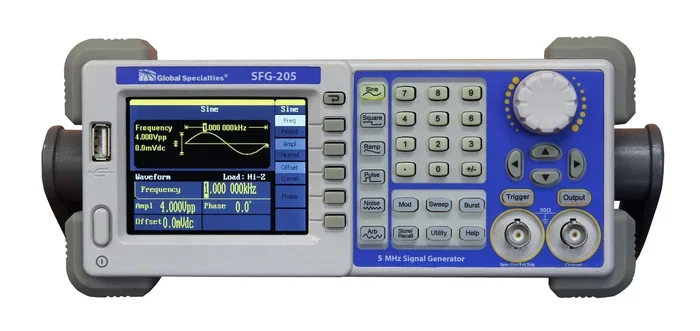
A signal generator is a piece of test equipment that produces controlled electrical waveforms. These waveforms can be repetitive or one-shot events. The device generates a specific signal frequency and signal amplitude that you can adjust. It acts as a substitute for a real sensor during electronic testing. You feed the known waveform into a circuit and observe the response. This process reveals how the circuit behaves under different conditions.
How Does a Signal Generator Work?
The core of a signal generator is a frequency synthesis circuit. This circuit creates a base sine wave at a precise rate. You can then shape that wave into a square wave, a sawtooth wave, or any custom pattern. The output stage amplifies the signal to your desired level. Modern units use digital techniques to build complex waveforms with high accuracy. They can also apply signal modulation like AM, FM, or phase modulation. The modulated output simulates real-world communication signals. You then connect the output to your device under test. An oscilloscope or test equipment monitor captures the results. This lets you measure gain, phase shift, and distortion quickly.
Quick Tips for Beginners
- Start with a function generator. It covers most basic needs like sine, square, and triangle waves.
- Always check the output amplitude. Too much voltage can damage sensitive circuits.
- Use a signal generator with a built-in attenuator. This lets you reduce the signal level safely.
- Keep your cables short. Long cables can pick up noise and distort your signal integrity.
- Calibrate regularly. A well-calibrated signal generator gives accurate electronic measurement results.
Key Uses of a Signal Generator
The applications of a signal generator are vast and varied. Below are the main areas where this tool shines.
Testing Electronic Circuits
The most common use for a signal generator is testing electronic circuits. You apply a known input signal and measure the output. This tells you if the circuit amplifies, filters, or distorts the signal correctly. For example, an audio amplifier needs a clean sine wave input. You feed that wave into the amplifier and check the output on an oscilloscope. If the output is clipped or noisy, you know there is a problem. Circuit testing with a signal generator is fast and repeatable. It helps you find issues like phase shift, frequency response, and gain errors. You can also perform a frequency sweep to map out the entire response curve of a filter. This is vital in electronic testing labs and for signal integrity analysis.
Audio and Acoustics
Signal generators are essential in audio design. They produce sounds from 20 Hz to 20 kHz. Engineers use them to test speakers, microphones, and mixers. A function generator can send a sine wave sweep to check a speaker’s frequency response. You can also test signal modulation techniques like AM and FM. In acoustics labs, a signal generator helps measure room echo and noise levels. It ensures that audio gear meets quality standards. This is a key part of signal processing and signal integrity work. You can even use it to measure total harmonic distortion (THD) in amplifiers.
RF and Wireless Testing
Radio frequency (RF) signal generators are used for wireless devices. They create high-frequency signals from 1 MHz to several GHz. You use them to test antennas, transmitters, and receivers. An RF signal generator can simulate a carrier wave. It can also modulate the signal with audio or data. This is how engineers verify that a Wi-Fi module or Bluetooth device works properly. RF testing requires precise signal frequency control. The signal generator must be stable and low in phase noise. This ensures accurate electronic measurement of wireless performance. You can also test receiver sensitivity by feeding a very weak signal into the device.
Education and Training
Universities and technical schools rely on signal generators for teaching. Students learn to build and test circuits using real-world signals. A benchtop instrument like a signal generator is a staple in electronics labs. It helps students understand waveform generation, frequency synthesis, and signal amplitude control. Many lab equipment kits include a basic function generator. This hands-on experience prepares students for careers in electronic testing and signal processing. Instructors can set up experiments on modulation, filtering, and feedback loops with ease.
Quick Tips for Using a Signal Generator in Testing
- Always start with the lowest frequency and amplitude, then increase gradually.
- Use the generator’s modulation input to test how circuits respond to changing signals.
- Keep a log of your test settings for reproducibility.
- Use a signal generator with a built-in frequency counter for precise measurements.
- When testing audio, use a sine wave at the crossover frequency to check speaker phase.
Signal Generator Types and How They Differ
Not all signal generators are the same. Different types serve different purposes. Here is a closer look at the main categories.
Function Generators
A function generator is the most common type of signal generator. It produces standard waveforms like sine, square, triangle, and sawtooth. These are perfect for general electronic testing. Function generators are easy to use and affordable. They are ideal for circuit testing and audio applications. Most hobbyists start with a function generator because it covers 90% of basic needs. You can adjust the signal frequency and signal amplitude with simple knobs or front-panel buttons.
Arbitrary Waveform Generators
An arbitrary waveform generator (AWG) goes a step further. It can create any shape you define. You draw the waveform on a computer and upload it to the unit. This is powerful for signal processing and complex electronic testing. AWGs are used in medical device testing, radar simulation, and advanced research. They offer deep memory to store long, detailed waveforms. If you need signal integrity in unusual patterns, an AWG is the right choice. Some models can even stream waveforms in real time from a PC.
RF and Microwave Signal Generators
RF signal generators focus on high frequencies. They cover the radio spectrum from hundreds of kHz to tens of GHz. These are essential for wireless communication testing. A microwave signal generator goes even higher, into the gigahertz range. It is used in aerospace, defense, and satellite work. Both types provide very stable signal frequency and low noise. They are critical for electronic measurement in the RF domain. They can also generate pulsed signals for radar system testing.
Comparison Table: Signal Generator Types
| Type | Frequency Range | Waveform Types | Best For |
|---|---|---|---|
| Function Generator | 1 Hz to 10 MHz | Sine, square, triangle, sawtooth | Basic circuit testing, audio |
| Arbitrary Waveform Generator | 1 Hz to 200 MHz+ | Any custom shape | Complex signal simulation, research |
| RF Signal Generator | 100 kHz to 6 GHz | Sine, modulated carriers | Wireless testing, antennas |
| Microwave Signal Generator | 1 GHz to 40+ GHz | Sine, pulsed, modulated | Satellite, radar, high-frequency labs |
Expert Insight: Choosing Between Types
Experienced engineers often say that a signal generator is only as good as its setup. Always use short, shielded cables to preserve signal integrity. Warm up the unit for 15 minutes before critical electronic testing. This stabilizes the internal frequency synthesis circuitry. Also, pair your signal generator with a high-quality oscilloscope. The scope lets you see exactly what the generator is producing. This combo is the gold standard in any lab equipment rack. For signal processing tasks, consider a unit with arbitrary waveform capability. It opens doors to creative testing that standard waveform generators cannot match.
How to Choose the Right Signal Generator
Picking the right signal generator can feel overwhelming. Here are the steps to make it easier.
Key Specifications to Consider
When choosing a signal generator, look at a few key specs. First, check the frequency range. Make sure it covers the signals you need. Second, look at the signal amplitude range. A wider range gives you more flexibility. Third, consider the waveform types. A function generator is great for basics. If you need custom shapes, choose an arbitrary waveform generator. Fourth, look at modulation capabilities. If you test wireless gear, you need AM, FM, and digital modulation. Finally, think about connectivity. Many modern units offer USB, LAN, and GPIB interfaces for lab equipment automation. Here is a quick checklist:
- Frequency range: Must cover your lowest and highest test frequencies.
- Amplitude range: Should match the voltage levels of your device under test.
- Waveform options: Standard shapes plus any custom waveforms you need.
- Modulation types: AM, FM, PM, and digital modulation if required.
- Output impedance: Usually 50 ohms for RF, 600 ohms for audio.
- Resolution and accuracy: Look for high bits and low phase noise for precision electronic measurement.
Common Mistakes to Avoid
- Ignoring output impedance. Mismatched impedance can cause signal reflections and wrong readings.
- Overlooking the need for calibration. An uncalibrated signal generator gives false results in electronic measurement.
- Using the wrong waveform for the test. A square wave can excite harmonics that a sine wave would not.
- Skipping the attenuator. Sending too high a voltage can permanently damage your device under test.
- Buying only on price. A cheap signal generator may lack the accuracy and signal integrity you need.
Expert Insights for Better Results
Seasoned technicians share a few secrets. Always use short, shielded cables to preserve signal integrity. Warm up the unit for 15 minutes before critical electronic testing. This stabilizes the internal frequency synthesis circuitry. Also, pair your signal generator with a high-quality oscilloscope. The scope lets you see exactly what the generator is producing. This combo is the gold standard in any lab equipment rack. For signal processing tasks, consider a unit with arbitrary waveform capability. It opens doors to creative testing that standard waveform generators cannot match. Another pro tip: label your cables and store them properly. This prevents accidental damage and keeps your test equipment in top shape.
Final Thoughts: Why a Signal Generator Matters
A signal generator is more than a box that makes beeps and waves. It is the heartbeat of any electronic testing environment. From the first prototype to final calibration, it provides the signals you need to trust your designs. Whether you are testing a simple circuit testing board or a complex wireless system, the right signal generator gives you confidence. It turns guesswork into precise, repeatable electronic measurement. Investing in a good signal generator pays off in faster debugging, better signal integrity, and higher-quality products.
Remember the key takeaways from this guide. Choose the right type for your application. Understand your signal frequency and signal amplitude needs. Avoid common pitfalls like ignoring calibration and impedance matching. With these tips, you will get the most out of your signal generator. Now go out and test something amazing.
Key Takeaways
- Versatile tool: A signal generator produces waveforms for testing, design, and calibration across many industries.
- Multiple types exist: Function generators, AWGs, and RF generators each serve different electronic testing needs.
- Key specs matter: Frequency range, amplitude, and waveform shape determine the right unit for your lab equipment.
- Avoid common mistakes: Always check impedance, calibrate regularly, and use proper cables for signal integrity.
- Pair with an oscilloscope: This combo gives you full visibility into signal processing and circuit behavior.
Frequently Asked Questions
What is a signal generator used for?
A signal generator is used to produce controlled electrical waveforms for testing and designing electronic circuits. It helps engineers verify how circuits respond to specific signal frequencies and amplitudes. You can test amplifiers, filters, antennas, and audio gear with it.
Can a signal generator be used for audio testing?
Yes, a signal generator is excellent for audio testing. It produces sine waves and other waveforms from 20 Hz to 20 kHz. You can use it to measure speaker frequency response, amplifier distortion, and microphone sensitivity. It is a staple in any audio lab.
What is the difference between a function generator and an arbitrary waveform generator?
A function generator creates standard waveforms like sine, square, and triangle. An arbitrary waveform generator (AWG) can produce any custom shape you define. AWGs are more flexible and are used for complex signal processing and advanced electronic testing.
Do I need a high-end signal generator for hobby projects?
Not necessarily. A basic function generator is often enough for hobby projects. It covers most common waveforms and frequencies. However, if you work on RF or complex designs, an arbitrary waveform generator or RF signal generator may be worth the investment.
How often should I calibrate my signal generator?
Calibration frequency depends on usage. For heavy lab use, calibrate every 6 to 12 months. For occasional use, once a year is fine. Always check the manufacturer’s recommendations. Regular calibration ensures your electronic measurement results stay accurate.
Can a signal generator damage my circuit?
Yes, if used incorrectly. Sending too high a signal amplitude or the wrong waveform can harm sensitive components. Always start with the lowest output level. Use the built-in attenuator when needed. Double-check your connections before powering on the circuit.