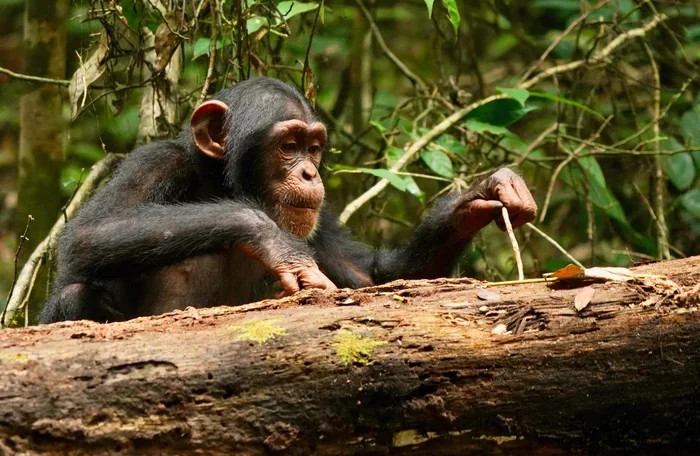
Do Chimpanzees Use Tools Like Humans Do Every Single Day
Do chimpanzees use tools just like humans do every single day? The answer is a resounding yes. Chimpanzees are among the most tool-savvy animals on the planet, using sticks, stones, leaves, and even grass to solve daily problems. From fishing for termites to cracking open nuts, these clever primates show remarkable tool use that rivals some human behaviors.
Chimpanzees are some of the most fascinating creatures on Earth. When you watch them in the wild, you see animals that think, plan, and solve problems every single day. One of the most amazing things about chimps is their tool use. They pick up sticks, stones, and leaves and turn them into useful tools. This behavior has stunned scientists for decades.
If you have ever wondered do chimpanzees use tools the way humans do, you are not alone. The short answer is yes. Chimps use tools for feeding, grooming, building, and playing. Their tool use is not random either. It follows patterns and shows real thought. In this article, we will explore exactly how chimps use tools, why they do it, and what it tells us about animal intelligence.
Key Takeaways
- Chimpanzees use tools daily: Wild chimps regularly use sticks, stones, and leaves to find food, build nests, and groom.
- Tool use shows high intelligence: Chimp tool use demonstrates advanced problem solving, planning, and social learning abilities.
- Different populations use different tools: Chimp groups in different regions develop unique tool traditions passed down through generations.
- Young chimps learn by watching: Social learning and play are how baby chimps master essential tool skills over time.
- Chimp tool use helps us understand human evolution: Studying chimp tools gives scientists valuable clues about early human behavior and technology.
- Chimps show both similarities and differences to humans: Chimp tool use is sophisticated but simpler than the full range of human tool creation and use.
📑 Table of Contents
What Do Chimpanzees Use Tools For?
Chimpanzees use tools for many different reasons. Each reason shows a different side of their cleverness. Let us look at the main purposes chimps have for using tools in their daily lives.
Finding and Getting Food
The most common reason chimps use tools is to get food. Chimpanzees have a varied diet that includes fruits, leaves, insects, and even meat. But some foods are hard to reach or difficult to eat. This is where tools come in handy.
One famous example is termite fishing. Chimps take a stick, strip off the leaves, and poke it into a termite mound. They wait patiently and then pull the stick out. Termites cling to the stick, and the chimp licks them off for a tasty snack. This is not instinct. Chimps learn this behavior from others in their group.
Another food-related tool use involves cracking nuts. Chimps place a nut on a flat stone and hit it with another stone. This takes real skill and strength. Not all chimps master it. Those who do can access the nutritious kernel inside the hard shell. Just like asking yourself what can I use an air compressor for at home, chimps figure out which tools work best for specific tasks.
Building and Maintaining Nests
Chimpanzees build nests in trees every night. They use branches, leaves, and other plant materials to create a comfortable sleeping spot. This is a form of tool use too. Chimps select specific branches and bend them into shape. They layer leaves on top for comfort and insulation.
Building a good nest takes practice. Young chimps watch their mothers and gradually learn the technique. Over time, they get better at choosing the right materials and building sturdy nests. This process is similar to how humans use building maintenance tools to construct and care for their homes. Chimps are constantly maintaining and improving their sleeping spaces every single night.
Grooming and Social Bonding
Tool use is not just about food and shelter. Chimps also use tools for grooming. They may use a leaf as a kind of sponge to soak up water and then spread it on their fur. Some chimps use sticks to scratch hard-to-reach spots on their backs.
Grooming is very important for chimp social life. It builds trust and strengthens bonds within the group. When chimps use tools to help with grooming, it shows that tool use serves social purposes too. This adds another layer to how we understand chimp behavior and their daily routines.
How Do Chimpanzees Learn to Use Tools?
Chimpanzee tool use is not something animals are born knowing how to do. It is a learned skill. Young chimps acquire tool use through observation and practice. This learning process is one of the most interesting aspects of chimp behavior.
Social Learning and Observation
Young chimpanzees watch the adults around them very carefully. When a mother uses a stick to fish for termites, her baby is watching. The baby chimp observes every move. Over weeks and months, the young chimp starts to mimic what it has seen.
This type of learning is called social learning. It is the same basic process humans use to learn many skills. Chimps do not just copy blindly. They adjust their technique based on what works. This shows real understanding, not just mindless imitation.
Different chimp groups develop different tool traditions. A group in one forest might use a specific method for cracking nuts. A group in another forest might use a completely different approach. These traditions pass from generation to generation. This is very similar to how human cultures develop and share process workflow tools and techniques that are unique to each community.
The Role of Play in Learning
Play is a big part of how young chimps learn. Baby chimps pick up sticks and stones and pretend to use them. They bang rocks together and poke sticks into holes. This playful experimentation helps them develop the motor skills they need for real tool use later in life.
Play also helps chimps understand cause and effect. They learn that hitting a nut with a stone can crack it open. They learn that poking a stick into a mound can bring out termites. These lessons are learned through hands-on experience and trial and error. It is a natural and effective way for young chimps to build their skills step by step.
Do Chimpanzees Use Tools Like Humans Do?
This is one of the most common questions people ask. The answer is both yes and no. Chimps and humans share a common ancestor. Both species use tools in sophisticated ways. But there are also important differences that set us apart.
Similarities Between Chimp and Human Tool Use
Chimpanzees and humans both use tools to solve problems. Both species select the right tool for the job. Both species improve their techniques over time. And both species pass tool knowledge to the next generation.
Here are some key similarities between chimp and human tool use:
- Both chimps and humans choose specific tools for specific tasks
- Both species modify tools before using them
- Both learn tool skills through observation and practice
- Both show improvement with experience over time
- Both use tools to access food that would otherwise be unavailable
These similarities are striking. They show that tool use is not something that only humans do. It is a broader primate trait that chimps share with us. This connection between our species is one of the most exciting discoveries in modern primatology.
Key Differences to Consider
Despite the similarities, there are clear differences. Human tool use is far more complex and varied. Humans make tools from multiple materials. We combine tools to create new devices. We also use tools to make other tools. This chain of tool creation is something chimps do not really do.
Humans also use tools for a much wider range of purposes. We use tools for communication, art, travel, and medicine. Chimp tool use is mostly focused on food, shelter, and social grooming. The scope of human tool use is simply much broader.
Another key difference is technology transfer. Humans build on the tools of previous generations. We improve and refine over centuries. Chimp tool traditions change slowly and stay relatively simple. If you have ever asked yourself do I need an air compressor for a big project, a chimp would never need anything like that. Their tool needs are much more basic and immediate, focused on survival needs in the moment.
A Comparison Table
| Feature | Chimpanzees | Humans |
|---|---|---|
| Tool variety | Sticks, stones, leaves, grass | Thousands of different tools |
| Tool modification | Basic stripping and shaping | Complex manufacturing |
| Learning method | Social observation and play | Teaching, reading, practice |
| Tool purposes | Food, shelter, grooming | Almost everything |
| Tool complexity | Simple single tools | Compound and multi-step tools |
| Knowledge transfer | Within small groups | Across generations and cultures |
Famous Examples of Chimpanzee Tool Use
Scientists have documented many amazing examples of chimp tool use over the years. These observations have changed how we view these incredible animals and opened new doors for understanding primate intelligence.
Termite Fishing with Sticks
Termite fishing is perhaps the most well-known chimp tool behavior. Researchers first observed this in the 1960s. A chimp would carefully select a thin stick, remove the side branches, and insert it into a termite mound. After a few moments, the chimp would pull the stick out and eat the termites stuck to it.
This behavior requires patience and precision. The stick must be the right thickness. The chimp must insert it gently so the termites do not escape. It is a learned skill that takes time to master. Young chimps practice for months before they become skilled at it. Watching a chimp fish for termites is one of the most mesmerizing sights in the animal kingdom.
Nut Cracking with Stones
Nut cracking is another remarkable chimp behavior. Chimps find a hard nut and place it on a flat stone anvil. They then use another stone as a hammer to crack the shell open. This requires both strength and accuracy.
Nut cracking is not easy. Many young chimps struggle to learn it. Some never master it at all. Those who do show impressive hand-eye coordination and planning skills. They choose the right nuts, the right stones, and the right striking force. It is a complex behavior that shows real cognitive ability and years of practice.
Using Leaves as Sponges
Chimps also use leaves as sponges to drink water. They fold a leaf into a small pouch, dip it into water, and then squeeze the water into their mouths. This is a clever solution to a simple problem. The chimp does not have to lower its head all the way to the water source.
This behavior has been observed in multiple chimp populations. It shows that chimps can think creatively about everyday problems. A simple leaf becomes a useful tool through the chimps ingenuity. It is a perfect example of how chimps make the most of what nature provides.
Using Spears for Hunting
In some regions, chimps have been observed sharpening sticks and using them as spears to hunt small animals. They strip the bark, sharpen the tip with their teeth, and then jab the stick into tree holes where bushbabies hide. This is one of the most sophisticated tool behaviors observed in non-human animals.
This hunting tool use shows that chimps can plan ahead and modify tools for a specific purpose. It challenges the old idea that only humans hunt with weapons. It also shows that chimpanzee tool use can be aggressive and strategic, not just gentle and food-focused.
Why Do Chimpanzees Need Tools?
Tool use is not just a fun fact about chimps. It plays a vital role in their survival and daily life. Understanding why chimps need tools helps us appreciate their intelligence even more.
Survival and Food Access
Tools give chimps access to food they could not otherwise reach or eat. Termites are a valuable protein source. Nuts provide essential fats and nutrients. Without tools, chimps would miss out on these important food sources.
In the wild, food competition is fierce. Chimps that can use tools effectively have an advantage. They can exploit food sources that others cannot. Over time, tool use becomes a key survival skill that is passed down through generations. This is how chimpanzee tool use becomes deeply embedded in a group culture.
Tool Use and Intelligence
Tool use is closely linked to intelligence in chimps. Studies show that chimps who use tools more frequently also perform better on problem-solving tasks. Tool use requires planning, foresight, and understanding of cause and effect.
Chimps also show what researchers call meta-tool use. This means using one tool with another tool. For example, a chimp might use a stick to pull a distant stone closer, and then use that stone to crack a nut. This multi-step thinking shows a high level of cognitive ability and flexible problem solving.
Tool use also shows that chimps can think about the future. When a chimp selects a tool before it needs it, that is planning ahead. This kind of forward thinking was once thought to be uniquely human. Chimps have proven us wrong again and again with their clever behavior.
The Evolution of Tool Use in Chimpanzees
Chimpanzee tool use has deep roots. Understanding how and why this behavior evolved gives us important insights into our own history and the story of primate development over millions of years.
How Tool Use Developed in Chimps
Scientists believe chimp tool use has been around for millions of years. The common ancestor of chimps and humans likely used simple tools. Over time, different lineages developed different tool traditions based on their environment and needs.
Today, wild chimps across Africa show a wide range of tool behaviors. Some populations crack nuts. Others fish for termites. Still others use leaves as sponges. Each population has its own unique toolkit. This diversity shows that tool use in chimps is not fixed. It evolves and adapts to local conditions and available resources.
What Chimp Tool Use Tells Us About Early Humans
Studying chimp tool use helps scientists understand early human behavior. If our closest living relatives use tools in sophisticated ways, it is likely that our early ancestors did too. Chimp tool behavior gives us a window into what tool use might have looked like millions of years ago.
The evolution of human tools was a long journey. Simple stone tools appeared about 3.3 million years ago. Over time, these tools became more complex. Eventually, humans developed metal tools, machines, and technology that chimps could never imagine. But the roots of all that technology likely started with simple tool use like what we see in chimps today.
Every time a chimp picks up a stick to fish for termites, it is showing us a behavior that connects us to our deep evolutionary past. This is why studying do chimpanzees use tools is so important. It helps us understand where we came from and how we became the tool-using species we are today. The connection between chimps and humans through tool use is one of the most powerful stories in all of science.
Frequently Asked Questions
Do all chimpanzees use tools?
Not all chimpanzees use tools equally. Tool use varies between different chimp populations and even between individuals. Some chimps are highly skilled tool users while others rarely use tools. Factors like environment, group culture, and individual experience all play a role in how much tool use you will see in a given chimp community.
What is the most common tool chimpanzees use?
The most common tool chimpanzees use is a stick. Chimps use sticks for termite fishing, probing for honey, and even as weapons. Sticks are readily available in their forest habitats and easy to modify for different tasks. Leaves, stones, and grass are also commonly used tools in the chimp toolkit.
Do baby chimpanzees use tools from birth?
No, baby chimpanzees do not use tools from birth. Young chimps start by watching adults and playing with objects. They gradually learn tool skills through observation and practice over months and years. It typically takes several years before a young chimp becomes proficient at using tools effectively for tasks like termite fishing or nut cracking.
Can chimpanzees make their own tools?
Yes, chimpanzees can modify and prepare their own tools. They strip leaves from sticks, shape stones for nut cracking, and select specific materials for specific tasks. While their tool making is simpler than human manufacturing, it shows real intention and understanding of how to prepare a tool for a particular job.
How does chimpanzee tool use compare to other primates?
Chimpanzees are among the most skilled tool users in the primate world. Other primates like capuchin monkeys and macaques also use tools, but chimps show the most diverse and sophisticated tool behaviors. Their tool use is more varied, more deliberate, and more culturally transmitted than what is seen in most other primate species.
Has chimpanzee tool use changed how we view animal intelligence?
Absolutely. The discovery of chimpanzee tool use completely changed how scientists view animal intelligence. It showed that tool use is not exclusive to humans and that other animals can think, plan, and learn complex skills. This discovery opened the door to studying intelligence across many animal species and continues to shape our understanding of the animal mind today.
=== CONCLUSION ===
So do chimpanzees use tools like humans do every single day? The evidence is clear: yes, they do. Chimpanzees use sticks, stones, leaves, and other natural materials to find food, build homes, groom friends, and solve problems. Their tool use is thoughtful, learned, and passed down through generations.
Studying do chimpanzees use tools gives us incredible insights into animal intelligence and human evolution. Chimps show us that tool use is not something that belongs only to humans. It is a broader trait shared across primate species. Every new discovery adds to our understanding of these remarkable animals and their fascinating behaviors.
The next time you see a chimpanzee in a documentary or at a zoo, remember that you are watching a skilled tool user. These animals think, plan, and create in ways that surprise and inspire us. Their tool use connects them to us in deep and meaningful ways. And it reminds us that intelligence comes in many forms across the animal kingdom. Understanding chimp tool use is not just about animals. It is about understanding ourselves and where we came from.