The Tools Dentists Use to Perform Modern Dental Care
The tools dentists use have evolved dramatically, making procedures faster, safer, and more comfortable than ever before. Modern dental care relies on a wide range of dental instruments including handpieces, mirrors, scalers, and imaging equipment. Understanding these dental tools helps patients feel more confident and informed during their visits to the dentist.
Key Takeaways
- Examination tools like mirrors and explorers form the foundation of every dental checkup.
- High-speed dental handpieces have revolutionized cavity preparation and tooth shaping.
- Digital imaging tools including X-ray machines and intraoral scanners provide precise diagnostics. Sterilization equipment ensures every tool is safe and clean for each patient.
- Laser technology is becoming a game-changer for soft tissue procedures and minimally invasive care.
- Dental chairs and suction devices work together to keep patients comfortable and the workspace clear.
- Modern dental equipment continues to evolve with smart technology and automation.
📑 Table of Contents
- Introduction: Why Knowing Your Dental Tools Matters
- Examination Tools: The Foundation of Every Dental Visit
- Restorative Tools: Filling Cavities and Repairing Teeth
- Imaging and Diagnostic Tools: Seeing What the Eye Cannot
- Comfort and Suction Tools: Keeping You Comfortable During Procedures
- Sterilization and Safety Equipment
- Advanced and Emerging Dental Technologies
- Conclusion: The Future of Dental Tools
Introduction: Why Knowing Your Dental Tools Matters
Have you ever wondered what goes on behind the dental chair before your dentist starts working? A wide variety of tools dentists use are laid out and ready to go. Each one serves a specific purpose, from examining your teeth to fixing cavities and polishing your smile.
Understanding these dental instruments can take the mystery out of your dental visits. When you know what a tool does, you feel more relaxed and in control. This article breaks down the most important dental equipment used in modern practices today.
We will walk through everything from basic examination tools to advanced digital imaging systems. Whether you are a curious patient or a dental student, this guide covers the essential dental tools you need to know about. Let us dive right in.
Examination Tools: The Foundation of Every Dental Visit
Every dental appointment starts with an examination. Dentists rely on a set of basic oral health tools to look inside your mouth and spot any problems early. These instruments are simple but incredibly important.
Dental Mirrors
The dental mirror is one of the first tools dentists use during any checkup. It is a small round mirror attached to a long metal handle. Dentists use it to see the back surfaces of your teeth and the inside of your cheeks. Without a mirror, it would be very hard to spot early signs of decay or gum disease.
Dental mirrors come in different sizes. A front-facing mirror gives a clear view of the front teeth, while a back-facing mirror helps the dentist see the molars. The mirror also helps reflect light into dark corners of your mouth, making it easier to examine every surface.
Dental Explorers and Probes
Next up are dental explorers and probes. These are thin, pointed metal instruments that dentists use to feel the surfaces of your teeth. An explorer has a sharp tip that can detect tiny holes or soft spots in your enamel. This is how dentists find early cavities that are not yet visible to the naked eye.
Periodontal probes measure the depth of the spaces between your teeth and gums. These measurements help identify signs of gum disease. A healthy gum pocket is usually 1 to 3 millimeters deep. Anything deeper may signal a problem that needs attention.
Tweezers and Cotton Pliers
You have probably seen your dentist use small tweezers during your visit. These dental instruments are used to hold cotton rolls, place materials, or move small objects inside your mouth. They are simple but essential for keeping the workspace organized during any procedure.
Restorative Tools: Filling Cavities and Repairing Teeth
When a dentist finds a cavity or damage, they need specialized restorative dental tools to fix the problem. These instruments help remove decay, shape the tooth, and place filling materials with precision.
Dental Handpieces and Burs
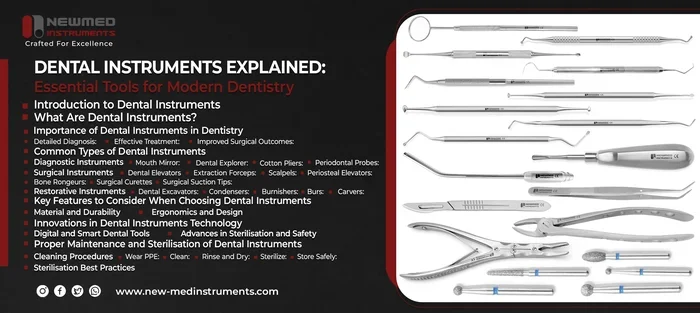
The dental handpiece is the high-speed drill you probably think of when you picture a dentist at work. Modern handpieces spin at incredibly fast speeds, sometimes over 400,000 revolutions per minute. They use interchangeable dental burs — small rotating bits — to remove decay and shape the tooth structure.
There are different types of burs for different tasks. Round burs remove decay, while flame-shaped burs shape and smooth the tooth surface. Some handpieces run on air pressure, while others are electric. Electric handpieces tend to be quieter and offer more control, which many patients appreciate.
Dental Scalers and Curettes
Scaling is the process of removing plaque and tartar buildup from your teeth. Dentists use dental scalers for this purpose. These handheld tools have a sharp, curved tip that scrapes away hardened deposits from the tooth surface and below the gumline.
Curettes are similar to scalers but have a rounded tip. They are designed for deeper cleaning below the gumline without damaging the gum tissue. Together, scalers and curettes are the backbone of a professional dental cleaning.
Dental Condensers and Carvers
After removing decay, the dentist needs to place and shape the filling material. Dental condensers are used to pack filling material tightly into the prepared cavity. This ensures the filling holds up over time and does not fall out.
Carvers are used to shape and sculpt the filling material so it matches the natural contour of your tooth. This step is crucial for a comfortable bite and a natural-looking result. A well-carved filling feels smooth and blends seamlessly with your other teeth.
Imaging and Diagnostic Tools: Seeing What the Eye Cannot
Modern dentistry would not be the same without advanced imaging technology. These dental tools give dentists a detailed look at what is happening beneath the surface of your teeth and gums.
Dental X-Ray Machines
X-rays have been a staple of dental care for decades. They allow dentists to see between your teeth, under your gums, and inside the jawbone. This is essential for detecting cavities, impacted teeth, bone loss, and other hidden problems that cannot be seen during a visual exam.
Digital X-ray machines have largely replaced traditional film-based systems. Digital images appear instantly on a computer screen, which means less waiting time for you. They also use significantly less radiation, making them a safer option for patients of all ages.
Intraoral Cameras
An intraoral camera is a small, wand-like device that takes high-resolution photos inside your mouth. The camera is connected to a screen, so you can see exactly what your dentist sees. This is a powerful diagnostic tool that helps patients understand their oral health in a visual way.
Intraoral cameras are especially helpful for showing patients areas that need attention. When you can see a cracked tooth or early gum inflammation on a screen, it is much easier to understand why treatment is recommended. These cameras also create a digital record that can be tracked over time.
CBCT Scanners
Cone Beam Computed Tomography (CBCT) scanners provide 3D images of your teeth, jaw, and surrounding structures. Dentists use these advanced dental instruments for complex procedures like dental implant planning and orthodontic treatment. CBCT scans give a level of detail that traditional X-rays simply cannot match.
Comfort and Suction Tools: Keeping You Comfortable During Procedures
Dental procedures can sometimes produce water, saliva, and debris. A range of comfort and suction tools dentists use keep the experience clean and pleasant for the patient.
Dental Suction Devices
The suction device, often called a saliva ejector or vacuum tip, removes water and saliva from your mouth during procedures. It is a small, flexible tube that the dentist places near the area they are working on. This keeps your mouth dry and clear, which is essential for procedures like fillings and crowns.
Modern suction devices are designed to be gentle and comfortable. They do not pull on your cheeks or tongue. Some practices use high-volume evacuators that are even more effective at removing fluids quickly, which speeds up procedures and keeps the workspace clean.
Dental Chairs and Lighting
A modern dental chair is far more than just a seat. It can recline, tilt, and adjust in many ways to give the dentist optimal access to your mouth. Built-in lighting systems illuminate the work area, and many chairs have integrated screens for showing patient images or playing entertainment during longer procedures.
Some dental practices also use productivity tools for work integrated into their chair systems to manage patient records and treatment plans in real time. This seamless setup helps the dentist stay focused on your care while keeping everything organized.
Sterilization and Safety Equipment
Safety is a top priority in every dental office. A rigorous sterilization process ensures that every tool a dentist uses is clean and free of harmful bacteria before it touches your mouth.
Autoclaves and Sterilizers
An autoclave is a machine that uses high-pressure steam to kill bacteria, viruses, and spores on dental instruments. Every reusable tool goes through a thorough cleaning and sterilization cycle before being used on the next patient. This process is essential for preventing cross-contamination and maintaining a safe environment.
Dental offices also use chemical sterilants and UV sterilization cabinets for tools that cannot withstand heat. Each instrument is tracked and logged to ensure it has been properly sterilized. Patients can always feel confident that their safety comes first.
Personal Protective Equipment
Dentists and their teams wear gloves, masks, eyewear, and protective gowns during every procedure. These items protect both the patient and the dental staff from the spread of germs. Disposable items like gloves and suction tips are used once and then thrown away, adding an extra layer of safety.
Advanced and Emerging Dental Technologies
The world of dental equipment is constantly evolving. New technologies are making dental care more precise, less invasive, and more comfortable for patients. Let us look at some of the exciting advancements reshaping modern dentistry.
Laser Dentistry
Dental lasers are used for a variety of procedures, from gum reshaping to cavity detection. Lasers can target specific tissues with incredible precision, which means less damage to surrounding areas. Many patients report less pain and faster healing times when lasers are used instead of traditional methods.
Lasers are also used for teeth whitening procedures. A laser activates the whitening gel, speeding up the process and producing brighter results. As this technology becomes more affordable, more dental practices are adopting it into their daily workflows.
CAD/CAM Technology
Computer-Aided Design and Computer-Aided Manufacturing (CAD/CAM) technology allows dentists to design and create dental restorations right in the office. This includes crowns, veneers, inlays, and onlays. The process starts with a digital scan of your tooth, and the restoration is milled from a ceramic block in a matter of hours.
This means you can get a custom crown in a single visit instead of waiting weeks for a lab. CAD/CAM technology is one of the most exciting advancements in modern dental care, and it is changing the way patients experience dental treatment.
Digital Workflow Tools in Dental Practices
Beyond the clinical tools, dental offices also rely on digital management systems to streamline patient care. Many practices use process workflow tools to organize appointments, track treatment plans, and communicate with patients more efficiently. These systems help the entire team stay coordinated and ensure nothing falls through the cracks.
Some practices also use building maintenance tools to keep their equipment running at peak performance. Regular maintenance of dental handpieces, sterilizers, and imaging machines is essential for providing safe, high-quality care. A well-maintained practice is a sign of a professional and caring dental team.
Conclusion: The Future of Dental Tools
The tools dentists use have come a long way from the basic instruments of the past. Today, dentists have access to a remarkable range of dental instruments that make every procedure more precise, more comfortable, and more efficient. From simple examination mirrors to cutting-edge CBCT scanners and CAD/CAM systems, modern dentistry is truly a blend of science and technology.
As technology continues to advance, we can expect even more innovations in the years ahead. Laser dentistry, digital imaging, and AI-assisted diagnostics are just the beginning. The goal remains the same: to give every patient the best possible care in a safe and comfortable environment.
Next time you visit your dentist, take a moment to look at the dental equipment around you. Each tool has a purpose, and every instrument plays a role in keeping your smile healthy and bright. Understanding what goes on behind the chair can make your dental visits feel less intimidating and more empowering.
Remember, modern dental care is built on a foundation of precision, safety, and innovation. The right tools dentists use make all the difference, and the future of dentistry looks brighter than ever.
Frequently Asked Questions
What are the most basic tools dentists use during a checkup?
The most basic tools dentists use during a routine checkup include a dental mirror, explorer, probe, and tweezers. These dental instruments help the dentist examine your teeth, detect cavities, and check the health of your gums. They are simple but essential for every dental visit.
Do dentists use lasers, and are they safe?
Yes, many modern dental practices use laser tools for procedures like gum reshaping, cavity treatment, and teeth whitening. Dental lasers are safe and approved by dental authorities. They offer precise treatment with less discomfort and faster healing times compared to traditional methods.
How do dentists keep their tools clean and safe?
Dental offices use autoclaves, chemical sterilants, and UV sterilization cabinets to clean every dental tool between patients. Disposable items like gloves and suction tips are used once and discarded. Strict sterilization protocols are followed to ensure a safe and hygienic environment for every patient.
What is a dental handpiece, and how does it work?
A dental handpiece is a small, high-speed drill used to remove decay and shape teeth during restorative procedures. It works by spinning a tiny bur at very high speeds. Modern handpieces are quieter and more precise than older models, making procedures faster and more comfortable for patients.
Are intraoral cameras painful to use?
No, intraoral cameras are completely painless. The device is a small, wand-like camera that the dentist places gently inside your mouth. It takes high-resolution photos that help the dentist diagnose problems and show you exactly what is going on with your oral health.
What new dental technologies should patients know about?
Some of the most exciting new dental technologies include digital X-rays, CBCT 3D scanners, CAD/CAM same-day crowns, and laser dentistry. These dental tools make treatments more precise, reduce chair time, and improve patient comfort. Ask your dentist if they use any of these technologies at your next visit.
=== META TITLE ===
Tools Dentists Use for Modern Dental Care
=== URL SLUG ===
tools-dentists-use-modern-dental-care
=== SEO TITLE ===
The Tools Dentists Use to Perform Modern Dental Care