Taking out a loan, whether for a dream home, a new car, or personal needs, is a significant financial decision. The central figure in this process is the EMI—the Equated Monthly Installment. Understanding EMI is not just about knowing the monthly figure that leaves your bank account; it’s about mastering the entire lifecycle of your debt, from day one to final repayment.
This comprehensive guide is designed to empower you with 15 essential pieces of knowledge about your EMI, ensuring you walk into the loan process informed, confident, and prepared to make the smartest financial choice for your future.
1. Understanding EMI: The Core Definition
Before diving into the complexities, let’s solidify the foundation. EMI stands for Equated Monthly Installment.
In simple terms, an EMI is a fixed amount of money that a borrower pays to a lender on a specific date each month. This payment continues until the loan is fully repaid, over the agreed-upon duration, or tenure.
The Two Critical Components:
Every single EMI payment is a blend of two distinct parts:
- Principal: This is the portion of the actual borrowed money that is being repaid. It directly reduces your outstanding loan balance.
- Interest: This is the cost of borrowing the money, charged by the lender for the service they provide.
The Formula Behind the EMI
While you’ll almost always use a calculator, it’s insightful to know the mathematical formula that determines your EMI:
EMI = [P × R × (1+R)N] / [(1+R)N – 1]
Where:
- P = Principal loan amount
- R = Monthly interest rate (i.e., annual rate / 12)
- N = Number of monthly installments (the tenure in months)
This formula ensures that the EMI remains constant, even as the interest and principal components change with each payment.
Key Takeaway: You are not just paying back the money you borrowed; you are also paying a premium for the privilege of borrowing it. A clear understanding of this split is the first step toward financial literacy in the world of loans.
2. The Amortization Mystery: Interest vs. Principal Split
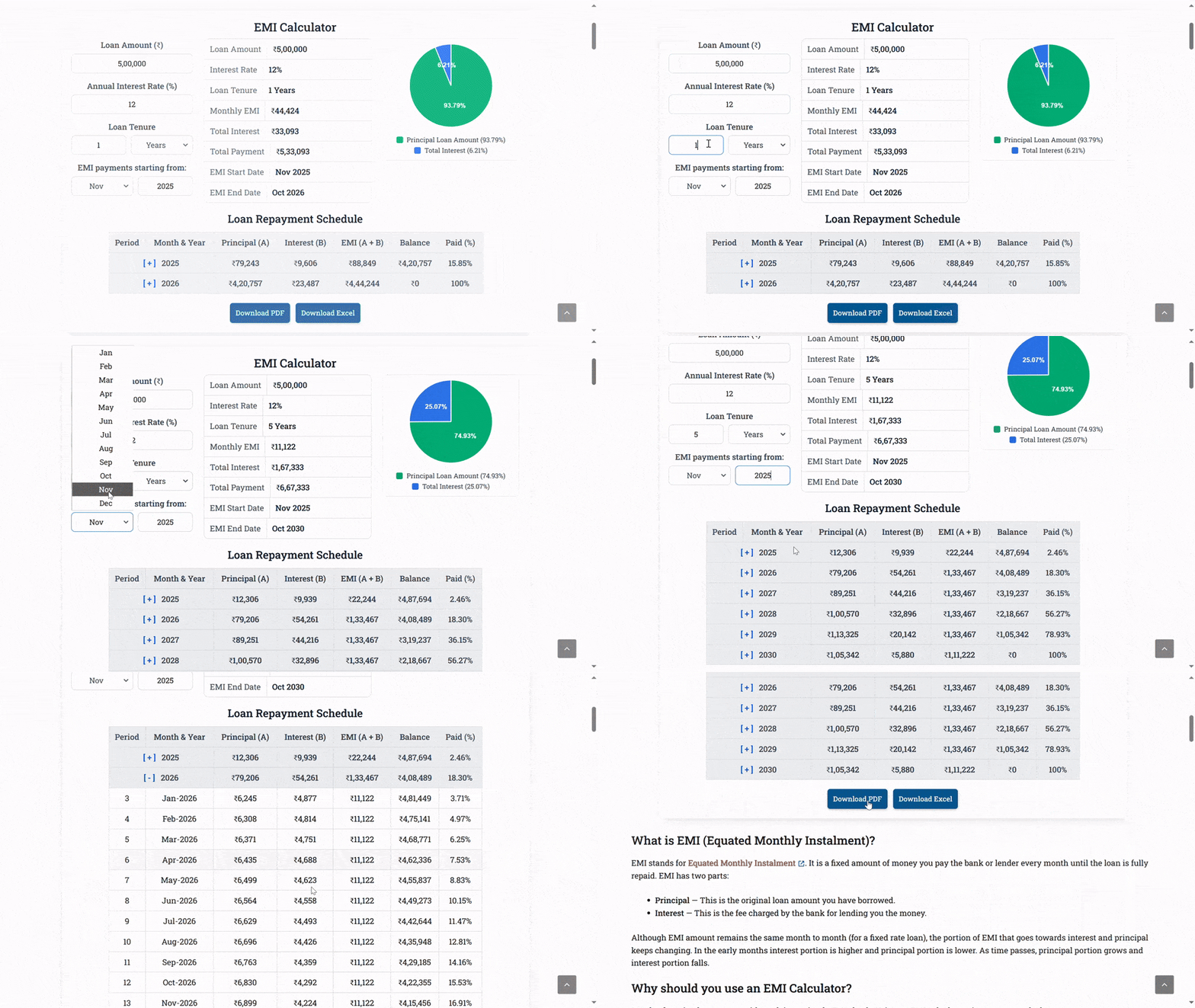
This is arguably the most crucial concept to grasp. Your EMI is a fixed amount, but the composition of that amount changes dramatically over the loan’s life. This is detailed in what is called an Amortization Schedule.
- In the Initial Years (The Interest-Heavy Phase): A disproportionately large chunk of your EMI goes towards paying the interest component, and a very small amount goes towards reducing the principal. This happens because the outstanding loan amount is at its highest, and interest is calculated on this large balance.
- In the Later Years (The Principal-Heavy Phase): As your outstanding principal balance steadily reduces, the interest component of your EMI shrinks, and an increasingly larger portion is applied to the principal repayment.
Why this matters: Knowing this explains why making prepayments early on is significantly more effective than doing so later, as you are hitting the principal when the interest burden is at its peak.
3. The Power of the EMI Calculator: Your Essential Pre-Loan Tool
Never take a loan without first using a high-quality EMI Calculator. This online tool is your first line of defense in financial planning.
| Input Parameter | What It Affects | Why It’s Important |
|---|---|---|
| Principal Loan Amount (P) | Directly affects the EMI size. | Determines the total debt you take on. |
| Interest Rate (R) | The cost of the loan; a small change has a huge long-term impact. | A lower rate means a significantly lower EMI and total interest paid. |
| Loan Tenure (N) | The total time (in months/years) for repayment. | A trade-off between monthly affordability and total interest. |
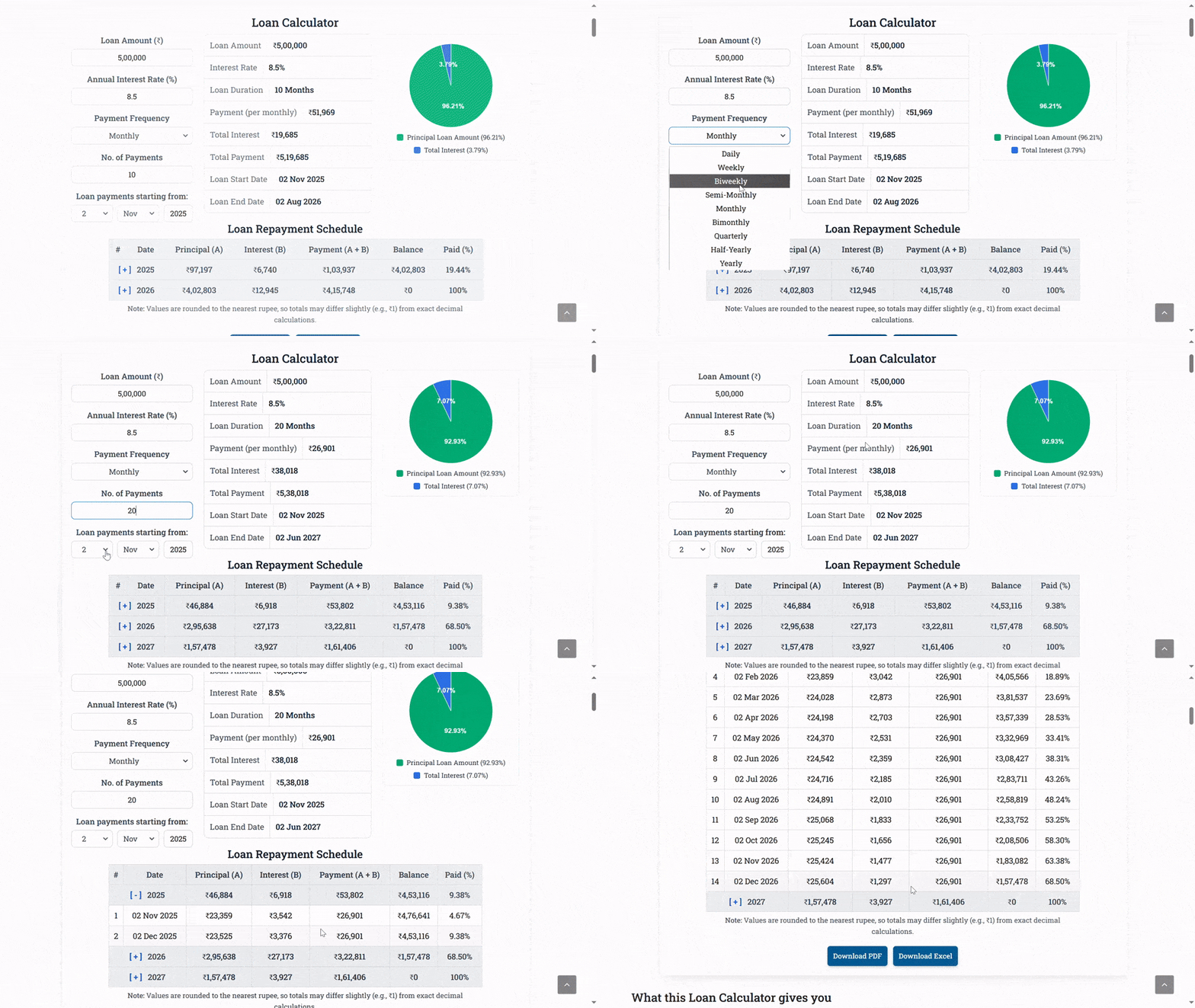
Our advanced EMI Calculator and Loan Calculator are designed to help you instantly simulate different scenarios—varying loan amounts, interest rates, and tenures—so you can find the monthly payment that is truly affordable for you.
4. The Tenure Trap: Long Term vs. Short Term
One of the biggest decisions you’ll face is choosing the loan tenure. It’s a classic financial trade-off:
- Longer Tenure: → Lower EMI, but Higher Total Interest Paid.
- Advantage: Makes the loan more affordable on a month-to-month basis, easing cash flow.
- Disadvantage: You pay significantly more in interest over the lifetime of the loan, delaying your freedom from debt.
- Shorter Tenure: → Higher EMI, but Lower Total Interest Paid.
- Advantage: Substantial savings on interest and faster debt freedom.
- Disadvantage: Places a greater strain on your monthly budget.
Smart Strategy: Use the calculator to find a comfortable EMI for a shorter tenure. If your cash flow allows it, always lean towards a shorter tenure to minimise the total cost of borrowing.
5. Fixed vs. Floating Rate EMIs: Understanding the Fluctuation
Your EMI’s stability depends heavily on the type of interest rate you choose.
| Interest Rate Type | EMI Behaviour | Best For |
|---|---|---|
| Fixed Rate | Stays the same for the entire loan tenure, offering predictability. | Individuals who value stability, have a fixed budget, or when interest rates are currently low. |
| Floating Rate | Fluctuates based on market conditions (like the RBI’s repo rate). The EMI or tenure can change. | Individuals who believe market rates will fall, are comfortable with some risk, or plan to prepay aggressively. |
Pro Tip: For major, long-term loans like a home loan, a floating rate often starts lower, but you must be prepared for the possibility of your EMI increasing if the market changes. For personal or car loans, fixed rates are more common.
6. The Debt-to-Income (DTI) Ratio and EMI Eligibility
Lenders don’t just look at your income; they look at your capacity to repay. This is where the Debt-to-Income (DTI) Ratio comes in.
- DTI Ratio: It is the percentage of your gross monthly income that goes toward paying your recurring monthly debt payments (including the potential new EMI).
- The Golden Rule: Most lenders prefer a DTI ratio of 40% to 50% or less. If your total existing and new EMIs exceed this threshold, your loan application is likely to be rejected or the loan amount sanctioned will be reduced.
Action Point: Calculate your current DTI ratio before applying. Use the EMI Calculator to ensure your new EMI fits within a healthy DTI range.
7. The Hidden Cost: EMI on Flat Rate vs. Reducing Balance
Not all interest calculation methods are created equal. You must know which method your loan uses.
- Reducing Balance Method (Most Common for Home Loans): Interest is calculated only on the outstanding principal after each EMI payment. This is the borrower-friendly method, as the interest component reduces over time.
- Flat Rate Method (Common for Car/Personal Loans): Interest is calculated on the original principal amount for the entire loan tenure, regardless of how much you’ve repaid. This method results in a significantly higher total interest payout for the borrower.
Always ask your lender: “Is the interest calculated on a reducing balance basis or a flat rate basis?” The difference can save you lakhs over the life of the loan.
8. Pre-EMI: What it is and How to Avoid it
If you are taking a home loan for an under-construction property, you may encounter the term Pre-EMI.
- What it is: During the construction phase, the bank disburses the loan in instalments. The Pre-EMI is the interest paid only on the disbursed amount until the full loan is released. It does not include any principal repayment.
- The Catch: Your principal is not being reduced, meaning the loan balance remains high, and you are simply paying “rent” on the partial loan.
Best Practice: If your financial situation allows, try to start your Full EMI immediately upon the first disbursement, or opt for a loan structure that minimizes the Pre-EMI phase.
9. The Golden Rule of Prepayment: Reduce Tenure, Not EMI
One of the most powerful moves you can make is a prepayment (paying a lump sum over and above your EMI). When you prepay, the bank will offer you two options:
- Reduce EMI: Keep the tenure the same, but lower the monthly installment.
- Reduce Tenure: Keep the EMI the same, but shorten the repayment period.
| Prepayment Strategy | Resulting Benefit | Financial Impact |
|---|---|---|
| Reduce Tenure (Recommended) | Loan closes faster (e.g., 20-year loan becomes 15 years). | Maximum Interest Saved. The most financially efficient choice. |
| Reduce EMI | Monthly payment is reduced (e.g., from ₹30,000 to ₹28,000). | Better monthly cash flow, but Less Interest Saved overall. |
The Verdict: While reducing the EMI offers immediate monthly relief, reducing the tenure is the clear winner for long-term wealth creation, resulting in significantly greater interest savings.
10. The Credit Score Connection: EMI and CIBIL
Your EMI payment history is the single biggest factor influencing your Credit Score (like CIBIL Score).
- Timely Payments: Paying your EMI on or before the due date is the surest way to build an excellent credit history (a score of 750+), which qualifies you for better interest rates on future loans.
- EMI Default: Even a single missed or delayed payment can severely damage your credit score, making future borrowing difficult and expensive.
Rule to Live By: Automate your EMI payments. Set up standing instructions or auto-debit to ensure you never miss a payment.
11. Impact of Foreclosure Charges on Full Repayment
Sometimes, you might get a windfall—a bonus, an inheritance, or a lucrative investment payoff—and you decide to pay off your loan completely, a process called foreclosure.
- Foreclosure/Prepayment Charges: Many lenders levy a fee for foreclosing a loan before the scheduled end date. This fee is typically a percentage (e.g., 2-5%) of the outstanding principal.
- Good News: In many countries, regulators have mandated Zero Foreclosure Charges on home loans with floating interest rates taken by individuals.
Crucial Check: Before you sign, always confirm the prepayment and foreclosure clauses. A loan with zero prepayment penalty offers greater financial flexibility.
12. Tax Benefits: The Silver Lining of EMI
For certain loans, particularly home loans, your EMI payments come with significant tax advantages.
- Principal Component: Repayment of the principal amount is often deductible under specific sections of the Income Tax Act, subject to an annual limit.
- Interest Component: The interest portion of your EMI is also deductible, often up to a higher annual limit.
Why Use the Calculator: A good EMI calculator provides an Amortization Schedule, which clearly breaks down the principal and interest paid each year. This is vital for accurate tax planning and filing.
13. Understanding the Loan Agreement’s Fine Print
The EMI figure is what you see monthly, but the loan agreement is what governs your financial life for years.
- Penalties: Look for details on late payment penalties, bouncing cheque charges, and default interest rates.
- Escalation Clause: Does the bank have the right to unilaterally increase your interest rate beyond market-driven changes?
- Processing Fees: This one-time charge, sometimes a percentage of the loan amount, can significantly add to the upfront cost of your loan. Negotiate or compare this fee across lenders.
Never Skip This: Read every single clause related to your EMI and its potential changes. Don’t be afraid to ask for clarification on anything you don’t understand.
14. EMI and Insurance: Protecting Your Liability
Life is unpredictable. Should an unfortunate event occur, you don’t want your EMI liability to fall on your family.
- Loan Protection Insurance (or Term Insurance): Many lenders offer a loan protection plan, often packaged with the EMI, which pays off the outstanding loan principal in case of the borrower’s death or permanent disability.
- The Choice: While this offers peace of mind, you often have the option to buy a cheaper term insurance policy separately that covers your loan amount, rather than going with the lender’s often more expensive group plan.
Financial Safety: Ensure your EMI obligation is adequately covered by a suitable insurance policy. This is not about the EMI itself, but about the security surrounding it.
15. The Principle of Affordability: Your Personal Comfort Zone
Ultimately, the best EMI is not the lowest one, but the one you can comfortably afford, even if your income stream takes a temporary hit.
- The Stress Test: Calculate your EMI and then ask: “Can I still pay this EMI if I lose my job for 3-6 months, or if a major unexpected expense occurs?”
- Emergency Fund Buffer: Before taking a loan, you should have an emergency fund equal to at least 6 months’ worth of total expenses, including your projected EMI.
Your Final Decision: The EMI you choose should allow you to meet your financial obligations and save for your other goals (retirement, children’s education) without undue stress. Never stretch your EMI to the absolute limit of your income.
The Path to Smart Borrowing
Your Equated Monthly Installment is a simple number with complex implications. It’s the result of a powerful mathematical formula that is either working for you (saving you interest and liberating you from debt) or against you (costing you more and keeping you tied to your lender).
By understanding these 15 key aspects—from the amortization schedule to the tax benefits and the critical role of prepayment—you transition from being a passive borrower to an informed financial master.
Ready to put this knowledge into action and find your perfectly tailored EMI?