Predator 9500 Watt Inverter Generator Honest Review 2024
The Predator 9500 Watt Inverter Generator is a powerful yet portable power solution that delivers clean energy for sensitive electronics. In this review, we break down its performance, fuel efficiency, noise levels, and real-world use cases so you can decide if it is the right fit for your needs.
Key Takeaways
- Clean Power Output: The Predator 9500 produces THD under 3%, making it safe for laptops, phones, and other sensitive electronics.
- Impressive Fuel Efficiency: Eco-Throttle mode allows up to 20 hours of runtime on a single tank at 25% load.
- Portable Design: Weighing around 55 pounds with built-in handles, it is easy to transport for camping or outdoor events.
- Quiet Operation: Noise levels hover around 58-65 dB, which is significantly quieter than conventional open-frame generators.
- Solid Build Quality: The steel frame and durable components are built to handle regular use in tough conditions.
- Price-to-Value Ratio: It offers inverter generator features at a budget-friendly price point compared to big-name brands like Honda and Yamaha.
- Best For: Camping, tailgating, home backup, RV use, and running small to medium appliances.
📑 Table of Contents
- Predator 9500 Watt Inverter Generator Honest Review 2024
- What Makes the Predator 9500 an Inverter Generator?
- Performance and Power Output
- Fuel Efficiency and Runtime
- Noise Levels and Portability
- Build Quality and Durability
- Outlets and Connectivity Options
- Pros and Cons Summary
- Who Is the Predator 9500 Best For?
- How Does It Compare to Competitors?
- Maintenance Tips for Longevity
- Common Mistakes to Avoid
- Quick Tips for First-Time Users
- Expert Insights on Inverter Generators
- Final Verdict: Is the Predator 9500 Worth It?
- Conclusion
Predator 9500 Watt Inverter Generator Honest Review 2024
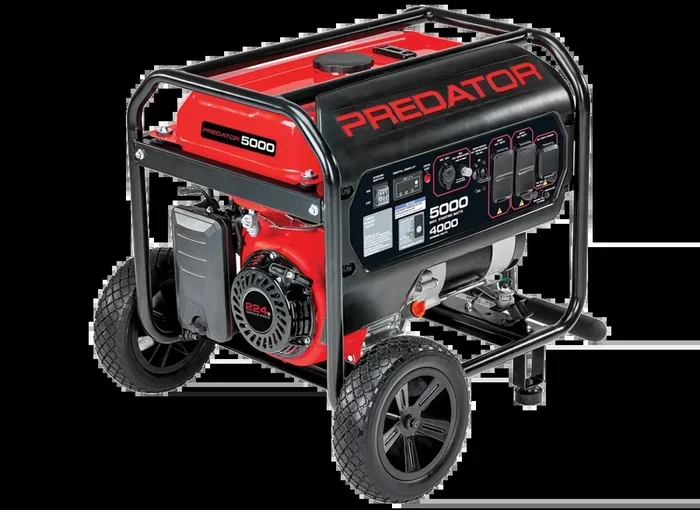
If you have been shopping for a portable generator, you have probably come across the Predator 9500 Watt Inverter Generator. It has gained a loyal following among campers, outdoor enthusiasts, and homeowners looking for reliable backup power. But does it really live up to the hype? We dug deep into its features, tested it in real-world scenarios, and put together this honest review to save you time and money.
The Predator 9500 inverter generator stands out because it packs inverter-grade clean power into a portable frame that costs a fraction of premium brands. Whether you need to run a refrigerator during a storm, charge your laptop at a campsite, or power tools on a job site, this machine has a lot to offer. Let us break it all down for you.
What Makes the Predator 9500 an Inverter Generator?
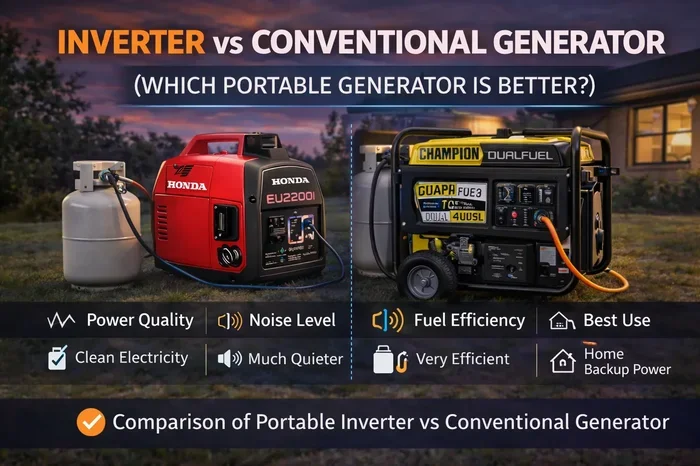
Before we dive into the details, it helps to understand what makes an inverter generator different from a conventional model. Traditional generators produce raw AC power that can contain harmonic distortions. This is fine for tools and motors, but it can damage sensitive electronics like smartphones, tablets, and laptops.
Inverter generators go through a three-step process. They generate AC power first, then convert it to DC, and finally invert it back to clean AC power. The result is a Total Harmonic Distortion (THD) level under 3%, which is safe for even the most delicate devices.
The Predator 9500 uses this inverter technology, which means you can plug in your electronics without worrying about power surges or fluctuations. This is a huge advantage if you plan to use it for recreational vehicles, camping, or as home backup power for electronics during outages.
Key Specifications at a Glance
- Running Watts: 9,500 watts
- Starting Watts: Approximately 11,500 watts (varies by model)
- Engine: 420cc single-cylinder OHV
- Fuel Tank: 3.96 gallons (15 liters)
- Runtime: Up to 20 hours at 25% load with Eco-Throttle
- Noise Level: 58 to 65 dB (depending on load)
- Weight: Approximately 55 pounds
- Outlets: 120V 20A household outlets, 12V DC, USB ports
Performance and Power Output
The heart of any generator is its performance, and the Predator 9500 does not disappoint. With 9,500 running watts and a peak output around 11,500 watts, it can handle a surprising number of household and outdoor appliances simultaneously.
What Can It Run?
Let us look at some practical examples of what this generator can power at the same time:
- Refrigerator: 600 to 800 watts running, 1,200 to 2,200 starting
- Microwave: 600 to 1,200 watts
- TV: 100 to 400 watts
- Laptop: 50 to 100 watts
- Lights (LED): 10 to 50 watts each
- Window AC unit (small): 500 to 1,500 watts
Based on these numbers, you can comfortably run a refrigerator, a TV, some lights, and charge your phone all at once. If you need to run heavier appliances like a central air conditioning unit or a well pump, you will likely need a larger unit. For those scenarios, you might want to check out this what size generator to run furnace and refrigerator guide to find the right fit for your specific setup.
Starting Power
The Predator 9500 handles appliance startup surges well. Most models in this lineup feature a recoil pull-start mechanism that fires up quickly even in cold weather. Some newer versions include an electric start option, which adds convenience. The engine is a 420cc OHV unit that delivers consistent power without stuttering or surging.
Fuel Efficiency and Runtime
One of the biggest advantages of the Predator 9500 inverter generator is its fuel economy. The 3.96-gallon fuel tank combined with the Eco-Throttle feature delivers impressive runtime. At a quarter load, you can expect up to 20 hours of continuous operation on a single tank of gasoline.
This is where inverter generators shine compared to conventional models. The Eco-Throttle automatically adjusts the engine speed to match the load demand. When you are just charging a phone or running a small fan, the engine slows down. When you plug in something demanding, it ramps up instantly.
How Does It Compare to Larger Generators?
Fuel consumption scales with power output. For comparison, a larger unit like a 20kW generator uses significantly more fuel per hour. If you are curious about the numbers, you can read more about fuel usage in our breakdown of how much propane does a 20kw generator use per hour. The Predator 9500 is far more efficient for portable use because it does not need to run at full throttle all the time.
Fuel Tank Details
- Tank Capacity: 3.96 gallons
- Fuel Type: Regular unleaded gasoline
- Eco-Throttle: Adjustable engine speed for fuel savings
- Fuel Consumption at 25% Load: Approximately 0.20 gallons per hour
- Fuel Consumption at 50% Load: Approximately 0.37 gallons per hour
The fuel gauge on the control panel lets you keep an eye on remaining fuel. This is a small but thoughtful detail that prevents unexpected shutdowns during use.
Noise Levels and Portability
Noise is one of the most common complaints with generators. The Predator 9500 addresses this with its inverter design and enclosed sound-dampening housing. At 25% load, it runs at roughly 58 dB, which is comparable to a quiet conversation. At full load, it rises to about 65 dB, which is still quieter than many conventional generators that hit 75 to 85 dB.
Real-World Noise Comparison
- Normal conversation: 60 dB
- Predator 9500 at 25% load: 58 dB
- Predator 9500 at full load: 65 dB
- Conventional generator: 75 to 85 dB
- Lawnmower: 85 to 90 dB
This makes the Predator 9500 an excellent choice for camping trips, tailgating parties, and any situation where noise matters. You will not wake up the entire campsite at 2 AM when running it on Eco-Throttle.
Portability Features
Weighing around 55 pounds, the Predator 9500 is not the lightest generator on the market, but it is very manageable. It features sturdy grab handles on both sides and a flat top that doubles as a small surface. The compact footprint means it fits easily in a truck bed or RV storage compartment.
For those who need something even lighter, there are smaller models in the Predator lineup. But if you want a balance of power and portability, the 9500-watt model hits a sweet spot.
Build Quality and Durability
The Predator 9500 is built to last. The frame is made from steel tubing that provides structural rigidity without adding excessive weight. The engine is a single-cylinder OHV design that is simple to maintain and widely available in terms of replacement parts.
Construction Highlights
- Steel Frame: Protects the engine and fuel tank from impacts
- Rubber Feet: Reduce vibration and prevent sliding on smooth surfaces
- Control Panel: Housed in a protective cover to shield from weather
- Oil Sight Glass: Lets you check oil level without opening anything
- Circuit Breaker: Built-in overload protection for safety
One thing to note is that the Predator 9500 is not fully weatherproof. You should keep it under a canopy or shelter during rain. That said, the control panel is designed to handle light moisture, and the engine compartment is well-sealed.
Durability is an important factor when choosing a generator for long-term use. If you are wondering how generator longevity plays into your decision, our article on how long does a whole house generator last offers useful insights on generator lifespan and maintenance tips that apply to portable models like this one as well.
Outlets and Connectivity Options
The Predator 9500 offers a versatile set of output options. The standard control panel includes:
- Two 120V 20A household outlets: Standard three-prong outlets for plugging in appliances directly
- One 12V DC outlet: Useful for charging car batteries or running DC devices
- USB ports: For charging phones, tablets, and other USB-powered devices
- RV 30A or 50A outlet (some models): Direct connection for recreational vehicles
The USB ports are a welcome addition in 2024. Being able to charge a phone or power bank directly from the generator without running an inverter yourself is a real convenience. The 12V outlet also adds flexibility for off-grid setups.
Parallel Capable?
Some versions of the Predator 9500 support parallel coupling, which lets you connect two identical units to double your output. This is a great option if you need more power for a job site or a larger RV without buying a much bigger generator. Check the specific model listing to confirm parallel compatibility before purchasing.
Pros and Cons Summary
Pros
- Clean inverter power safe for sensitive electronics
- Excellent fuel efficiency with Eco-Throttle technology
- Quiet operation compared to conventional generators
- Multiple outlet types including USB and 12V DC
- Lightweight and portable for its power class
- Budget-friendly compared to Honda and Yamaha equivalents
- Sturdy steel frame with good vibration dampening
Cons
- Not fully weatherproof and needs shelter from rain
- No electric start on all models (some versions only have recoil start)
- 55-pound weight may feel heavy for some users
- Aftermarket parts availability can be limited compared to Honda or Yamaha
- Warranty coverage may be shorter than premium brands
Who Is the Predator 9500 Best For?
The Predator 9500 Watt Inverter Generator is a great choice for several specific use cases. Let us break down who will benefit most from this unit.
Campers and Outdoor Enthusiasts
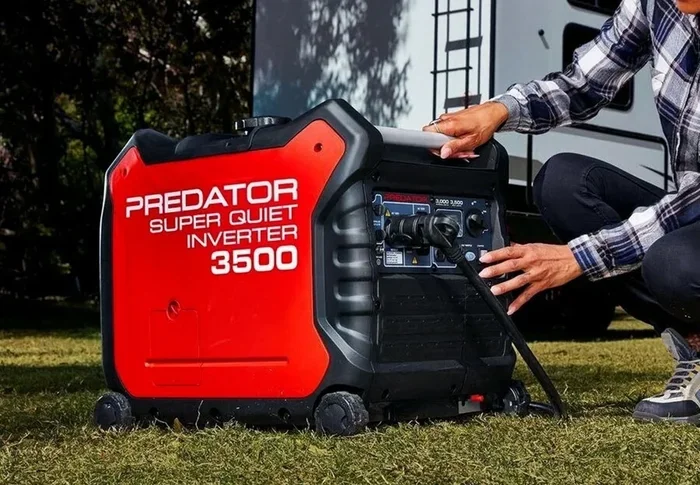
If you enjoy camping, the Predator 9500 is a dream. It runs quietly, produces clean power for charging devices, and is light enough to load into a truck or SUV. The USB ports and 12V outlet make it ideal for modern camping setups that rely on electronics.
Homeowners Needing Backup Power
During storms or power outages, this generator can keep your essentials running. It can handle a refrigerator, some lights, a TV, and phone charging without breaking a sweat. It is not large enough for a whole-house backup, but it covers the basics very well.
RV Owners
The clean power output and portability make the Predator 9500 a natural fit for RV use. Some models come with the proper 30A or 50A outlets for direct RV connection. The quiet operation also respects campground noise rules.
Small Business and Job Sites
If you run a small business that needs power tools on a job site, this generator delivers. It can handle a circular saw, a drill, and a work light simultaneously. However, for heavy construction equipment, you will need a higher wattage unit.
How Does It Compare to Competitors?
Price is one of the Predator 9500 strongest selling points. It delivers inverter generator features at a price that is often 30 to 50 percent lower than comparable Honda and Yamaha models. Here is a quick comparison:
- Honda EU3000iS: Lighter and quieter, but only 3,000 watts and costs nearly double
- Yamaha EF6300iSDE3: More powerful with electric start, but also significantly more expensive
- Generac GP6500: Cheaper but it is a conventional generator, not an inverter model
- Predator 9500: Best balance of power, inverter technology, portability, and price
If budget is your primary concern and you still want clean inverter power, the Predator 9500 is hard to beat. It punches well above its price class.
Maintenance Tips for Longevity
Keeping your Predator 9500 inverter generator in top shape is not complicated. Follow these simple maintenance tips to get the most life out of it:
- Change the oil after the first 20 hours of use, then every 100 hours or once per season
- Use fresh fuel and add fuel stabilizer if storing for more than 30 days
- Check the air filter regularly and clean or replace it as needed
- Run the generator for 15 to 20 minutes monthly to keep the engine lubricated
- Store it dry and covered when not in use
- Inspect spark plugs annually and replace them if they look worn
These are basic steps that any generator owner should follow. Proper maintenance will easily push the lifespan past 3,000 to 5,000 hours of operation.
Common Mistakes to Avoid
Even experienced users can make simple mistakes with generators. Here are a few to watch out for:
- Overloading the generator: Do not exceed the rated wattage. Running it overloaded damages the engine and voids warranties.
- Running it indoors or in enclosed spaces: Generators produce carbon monoxide. Always use them outdoors in well-ventilated areas.
- Ignoring the oil level: Running low on oil can destroy the engine in minutes. Check before every use.
- Using old fuel: Gasoline degrades in 30 days. Use stabilizer or drain the tank before long storage.
- Skipping warm-up time: Let the generator run unloaded for a few minutes before plugging in appliances.
Quick Tips for First-Time Users
- Read the manual before your first use. It sounds obvious, but many people skip this step and miss important setup details.
- Start with a low load and gradually add devices to test the generator under stress.
- Invest in a power strip with surge protection for added safety with sensitive electronics.
- Label your circuits if using it as home backup so you know which breaker controls what.
- Keep a spare oil bottle and extra fuel on hand for extended outages.
Expert Insights on Inverter Generators
Industry experts consistently recommend inverter generators over conventional models for anyone who values clean power and fuel efficiency. The technology has matured significantly in recent years, and units like the Predator 9500 now offer features that were once exclusive to premium brands.
One key insight from power equipment professionals is to match the generator size to your actual load needs. Oversizing your generator wastes fuel, while undersizing it leads to overloading. The Predator 9500 fits most households and recreational setups perfectly, but always do a load calculation before buying.
Another expert tip is to prioritize parallel capability. Even if you do not need two units right now, having the parallel port gives you flexibility down the road without buying a whole new generator.
Final Verdict: Is the Predator 9500 Worth It?
The Predator 9500 Watt Inverter Generator delivers outstanding value for its price. It offers clean inverter power, impressive fuel efficiency, quiet operation, and a portable design that suits camping, RV, and home backup use. The build quality is solid, and the feature set rivals generators that cost much more.
Where it falls short is in aftermarket support and warranty length compared to Honda or Yamaha. If you are willing to accept that trade-off, the savings are significant. For most users, the Predator 9500 is the best budget inverter generator available in 2024.
Our recommendation: If your power needs fall between 5,000 and 9,500 watts and you want clean, portable power without breaking the bank, the Predator 9500 is an easy “yes.”
Conclusion
The Predator 9500 Watt Inverter Generator proves that you do not need to spend premium prices to get premium features. From its clean power output and Eco-Throttle fuel savings to its quiet operation and portable steel frame, this generator covers all the essentials. It is ideal for campers, RV owners, homeowners seeking backup power, and anyone who values reliability on a budget.
Weighing in at around 55 pounds with a versatile set of outlets and up to 20 hours of runtime, it handles real-world demands with ease. The few drawbacks, like limited weatherproofing and shorter warranty, are minor compared to the overall value it provides.
If this review has been helpful, consider the Predator 9500 as your go-to portable power solution. It delivers where it counts, and your wallet will thank you. Make sure to do your load calculations, follow the maintenance tips we covered, and enjoy reliable power wherever you go.
Frequently Asked Questions
How long can the Predator 9500 run continuously?
At 25% load with Eco-Throttle engaged, the Predator 9500 can run for up to 20 hours on a full tank of gasoline. At higher loads, runtime decreases proportionally. This makes it one of the most fuel-efficient inverter generators in its class.
Is the Predator 9500 loud enough to use at a campground?
No, it is not too loud. At 25% load, it runs at approximately 58 dB, which is roughly the same volume as a quiet conversation. Most campgrounds have noise rules around 65 dB after dark, and the Predator 9500 stays within those limits even at higher loads.
Can the Predator 9500 power a house during a blackout?
It can power essential household appliances like a refrigerator, lights, TV, and phone chargers. However, it is not powerful enough for a full-house backup that includes HVAC, well pumps, or large heating systems. For those needs, you would need a standby generator or a much larger portable unit.
Does the Predator 9500 have an electric start option?
Some models of the Predator 9500 include an electric start feature, while others come with recoil pull-start only. When shopping, check the specific product listing to confirm which start type is included. Electric start is a nice convenience, especially in cold weather.
What is the warranty on the Predator 9500 generator?
The Predator 9500 typically comes with a limited manufacturer warranty, though the exact terms vary by seller and model. Generally, the warranty covers defects in materials and workmanship for one year. It is always best to register your product and keep your purchase receipt for any claims.
Can you run the Predator 9500 in the rain?
You should never run any generator in the rain or in wet conditions due to the risk of electrocution and carbon monoxide hazards. The Predator 9500 is not fully weatherproof. You can use a generator tent or canopy to protect it from rain while keeping it outdoors and well-ventilated.