In the world of professional communication, every small detail matters—grammar, punctuation, tone, and especially text case in professional writing. The way you capitalize or format your text can completely change the impression your message leaves on readers. Whether you’re writing an email, crafting a business proposal, creating a blog, or designing a resume, using the right text case reflects your professionalism and attention to detail. To make this task easier, tools like the Soula Tools Case Converter help you instantly convert text between uppercase, lowercase, title case, and sentence case, ensuring your writing looks clean, consistent, and polished every time.
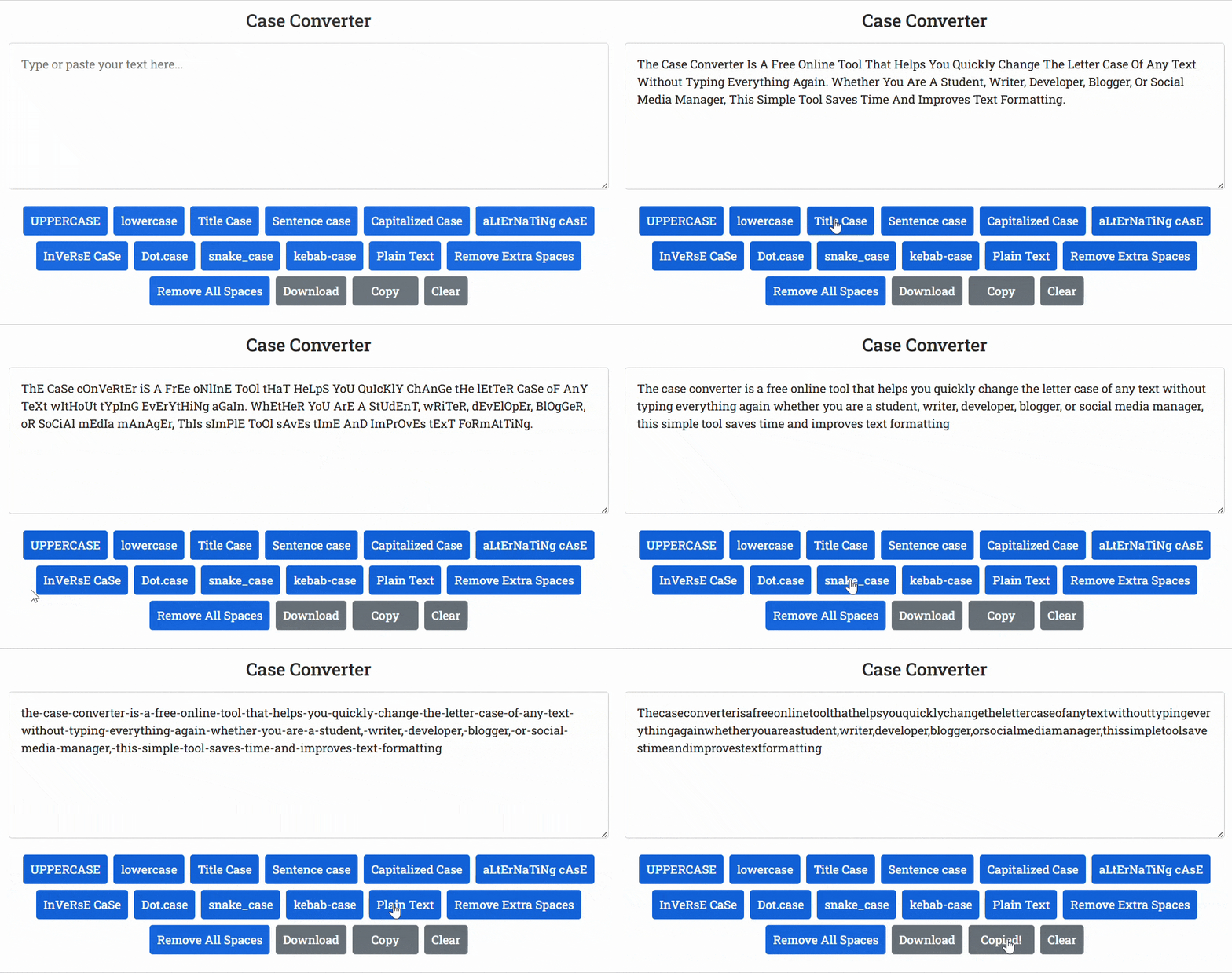
In this detailed article, we’ll explore why text case is more important than most people realize, how it influences readability and perception, and the key ways it defines your credibility in professional communication. Let’s dive into the power of proper capitalization and formatting — and how it can elevate your writing from ordinary to exceptional.
1. The First Impression Starts with Proper Case
When someone reads your email or document for the first time, they subconsciously judge your professionalism from the way your text looks. Improper capitalization or inconsistent case makes writing seem rushed or careless. Even if the content is strong, messy formatting weakens your credibility.
- Example of bad impression: “dear sir, i am interested in your job opening.”
- Example of good impression: “Dear Sir, I am interested in your job opening.”
The difference might seem small, but it’s powerful. The correct capitalization instantly communicates that you are serious, disciplined, and respectful toward your reader. In business, that first impression can make or break opportunities.
2. Consistency Shows Attention to Detail
Professional writing is not only about correct grammar but also about consistency. Using sentence case in one section and all caps in another can confuse readers and make your text look disorganized. Maintaining a consistent style across your entire document reflects reliability and precision — traits highly valued in the professional world.
Whether it’s a company report, website content, or client email, your text case consistency tells people that you care about every detail. That’s the hallmark of professional writing.
3. Case Affects Readability and Comprehension
It’s scientifically proven that text case affects how easily we read and understand content. Studies show that lowercase letters are generally easier to read in continuous text because of their distinct shapes, which help our eyes recognize words faster. On the other hand, ALL CAPS is harder to read because every letter looks the same, slowing down comprehension.
This is why professional writers, marketers, and designers avoid using all caps in long paragraphs. They use it selectively for emphasis, not as the main text format. Understanding when to use which case helps keep your message clear and reader-friendly.
4. Different Text Cases Serve Different Purposes
Each type of text case has a specific purpose in writing. Let’s look at the main types and when to use them:
- Sentence Case: Used in normal writing, where only the first letter of the sentence and proper nouns are capitalized. Example: “This is a sentence written in sentence case.”
- Title Case: Used for headings, titles, or creative work. Example: “The Quick Brown Fox Jumps Over the Lazy Dog.”
- Uppercase: Used for emphasis, acronyms, or commands. Example: “PLEASE READ THE INSTRUCTIONS CAREFULLY.”
- Lowercase: Common in informal digital communication. Example: “let’s meet at 5 pm.”
- Toggle Case: Used for stylized text, flipping between upper and lower cases. Example: “tHiS iS tOgGlE cAsE.”
Each has its own visual and emotional effect. Professional writers know which one fits best in a given context — that’s what makes their work stand out.
5. Title Case Enhances Professional Presentation
When creating documents, reports, or articles, titles and headings often decide whether readers continue reading. Using title case in your headings gives a formal and polished appearance. It helps distinguish main points from body text and maintains a professional hierarchy throughout your content.
Compare these examples:
- “why proper text case matters in writing”
- “Why Proper Text Case Matters in Writing”
The second one looks more official and ready for publication. It’s the kind of small detail that separates amateur writers from professionals.
6. Text Case Reflects Your Brand Voice
Every business and writer has a unique tone and brand voice. Some brands prefer lowercase for a modern, minimalist vibe, while others stick with title case for formality. Choosing the right text case across your website, social media, and marketing materials helps maintain a consistent identity.
For example, tech companies like “eBay” and “iPhone” deliberately use lowercase styling to appear friendly and approachable. Meanwhile, traditional institutions like banks or universities use title case to show authority and trustworthiness. Your capitalization style silently communicates your brand’s personality.
7. Professional Emails Demand Correct Case
Email communication remains the backbone of professional correspondence. Yet, many people underestimate how much capitalization matters in an email. Writing in all lowercase can look lazy or disrespectful, while overusing uppercase can come off as shouting.
For example:
- Bad: “HELLO JOHN, PLEASE SEND THE FILES.”
- Better: “Hello John, please send the files.”
The right capitalization keeps your message polite, balanced, and readable — ideal for workplace communication.
8. Text Case Helps with Clarity in Technical Writing
In technical or academic writing, case usage can determine the meaning of terms. For instance, “apple” (the fruit) and “Apple” (the company) refer to entirely different things. Consistent case usage avoids confusion and keeps your content accurate.
When writing manuals, reports, or product documentation, maintaining proper case ensures precision and professionalism — two essentials for technical communication.
9. Capitalization Rules in Creative Writing
Creative writing gives authors more freedom, but even then, understanding capitalization rules is vital. Poets may use lowercase intentionally to express emotion or rebellion, but doing it carelessly in professional writing can send the wrong message.
Knowing the rules allows you to break them effectively. It’s like grammar — you can bend it for style only when you fully understand it.
10. Avoiding the “Caps Lock Mistake” in Online Communication
In the digital world, typing in all caps is often interpreted as shouting. It can make your text look aggressive or unprofessional, especially in emails, social posts, or comments. Even if your intention is emphasis, readers may perceive it negatively.
Use bold text or italics for emphasis instead of ALL CAPS. This small change can drastically improve how your writing feels to your audience.
11. Proper Case Improves SEO and Online Visibility
Search engines don’t technically rank text case, but readability and professionalism affect how users engage with your content. Clean, well-capitalized titles and descriptions attract more clicks and longer engagement — both positive signals for SEO.
For instance, a blog post titled “why text case is key to professional writing” may get fewer clicks than “Why Text Case Is Key to Professional Writing.” The second one simply looks more authoritative and trustworthy.
12. Case Matters in Legal and Formal Documents
In legal, academic, or government documents, capitalization rules are strict. Every proper noun, defined term, and title must be correctly capitalized. A single mistake could change the interpretation of a contract or report.
For instance, writing “The Company” (capitalized) refers to a specific legal entity, whereas “the company” might mean any business. Such precision is crucial in professional writing.
13. Better Case Formatting Enhances Accessibility
Readable text helps everyone, including those using screen readers or accessibility tools. Properly capitalized text follows linguistic patterns that assistive technologies can interpret more accurately, improving the experience for visually impaired users.
Inaccessible formatting — like random capitalization or all caps — can make reading tools mispronounce words, confusing the listener. Using the right case improves both accessibility and user experience.
14. Correct Case Adds Professionalism to Resumes and Cover Letters
Your resume and cover letter are the first representation of your professionalism. Incorrect capitalization, inconsistent headings, or all-lowercase names can give the impression of carelessness.
For example:
- Unprofessional: “john smith — software engineer”
- Professional: “John Smith — Software Engineer”
Small adjustments like these instantly make your documents look polished and credible — increasing your chances of getting noticed.
15. Maintaining Consistency Across Different Documents
Consistency is a key part of professional writing. Whether you’re preparing a company report, writing a blog post, or designing a presentation, maintaining a uniform text style across all materials makes your work look organized and credible. When text case varies randomly between uppercase, lowercase, and title case, it creates confusion and distracts readers from your main message. Consistent text case shows attention to detail and reinforces your personal or brand identity.
Conclusion
In professional communication, even the smallest details can influence how your message is received. Text case might seem like a minor stylistic choice, but it plays a major role in defining clarity, tone, and professionalism. Using the right case style helps ensure your writing looks polished and credible, whether you are creating business documents, academic reports, or online content. It shows that you value accuracy and presentation, both of which are essential in any professional setting.
Thankfully, with tools like the Soula Tools Case Converter, managing text case is now effortless. Instead of manually retyping or adjusting capitalization, you can instantly convert text into sentence case, title case, upper case, or lower case. This not only saves time but also helps maintain consistency across all your written materials. Mastering text case is a small habit that leads to big improvements in the way your writing communicates professionalism and confidence.