1800 Watt Generator What Will It Power During Outages
An 1800 watt generator is a versatile and affordable power solution that can run many of your essential household appliances during blackouts. In this guide, you will learn exactly what this generator size can handle, from refrigerators and lights to power tools and electronics. We also share practical tips to help you maximize performance and avoid common mistakes.
Power outages hit without warning. One minute you are watching TV, and the next everything is dark. That is exactly why thousands of homeowners are turning to portable generators for emergency power. Among the most popular sizes on the market, the 1800 watt generator hits a sweet spot. It is compact, affordable, and powerful enough to keep your daily life going when the grid goes down.
But what exactly can an 1800 watt generator power? That is the question we answer in this comprehensive guide. Whether you are preparing for hurricane season, camping in the woods, or just want a reliable backup for your home, understanding the limits of your generator is essential. We will walk through every appliance, tool, and device you can realistically run, plus share expert tips to squeeze the most out of every gallon of fuel.
By the time you finish reading, you will know how to plan your power management strategy, avoid overloading mistakes, and keep your generator running strong for years. Let us get into it.
Key Takeaways
- An 1800 watt generator covers most essentials: It can handle refrigerators, lights, fans, laptops, and small power tools during outages.
- Running watts vs surge watts matter: Always check both ratings, since some appliances draw more power when starting up than during normal use.
- Load management is critical: Running too many devices at once can overload the unit and trip the breaker.
- Fuel efficiency varies by load: Keeping the electrical load below 75% of total capacity extends runtime and protects the engine.
- Maintenance ensures reliability: Regular oil changes, filter cleaning, and exercise runs keep your generator ready when you need it most.
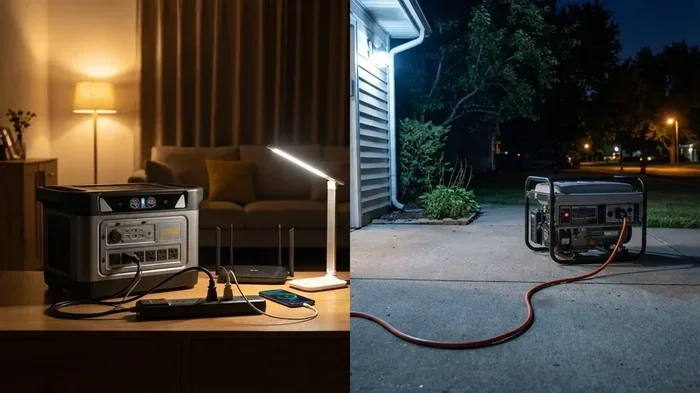
- Placement affects safety: Always run a generator outdoors in a well-ventilated area away from windows and doors.
📑 Table of Contents
- What Can an 1800 Watt Generator Power?
- Understanding Wattage: Running vs Surge Power
- Best Appliances to Run on an 1800 Watt Generator
- How to Maximize Your 1800 Watt Generator’s Performance
- Common Mistakes When Using an 1800 Watt Generator
- Expert Tips for Getting the Most Out of Your Generator
- Quick Tips for First-Time Generator Users
- Conclusion
What Can an 1800 Watt Generator Power?
The short answer is a lot. But the real answer depends on what you plug in at the same time. An 1800 watt generator typically produces around 1800 running watts and can handle a brief surge of roughly 2000 to 2300 watts. That is enough to cover most household essentials. Let us break it down by category.
Common Household Appliances
Most standard home appliances fall well within the reach of an 1800 watt portable generator. Here is a look at some everyday items and their typical wattage needs:
- Refrigerator: 600 to 800 running watts, with a surge of around 1200 watts. This is one of the first things you want running after an outage.
- Microwave: 600 to 1200 watts depending on size. A small microwave works great; a full-size convection model may push your limits.
- Television: 100 to 400 watts. No problem at all for this generator size.
- LED Lights: 10 to 50 watts per bulb. You can light up several rooms easily.
- Ceiling Fan: 50 to 100 watts. A couple of fans running together still leaves plenty of headroom.
- Phone Chargers: 5 to 25 watts each. Negligible impact on your total load.
- Laptop: 50 to 100 watts. Perfectly within range.
Notice a pattern? Most individual appliances draw far less than the generator’s full capacity. The challenge comes from running several at once. This is where smart load balancing becomes your best friend.
Tools and Equipment
If you use your 1800 watt generator for work or outdoor projects, it handles a solid range of tools:
- Drill: 400 to 600 running watts. Great for light construction tasks.
- Circular Saw: 1200 to 1500 running watts. It will run, but give it a break between cuts.
- Sander: 500 to 900 watts. Works smoothly on this generator size.
- Air Compressor (small): 500 to 1000 running watts. Ideal for inflating tires or powering small pneumatic tools.
- Welder (light): Some small welders fall in the 1500 to 1800 watt range. Check your specific model carefully before attempting this.
Keep in mind that power tools often have high surge wattage when the motor kicks in. Always check the manufacturer’s label for both the running and starting wattage before plugging in.
Understanding Wattage: Running vs Surge Power
This is the single most important concept to grasp when planning what your 1800 watt generator can run. Most people only look at one number. That is a mistake.
What Are Running Watts?
Running watts (also called continuous watts) are the steady amount of electricity a device needs to keep operating. Your refrigerator needs about 700 running watts to stay cold. A lamp needs maybe 60. These numbers add up over time and represent the constant power output your generator must sustain.
For an 1800 watt generator, the running wattage rating is usually 1800. That means you can safely run devices that total up to 1800 watts continuously without tripping the breaker or straining the engine.
What Is Surge Wattage?
Surge wattage is the extra burst of power some appliances need during startup. Motors are the biggest culprits. Think about your refrigerator compressor or a window air conditioner. They need a jolt of extra energy to get going, sometimes double their running wattage for a split second.
Your 1800 watt generator likely handles surges between 2000 and 2300 watts. That extra capacity is what makes it possible to start a refrigerator even though the surge might briefly exceed the running wattage rating.
Here is a quick comparison table to make this crystal clear:
| Category | Running Watts | Surge Watts |
|---|---|---|
| 1800 Watt Generator (Typical) | 1800W | 2000-2300W |
| Refrigerator | 600-800W | 1200-1500W |
| Window AC Unit (small) | 800-1200W | 1500-2000W |
| Circular Saw | 1200-1500W | 2000-2500W |
As you can see, some tools exceed the surge limit. Always double-check before plugging in high-draw equipment. This simple habit protects both your generator and your devices.
Best Appliances to Run on an 1800 Watt Generator
Now that you understand the basics of wattage capacity, let us look at some specific combinations that work well. These are real-world scenarios that actual users deal with during power outages.
Kitchen Essentials
The kitchen is often the biggest energy hog in any home. During an outage, you probably want to keep food fresh and maybe heat a quick meal. Here is a realistic combo:
- Refrigerator: 700 running watts
- Microwave (small): 800 watts
- Phone charger: 15 watts
- Under-cabinet LED lights: 30 watts
Total: roughly 1545 watts. That fits comfortably within your 1800 watt generator‘s limits. You can even add a ceiling fan at 75 watts and still stay under capacity at around 1620 watts.
However, try running the microwave and a full-size electric stove at the same time, and you will blow past 1800 watts fast. Generator efficiency depends on smart choices like these.
Heating and Cooling
Temperature control matters a lot during extreme weather. Here is what an 1800 watt generator can handle:
- Small window AC unit (5000-8000 BTU): 800 to 1200 running watts. This works well, especially on mild days.
- Space heater (1500W): Using a space heater alone is possible, but it leaves zero room for anything else. Pair it with a very small heater (500W) and you can handle a room and a device.
- Electric blanket: 50 to 200 watts. A cozy addition that barely touches your power budget.
- Fan (box fan or tower fan): 50 to 200 watts. Great for air circulation without heavy draw.
For homeowners wondering what size generator to run furnace and refrigerator, an 1800 watt unit works if your furnace uses a simple gas system with a small electric blower. Heavy electric furnaces, on the other hand, require much larger setups.
Electronics and Devices
Keeping your devices charged and connected is a priority for most people during outages. The good news is electronics draw very little power:
- TV: 100 to 400 watts
- Gaming console: 150 to 400 watts
- Router and modem: 20 to 50 watts
- Tablet charger: 10 to 25 watts
- Portable heater (small): 200 to 500 watts
You could easily run a TV, charge your phone, keep your router on, and power a small fan all at the same time. That total would be around 500 to 900 watts, leaving tons of electrical load headroom. This makes the 1800 watt generator a fantastic choice for staying entertained and informed during blackouts.
How to Maximize Your 1800 Watt Generator’s Performance
Owning a generator is one thing. Getting the best performance out of it is another. These practical tips help you run longer, safer, and smarter.
Power Management Tips
- Prioritize essentials first. Plug in your most critical devices before adding anything else. Think refrigerator, lights, and medical equipment.
- Stagger heavy loads. Do not start the microwave the same moment you fire up the refrigerator. Give large motors a few seconds between startups.
- Use LED lighting. LED bulbs use up to 80% less electricity than old incandescent bulbs. This simple swap saves serious wattage over time.
- Unplug idle devices. Even on standby, some electronics draw phantom power. Unplug what you are not actively using.
Load Balancing Strategies
Load balancing means distributing your electrical demand so you never exceed the generator’s limits. Here is a simple approach:
- Make a list of everything you want to power.
- Check each device’s wattage on the label or manual.
- Add up the running watts for everything running at the same time.
- Keep the total below 1500 watts to leave a 15 to 20% safety buffer.
- Rotate heavy items. Run the vacuum when the refrigerator is cycling off, for example.
This strategy directly impacts your generator runtime and engine health. Running at full capacity for hours stresses the motor. Keeping the load between 50 and 75 percent gives you the best balance of performance and longevity.
Common Mistakes When Using an 1800 Watt Generator
Even experienced users make errors. Here are the most frequent mistakes we see and how to avoid them:
- Overloading the unit. Plugging in too many high-draw devices at once trips the breaker and can damage the engine. Always calculate your total load before starting.
- Ignoring surge wattage. Devices with motors need extra power to start. A device that fits on paper might still trip the breaker during startup if you do not account for the surge.
- Running the generator indoors. This is extremely dangerous. Generator exhaust contains carbon monoxide. Always place it outdoors in a well-ventilated area, far from windows, doors, and vents.
- Skipping maintenance. A neglected generator may fail when you need it most. Oil changes, air filter cleaning, and spark plug replacement should happen at least once per season.
- Using the wrong fuel. Check your owner’s manual. Some generators run on gasoline, others on propane, and some support both. Using the wrong fuel can ruin the engine.
- Letting the tank run completely dry. Running out of fuel can damage the carburetor. Try to keep at least a quarter tank at all times.
Avoiding these simple errors keeps your 1800 watt generator running reliably and safely for a long time.
Expert Tips for Getting the Most Out of Your Generator
Maintenance Matters
Regular maintenance is the best investment you can make in your generator’s lifespan. Here is a quick checklist:
- Change the oil after every 100 hours of use or at least once per season.
- Clean or replace the air filter every 6 months.
- Inspect the spark plug annually and replace it if corroded.
- Run the generator for 15 to 20 minutes once a month, even when you are not using it. This is called an “exercise run” and keeps the engine lubricated and ready to go.
- Store fuel with a fuel stabilizer to prevent degradation.
For more information on how long a well-maintained generator can last, check out this helpful resource on how long does a whole house generator last. The principles of maintenance apply across generator types and sizes.
Fuel Efficiency
Fuel consumption is a big concern for most generator owners. An 1800 watt generator typically uses between 0.12 and 0.18 gallons per hour at half load. At full load, that number climbs closer to 0.20 or 0.25 gallons per hour.
Here are some proven ways to stretch every gallon:
- Reduce your load. The less power you draw, the less fuel you burn. Simple as that.
- Use energy-efficient devices. LED lights, inverter-equipped appliances, and modern electronics consume less power.
- Turn off what you do not need. Every device you unplug saves fuel over time.
- Consider a larger fuel tank. Some portable generators accept external fuel tanks. This extends runtime significantly during long outages.
If you are curious about generator fuel consumption at different sizes, you can explore data on how much propane does a 20kw generator use per hour to compare fuel use across generator capacities.
Choosing the Right Location
Where you place your generator affects both safety and performance. Keep these guidelines in mind:
- Always operate outdoors. Never use a generator inside a home, garage, or enclosed space.
- Place it on a dry, level surface. Wet conditions cause electrical hazards and can damage the unit.
- Keep it away from windows and vents. Exhaust fumes should never enter your living space.
- Position it where it is easy to refuel. You do not want to scramble for fuel lines during a storm.
- Use a generator cover when rain or snow is expected, but never while it is running. For more details on this topic, read about whether you can cover a generator while it is running and the safety risks involved.
Quick Tips for First-Time Generator Users
- Start with essentials. Do not plug in everything at once. Begin with your most critical devices and add more gradually.
- Read the owner’s manual. Every generator has specific guidelines. Following them keeps your warranty intact and your unit safe.
- Invest in a transfer switch. A transfer switch lets you power hardwired appliances like sump pumps and central HVAC systems safely. It also prevents backfeeding, which is dangerous for utility workers.
- Label your circuits. Know which breaker controls which room. This makes it easier to decide what to power during an outage.
- Keep a flashlight and spare batteries nearby. Setting up a generator in the dark is frustrating. Good lighting makes everything easier.
Conclusion
The 1800 watt generator is one of the most practical and versatile power solutions available today. It can run your refrigerator, charge your devices, power lights, handle small tools, and even cool a room with a window AC unit. The key to success lies in understanding running watts versus surge wattage, managing your electrical load wisely, and maintaining the unit properly.
We covered a lot of ground in this guide. You now know exactly what an 1800 watt generator can power, how to avoid common mistakes, and how to maximize generator performance for the longest runtime. The next time a storm rolls in, you will be ready. No panic. No confusion. Just confident, prepared power at your fingertips.
Take the time to plan your setup before an outage hits. Make a wattage list, test your loads, and practice your startup routine. That small effort today could make all the difference when the lights go out tomorrow.
Frequently Asked Questions
Can an 1800 watt generator run a whole house?
An 1800 watt generator can power many essential items in a home, but it cannot run an entire house at once. It handles appliances like refrigerators, lights, fans, and electronics comfortably. However, large heating systems, central air conditioning, and major appliances will exceed its capacity. For whole-house coverage, you would typically need a standby generator rated at 15,000 watts or more.
What is the difference between running watts and surge watts on an 1800 watt generator?
Running watts are the steady power output a generator provides continuously, usually 1800 watts in this case. Surge watts are the extra power available for short bursts to start appliances with motors. An 1800 watt generator typically offers 2000 to 2300 surge watts. This distinction matters because devices like refrigerators and air conditioners need more power to start than to run normally.
How long can an 1800 watt generator run continuously?
Runtime depends on your fuel tank size and the load you are running. Most 1800 watt generators have fuel tanks holding 1 to 2 gallons. At half load, you can expect roughly 8 to 12 hours of continuous operation on a single tank. Running at full load burns fuel faster and reduces runtime significantly. Always refuel outdoors and let the generator cool before adding more fuel.
What appliances draw the most power from a generator?
Appliances with electric motors tend to draw the most power, especially during startup. The biggest power consumers include air conditioners, refrigerators, space heaters, microwaves, and power tools like circular saws and welders. Always check the wattage labels on your devices and account for surge power when plugging multiple items into your generator at once.
Is an 1800 watt generator enough for a refrigerator and a window AC unit?
It can work, but you need to be careful. A refrigerator uses about 600 to 800 running watts, and a small window AC unit uses 800 to 1200 watts. Together, they total 1400 to 2000 watts, which is close to or at the limit of your generator. Avoid running other devices at the same time, and make sure both units are started one at a time to avoid tripping the surge capacity.
What fuel type is best for an 1800 watt generator?
Most portable generators in this range run on regular gasoline, which is widely available and easy to store. Some models are dual-fuel, meaning they can also run on propane. Gasoline offers convenient refueling, while propane has a longer shelf life and burns cleaner. Choose based on your storage situation and how often you plan to use the generator during outages.