what can analytical crm modeling tools actually discover
Analytical CRM modeling tools uncover hidden patterns in customer data, predict future behavior, and reveal opportunities to boost revenue. These powerful systems go far beyond simple contact management, giving businesses deep insights into customer journeys, lifetime value, and churn risks. Understanding what these tools can discover helps companies make smarter, data-driven decisions every day.
What can analytical CRM modeling tools actually discover? The answer might surprise you. These platforms go way beyond storing customer names and email addresses. They dig deep into data, uncovering patterns and insights that can transform how your business operates.
If you have ever wondered whether your CRM is just a digital Rolodex or something more powerful, this article is for you. Analytical CRM modeling tools turn raw customer data into actionable intelligence. They help you understand not just who your customers are, but what they will do next.
Let us walk through exactly what these tools can reveal. By the end, you will see why so many businesses are investing heavily in CRM analytics.
Key Takeaways
- Customer Behavior Patterns: Analytical CRM tools track and analyze how customers interact with your brand across multiple touchpoints.
- Predictive Sales Forecasting: These tools use historical data to predict future sales trends and help teams plan effectively.
- Lead Scoring and Prioritization: You can identify which leads are most likely to convert, saving time and resources.
- Customer Lifetime Value Insights: CRM modeling reveals which customers bring the most long-term revenue.
- Churn Prediction: Spot at-risk customers early and take action before they leave.
- Marketing Campaign Optimization: Discover which segments respond best to specific messages and offers.
- Actionable Business Intelligence: Turn raw data into clear strategies that drive real results.
📑 Table of Contents
- Understanding Analytical CRM Modeling Tools
- Customer Behavior Patterns and Insights
- Sales Forecasting and Revenue Prediction
- Lead Scoring and Prioritization
- Customer Lifetime Value and Retention Insights
- Marketing Optimization and Campaign Insights
- Common Mistakes and How to Avoid Them
- Final Thoughts
Understanding Analytical CRM Modeling Tools
Analytical CRM modeling tools are software systems designed to analyze customer data and generate meaningful insights. They use techniques like data mining, statistical modeling, and machine learning to find trends that humans might miss.
Think of these tools as a magnifying glass for your customer relationships. They take the huge amounts of data your business collects every day and turn it into clear, useful information. This includes everything from purchase history to website visits to email opens.
What makes these tools different from basic CRM systems? Standard CRMs store data. Analytical CRMs interpret it. They answer questions like “Why are customers leaving?” and “Which leads are most likely to buy?” This distinction matters a lot for businesses that want to grow smarter.
How CRM Modeling Works in Practice
CRM modeling starts with data collection. Every interaction a customer has with your brand gets recorded. This includes purchases, support tickets, social media engagements, and more.
The system then applies algorithms to this data. It looks for correlations, trends, and anomalies. For example, it might notice that customers who buy product A often return product B within 30 days. That kind of insight is pure gold for cross-selling strategies.
The modeling process also involves segmentation. Instead of treating all customers the same, the tool groups them based on shared characteristics. This lets you tailor your approach to each group effectively.
Customer Behavior Patterns and Insights
One of the most powerful things analytical CRM tools can discover is detailed customer behavior patterns. These patterns reveal how, when, and why customers interact with your business.
For instance, the tool might show that most of your customers make purchases on Tuesday afternoons. Or it might reveal that customers who engage with your blog are three times more likely to buy. These are the kinds of insights that drive real business decisions.
Key behavior insights include:
- Preferred communication channels and timing
- Buying frequency and average order value
- Product preferences and cross-purchase tendencies
- Response rates to different marketing messages
- Navigation paths on your website or app
Understanding these patterns helps you meet customers where they are. You can time your outreach better, recommend products more accurately, and create experiences that feel personal. This is the foundation of modern customer-centric business strategy.
Mapping the Customer Journey
Analytical CRM tools can map the entire customer journey from first touch to long-term loyalty. They show every step a customer takes, from visiting your website to making a purchase to submitting a support request.
This journey mapping reveals friction points. Maybe customers always abandon their cart at the shipping cost page. Or perhaps they consistently drop off after the third email in your sequence. Identifying these moments gives you a chance to fix problems and improve the experience.
Sales Forecasting and Revenue Prediction
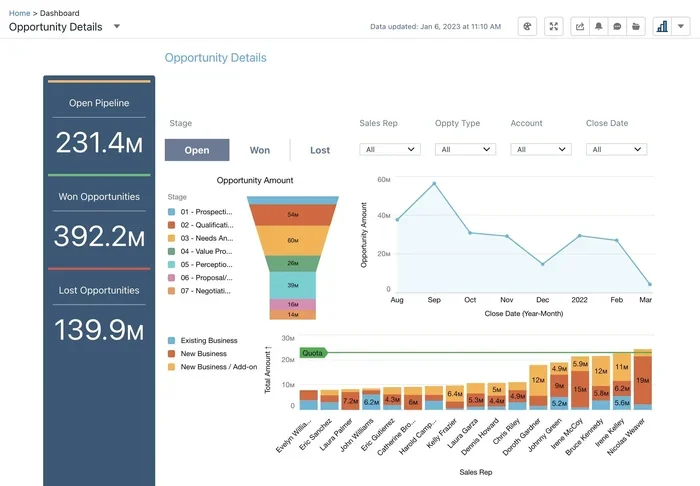
Sales forecasting is where analytical CRM tools really shine. By analyzing historical data and current pipeline trends, these tools can predict future revenue with impressive accuracy.
Instead of guessing how much you will sell next quarter, you can look at data-driven projections. The CRM analyzes past performance, seasonal trends, and current deal stages to give you a realistic forecast. This helps with budgeting, staffing, and strategic planning.
What sales forecasting tools can reveal:
- Likely revenue for the next month, quarter, or year
- Which deals are most likely to close
- Seasonal patterns in customer buying behavior
- The impact of marketing campaigns on pipeline velocity
- Team performance trends and coaching opportunities
Accurate forecasting reduces uncertainty. It gives leadership confidence to make bold moves. And it helps sales teams focus their energy on the opportunities that matter most.
Pipeline Analysis for Better Deal Management
Pipeline analysis is a core feature of CRM modeling. The tool examines every deal in your sales pipeline and assesses its likelihood of closing. It considers factors like deal size, stage duration, and historical conversion rates.
This means you can spot stalled deals early. You can also identify which stages of your pipeline need improvement. Maybe deals keep getting stuck in “negotiation” for too long. The data will show you that clearly.
Lead Scoring and Prioritization
Not all leads are created equal. Analytical CRM tools can score each lead based on its likelihood to convert. This is called lead scoring, and it is a game-changer for sales teams.
The tool looks at hundreds of signals to assign a score. These signals include demographics, engagement level, website behavior, and past interactions. A lead that has visited your pricing page three times and downloaded two white papers gets a higher score than someone who just signed up for a newsletter.
Benefits of lead scoring include:
- Faster sales cycles because reps focus on hot leads
- Higher conversion rates from better-targeted outreach
- Less wasted time on low-quality prospects
- Improved alignment between marketing and sales teams
- More consistent and predictable revenue growth
Lead scoring turns guesswork into a science. Your sales team spends time on the leads that matter most, and your marketing team gets feedback on what types of leads convert best.
Building an Effective Lead Scoring Model
To build a strong lead scoring model, start with your best existing customers. What traits do they share? What behaviors did they exhibit before buying? Use this information to define scoring criteria.
Then assign point values to different actions and attributes. A job title match might be worth 10 points. An email open might be worth 2 points. A demo request might be worth 25 points. Adjust these weights based on your data and refine over time.
Customer Lifetime Value and Retention Insights
Customer lifetime value, or CLV, is one of the most important metrics any business can track. Analytical CRM tools calculate CLV by analyzing purchase history, frequency, and customer longevity.
But these tools go even further. They can identify which customers are likely to have the highest lifetime value and which are at risk of leaving. This gives you the power to invest in the right relationships and prevent churn before it happens.
Key retention insights from CRM modeling:
- Which customer segments have the highest retention rates
- Early warning signs of customer dissatisfaction
- Impact of support interactions on long-term loyalty
- Relationship between purchase frequency and lifetime value
- Most effective win-back campaigns for lost customers
Retention is always cheaper than acquisition. By using CRM tools to keep your best customers happy, you protect your revenue and build a stronger brand over time.
Predicting Customer Churn
Churn prediction is one of the most valuable discoveries analytical CRM tools can make. The system analyzes patterns from customers who have left in the past and applies those patterns to your current base.
If a customer starts reducing their usage or stops opening emails, the tool flags them as at-risk. Your team can then reach out proactively with a personalized offer or check-in. This simple intervention can save a valuable customer relationship.
Marketing Optimization and Campaign Insights
Analytical CRM tools transform marketing from a guessing game into a precision science. They reveal exactly which campaigns work, which audiences respond, and which messages drive the best results.
By analyzing customer responses across different campaigns, the CRM can identify what resonates with each segment. Maybe your younger audience responds to video content while your enterprise clients prefer detailed case studies. The data makes this clear.
Marketing insights you can uncover:
- Highest-performing channels for each customer segment
- Optimal send times for email campaigns
- Content types that drive the most engagement
- ROI of different marketing campaigns and initiatives
- Customer acquisition cost by source and channel
These insights let you allocate your marketing budget more effectively. You stop wasting money on campaigns that do not work and double down on what does. The result is better performance and higher return on investment.
A/B Testing and Continuous Improvement
CRM modeling tools also support A/B testing at scale. You can test different subject lines, offers, or landing pages and let the CRM measure which version performs better.
Over time, this creates a continuous improvement loop. Each campaign teaches you something new. The CRM captures those lessons and applies them to future efforts. Your marketing gets smarter with every iteration.
Common Mistakes and How to Avoid Them
While analytical CRM tools are incredibly powerful, they are only as good as the data and strategy behind them. Here are common mistakes businesses make and how to avoid them.
Mistake 1: Ignoring data quality. Garbage in, garbage out. If your CRM data is messy or incomplete, your insights will be unreliable. Clean your data regularly and enforce entry standards.
Mistake 2: Over-relying on automation. Tools provide insights, but humans make decisions. Use the data to guide your strategy, not replace your judgment entirely.
Mistake 3: Not updating models regularly. Customer behavior changes over time. Your models need to be refreshed to stay accurate and relevant.
Mistake 4: Collecting data without a purpose. Do not track everything just because you can. Focus on the metrics that align with your business goals and drive real decisions.
Mistake 5: Siloing your data. Your CRM should integrate with other tools like marketing platforms and support systems. The more complete your data picture, the better your insights.
Final Thoughts
Analytical CRM modeling tools can discover a remarkable amount about your business and your customers. From behavior patterns and sales forecasts to churn predictions and marketing insights, these tools deliver value at every level of your organization.
The key is to use them intentionally. Set clear goals, maintain clean data, and review your insights regularly. When you do, analytical CRM tools become one of the most powerful assets in your business toolkit.
Start by identifying the questions you want answered. Then let your CRM modeling tools find the answers. The insights you uncover will help you make better decisions, serve your customers better, and grow your revenue more effectively.
Frequently Asked Questions
What is an analytical CRM modeling tool?
An analytical CRM modeling tool is a software system that analyzes customer data to uncover patterns, predict behaviors, and generate actionable insights. It goes beyond basic customer storage to interpret and model data for business intelligence.
How accurate are CRM-based sales forecasts?
Accuracy depends on data quality and model sophistication. Well-maintained CRM systems with clean historical data can produce forecasts that are remarkably accurate. Most businesses see significant improvement over guesswork-based planning.
Can small businesses benefit from CRM analytics?
Absolutely. Small businesses often have less data, but even modest datasets can reveal valuable patterns. CRM analytics help small teams prioritize leads, retain customers, and allocate marketing budgets more wisely.
Do I need technical skills to use analytical CRM tools?
Most modern CRM analytics platforms are designed for non-technical users. They offer intuitive dashboards and automated insights. However, understanding basic data concepts helps you get the most from these tools.
How long does it take to see results from CRM modeling?
Many businesses notice initial insights within a few weeks of consistent data collection. More advanced modeling like churn prediction and CLV analysis typically requires a few months of historical data to produce reliable results.
What data do CRM modeling tools need to work effectively?
The more data, the better. Key inputs include customer interactions, purchase history, website behavior, email engagement, support tickets, and demographic information. Clean, consistent data produces the most accurate insights.
=== CONCLUSION ===
Analytical CRM modeling tools can discover far more than most businesses realize. They reveal customer behavior patterns, predict future outcomes, and turn raw data into clear strategies. From lead scoring to churn prediction to marketing optimization, these tools touch every part of your business.
The real power comes from acting on what you discover. Insights without action are just numbers on a screen. Use what your CRM modeling tools tell you to make better decisions every day. Your customers will notice the difference, and your bottom line will reflect it too.
Start exploring what your analytical CRM tools can uncover today. The insights waiting in your data are worth the effort to extract them.