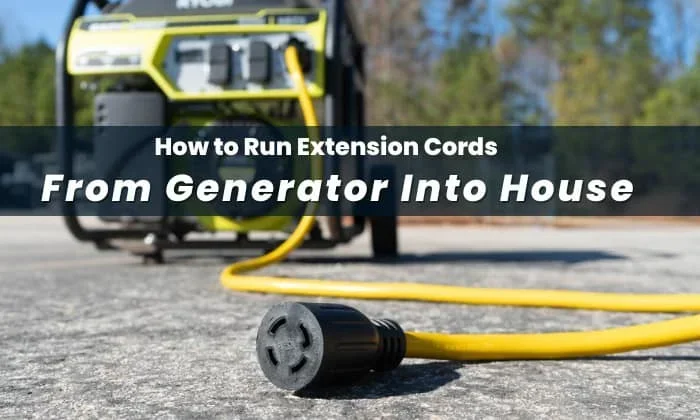
How to Run Extension Cord From Generator Into Your House
Running an extension cord from a generator into your house is one of the most practical ways to keep your home powered during an outage. This guide walks you through choosing the right cord, setting up a generator inlet box, and following every safety step. You will learn how to connect portable generator power to your home safely and avoid common mistakes that could damage your electrical system or put your family at risk.
Power outages happen when you least expect them. Storms knock down lines. Equipment fails. And suddenly, your refrigerator stops running, your lights go dark, and your heating system shuts off. When that happens, a portable generator can be a real lifesaver. But knowing how to connect it safely to your home is the part that trips up most people.
Running an extension cord from a generator into your house sounds simple. And in many ways, it is. But there is a right way and a very wrong way to do it. The wrong approach can damage your electrical system, start a fire, or even endanger the lives of utility workers. That is why this guide exists. We will walk you through every step of the process, from picking the right heavy-duty extension cord to making a safe and reliable connection.
Whether you are dealing with a brief power outage or you need temporary power for a job site, this article has you covered. We will break down the tools you need, the safety rules you must follow, and the mistakes you should avoid at all costs. Let us get started.
Key Takeaways
- Choose the right cord: Match the extension cord gauge and length to your generator’s wattage and the distance to your home.
- Use a generator inlet box: This provides a safe, weatherproof connection point for running power into your house.
- Never backfeed through a wall outlet: It is dangerous, illegal in many areas, and can electrocute utility workers.
- Place the generator outside: Always run your generator at least 20 feet from windows, doors, and vents to prevent carbon monoxide buildup.
- Check the grounding: Proper grounding protects your home and appliances from electrical surges and faults.
- Use a transfer switch for larger loads: An automatic or manual transfer switch makes generator power safer and more convenient.
- Inspect cords before every use: Damaged cords are a fire hazard and can cause serious electrical injuries.
📑 Table of Contents
- Why You Need to Know How to Run Extension Cord From Generator Into House
- Choosing the Right Extension Cord for Your Generator
- Setting Up the Generator Inlet Box
- Step-by-Step: How to Run the Extension Cord Safely
- Safety Tips and Common Mistakes to Avoid
- Using a Transfer Switch for a Safer Setup
- Expert Tips for Better Generator Performance
- Conclusion
Why You Need to Know How to Run Extension Cord From Generator Into House
Before we get into the how-to, let us talk about why this matters. A generator extension cord is not just any ordinary cord. It is a critical link between your generator and the devices you want to power inside your home. Getting this connection right means the difference between smooth, safe operation and a serious electrical hazard.
Here are the most common situations where people need to run power from a generator indoors:
- Storm-related power outages: When the grid goes down, a generator keeps your essentials running.
- Backup for medical equipment: Some households rely on generators to power life-saving devices.
- Home renovations: Temporary power on a job site when the main supply is off.
- Rural or remote properties: Homes that experience frequent or prolonged outages.
- Recreational and camping setups: Running appliances in cabins or RVs.
In every case, the goal is the same. You want safe, reliable home backup power without risking your safety or your electrical system. And the first step toward that goal is understanding the equipment involved.
Understanding Your Generator’s Power Output
Every generator has a wattage rating. This tells you how much electrical load it can handle at one time. Small portable generators might produce 3,000 to 5,000 watts. Larger ones can push 7,500 to 10,000 watts or more. Before you buy any cord, you need to know what your generator can deliver.
Check the label on your generator or read the owner’s manual. Look for the running watts and the starting watts. Running watts tell you the continuous power output. Starting watts tell you the extra burst needed when a motor kicks on, like in a refrigerator or air conditioner.
Make a list of the appliances you plan to run. Add up their wattage requirements. Then choose a generator and cord setup that exceeds your total load. This gives you a safety buffer and prevents the generator from overloading.
Choosing the Right Extension Cord for Your Generator
Picking the wrong cord is one of the most common mistakes people make. Not all extension cords are created equal. The one you use for a lamp in the living room is not the same one that can handle a portable generator running a refrigerator, sump pump, and heater at the same time.
What Is Cable Gauge and Why Does It Matter?
Cable gauge refers to the thickness of the wire inside the cord. The lower the number, the thicker the wire. Thicker wires carry more current without overheating. For generator use, you want to pay close attention to the cable gauge.
- 12-gauge wire: Handles up to about 20 amps. Good for medium loads over short distances.
- 10-gauge wire: Handles up to about 30 amps. Better for longer runs or heavier loads.
- 8-gauge wire: Handles up to about 40 amps. Best for long distances or high-wattage appliances.
As a rule of thumb, the longer the cord, the thicker the gauge you need. A 100-foot cord running 10-gauge wire will lose less voltage than a 100-foot cord running 16-gauge wire. Voltage drop means your appliances run less efficiently and your generator works harder.
Length Matters More Than You Think
Many people buy the shortest cord they can find. But a short cord forces you to place the generator very close to your home. This creates two problems. First, it puts the generator near windows and doors, increasing the risk of carbon monoxide poisoning. Second, it limits your placement options.
Aim for a cord that is long enough to place the generator at least 20 feet from your house. If you need more distance, consider using two cords of the same gauge connected together, or buy a single longer cord. Just never exceed the total recommended length for the gauge you are using.
Weatherproof and Outdoor-Rated Cords
Your extension cord will live outside. That means it needs to handle rain, dirt, UV rays, and temperature swings. Look for cords that are rated for outdoor use. They have thicker insulation and often come with a protective jacket around the wires.
A weatherproof connection is essential. Buy a cord with molded, grounded plug ends. Avoid cords with damaged or frayed insulation. Even a small crack in the outer jacket can let moisture in, which leads to short circuits and corrosion over time.
Quick Tip: Match Your Plug to Your Generator Outlet
Generators come with different outlet types. The most common are NEMA L14-20 and NEMA L14-30. These are locking plugs that prevent accidental disconnections. Make sure your extension cord has the matching plug end. A loose connection under load can arc, spark, and start a fire.
Setting Up the Generator Inlet Box
One of the best upgrades you can make for generator power is installing a generator inlet box. This is a weatherproof panel mounted on the outside of your house. It connects directly to your electrical panel and provides a safe, dedicated entry point for generator power.
What Is a Generator Inlet Box?
An inlet box looks like a metal box mounted near your main electrical panel. It has a special connector on the outside that accepts a generator cord. Inside, it connects to a dedicated circuit breaker. This setup eliminates the need to run cords through windows or doors.
The inlet box also includes a built-in grounding connection, which is critical for safety. It ensures that any stray electrical current has a safe path to the earth, protecting your home and your family.
How to Install a Generator Inlet Box
Installing an inlet box is a job for a licensed electrician if you are not comfortable working with your main electrical panel. Here is an overview of the process:
- Choose the location: Pick a spot on the exterior wall near your electrical panel. It should be high enough to avoid flooding and away from air conditioning units.
- Mount the box: Drill a hole through the wall for the conduit. Secure the inlet box to the exterior with screws and sealant.
- Run conduit inside: Pull electrical conduit from the inlet box to your main panel.
- Install a dedicated breaker: A qualified electrician will install a double-pole breaker sized for your generator’s output.
- Connect the wiring: The electrician connects the conduit wiring to the inlet box and the breaker.
- Test the connection: Once installed, test the inlet box with your generator to make sure everything works safely.
An inlet box is especially valuable if you plan to use a transfer switch. More on that in a moment.
Step-by-Step: How to Run the Extension Cord Safely
Now let us walk through the actual process of running your generator extension cord into the house. Follow these steps carefully every single time.
Step 1: Place the Generator Outdoors
Start by positioning your generator outside. It must be at least 20 feet from any window, door, vent, or air intake. Carbon monoxide is an invisible, odorless gas that can kill you in minutes. Never run a generator indoors, in a garage, or in a covered porch.
Place the generator on a level, dry surface. Use a generator cover or canopy if rain is expected, but never let the cover touch the generator while it is running. Keep the exhaust pointed away from your home and any neighboring windows.
Step 2: Prepare the Extension Cord
Before you connect anything, inspect the cord. Look for cuts, abrasions, exposed wires, or damaged plugs. If you find any damage, do not use the cord. Replace it immediately.
Uncoil the cord fully before plugging it in. A coiled cord can overheat because the heat has nowhere to dissipate. Lay it out in a straight line or in large loops on the ground.
Step 3: Connect the Cord to the Generator
Plug the generator end of the cord into the generator outlet. If it is a locking plug, turn it clockwise until it clicks into place. Make sure the connection is firm and secure.
Start the generator and let it run for a minute or two. Listen for unusual sounds. Check that the voltage output is stable. You can use a multimeter to verify the output if you want to be thorough.
Step 4: Route the Cord Into the House
Now comes the part that requires some planning. You need to get the cord from the generator, through a window or door, or into the inlet box. Here are your options:
- Through a window: Open the window as wide as possible. Thread the cord through carefully. Use a cord protector or a piece of rubber hose on the windowsill to prevent the cord from getting pinched or cut.
- Through a door: This works well for short-term use. Keep the door sealed as much as possible to maintain indoor temperature. Use a weatherstrip or towel to block the gap.
- Through an inlet box: This is the safest and most permanent option. Plug the cord into the inlet box connector on the outside of the house.
Never run a cord through a wall. This is extremely dangerous and violates electrical codes. The cord must always remain accessible and visible so you can inspect it for damage.
Step 5: Connect to Your Appliances
Once the cord is inside, plug in your appliances one at a time. Start with the most essential items first, like a refrigerator or a space heater. Check the total load against your generator’s capacity.
If you are using multiple appliances, stagger their startup. Motors like those in refrigerators and air conditioners draw a surge of power when they first turn on. If too many surge at the same time, the generator will trip its breaker or shut down.
Step 6: Monitor Everything
Once your system is running, do not just walk away. Check the generator regularly. Listen for unusual sounds. Feel the cord for heat. Watch the generator’s voltage and frequency gauges if it has them.
Keep the area around the generator clear of debris, children, and pets. Never refuel a generator while it is running. Turn it off and let it cool for at least two minutes before adding fuel.
Safety Tips and Common Mistakes to Avoid
Safety is the most important part of any generator setup. The following tips will help you avoid serious injuries and property damage.
Common Mistakes People Make
- Backfeeding through a wall outlet: This is the number one mistake. Plugging a generator into a wall outlet sends power backward through your wiring. It can energize lines that utility workers think are dead. This can kill them. It is also illegal in most jurisdictions and will void your homeowner’s insurance.
- Overloading the generator: Plugging in too many appliances at once can overload the generator. This causes it to shut down or, worse, overheat and start a fire.
- Using an indoor-rated cord: Indoor cords are not designed for outdoor conditions. They degrade quickly when exposed to moisture and UV light.
- Ignoring grounding: A generator that is not properly grounded can cause electrical shocks and damage to your appliances.
- Placing the generator too close to the house: This increases the risk of carbon monoxide entering your home through vents and open windows.
- Running the cord under rugs or through doorways: This traps heat and can melt the cord insulation, creating a fire hazard.
Quick Safety Tips
- Always keep a fire extinguisher near the generator.
- Install carbon monoxide detectors on every floor of your home.
- Use a surge protector for sensitive electronics like computers and televisions.
- Turn off all connected appliances before starting the generator.
- Let the generator warm up for a minute before plugging in loads.
- Store fuel in an approved container, away from the generator and any heat sources.
Using a Transfer Switch for a Safer Setup
If you plan to use your generator frequently, consider installing a transfer switch. This is a device installed between your generator and your main electrical panel. It lets you switch your home’s power source from the utility grid to the generator safely.
There are two main types of transfer switches:
- Manual transfer switch: You flip a switch by hand to select the generator as the power source. These are affordable and work well with portable generators.
- Automatic transfer switch: This device detects a power outage and switches to generator power automatically. It is more expensive but extremely convenient, especially if you are away from home during an outage.
A transfer switch eliminates the need to run extension cords through windows. It also prevents backfeeding, which makes your setup safer for everyone. If you have a whole-house generator or plan to run multiple circuits, a transfer switch is practically essential.
| Feature | Manual Transfer Switch | Automatic Transfer Switch |
|---|---|---|
| Price Range | $300 – $800 | $800 – $2,500+ |
| Installation | DIY possible with electrical knowledge | Requires licensed electrician |
| Convenience | Manual switching required | Switches automatically during outage |
| Compatibility | Portable and standby generators | Best with standby generators |
| Safety | Prevents backfeeding | Prevents backfeeding |
| Best For | Occasional use and budget setups | Frequent outages and whole-home power |
Expert Tips for Better Generator Performance
Even experienced generator users can improve their setup. Here are some expert-backed tips that will make your generator extension cord setup safer and more efficient.
Use a Power Management Strategy
Most generators cannot power everything in your house at once. Create a priority list of what you need most. Essentials like refrigerators, medical equipment, and a few lights should come first. Non-essentials like the TV or gaming console can wait.
Many modern generators come with a power management system. This feature automatically shuts off lower-priority circuits when the generator is under heavy load. It then brings them back online when the load decreases. If your generator has this feature, use it.
Keep Your Generator Maintained
A well-maintained generator performs better and lasts longer. Change the oil regularly. Replace the air filter when it gets dirty. Use fresh fuel and add a fuel stabilizer if you store the generator for long periods.
Run your generator for at least 15 minutes once a month, even when you do not need it. This keeps the engine lubricated and the battery charged. It also gives you a chance to spot problems before an emergency.
Invest in a Good Quality Cord
A cheap extension cord might save you $20 upfront, but it could cost you much more in the long run. A high-quality outdoor extension cord with heavy-duty insulation and gold-plated connectors will last for years and perform much more reliably.
Look for cords that are rated for outdoor use, have a grounding pin, and carry a warranty. Brands like Coleman, Southwire, and Flexzilla make excellent generator cords in a range of lengths and gauges.
Label Your Cords and Connections
This is a simple habit that pays off big. Label each end of your extension cord. Mark which generator outlet it plugs into and which appliances it powers. This saves time during an outage and prevents accidental overloads.
Key Takeaways
- Match cord gauge to load: Thicker cords handle more power safely.
- Keep cords fully uncoiled: Coiled cords overheat quickly.
- Inspect before every use: Damaged cords are a serious hazard.
- Use a transfer switch when possible: It makes your setup safer and more convenient.
- Maintain your generator regularly: A well-kept generator is a reliable generator.
Conclusion
Knowing how to run extension cord from generator into house safely is one of the most valuable skills a homeowner can have. Power outages are unpredictable, but your preparation does not have to be. With the right cord, the right setup, and the right safety habits, you can keep your home running smoothly even when the grid goes down.
Start by choosing a heavy-duty extension cord that matches your generator’s output. Install a generator inlet box if you want a permanent, weatherproof connection. Always place the generator outside and at least 20 feet from your home. Never backfeed through a wall outlet. And if you want the ultimate setup, invest in a transfer switch.
Take the time to learn your equipment. Practice the setup before you actually need it. That way, when the next power outage hits, you will be ready. Your home, your family, and your peace of mind will all thank you for it.
Stay safe, stay prepared, and never underestimate the value of a little planning ahead.
Frequently Asked Questions
Can I run an extension cord from a generator directly into my house through a window?
Yes, you can run a generator cord through a window temporarily. Open the window as wide as possible, thread the cord through carefully, and use a cord protector on the windowsill to prevent pinching. Never run the cord through a wall or permanently seal a window around the cord. This method is fine for short-term use but an inlet box or transfer switch is a safer long-term solution.
What size extension cord do I need for a 7500-watt generator?
For a 7500-watt generator running at 240 volts, you will need a 30-amp capable cord, which means a 10-gauge wire. If you are running at 120 volts, the current doubles and you should use an 8-gauge wire. Always match the cord’s amperage rating to your generator’s output and the total load of the appliances you plan to run.
Is it safe to leave a generator running overnight with an extension cord?
Yes, it can be safe if you follow all precautions. Place the generator at least 20 feet from your home with the exhaust pointing away from windows and vents. Make sure the extension cord is fully uncoiled, rated for outdoor use, and in good condition. Use carbon monoxide detectors inside your home and never let the cord run under rugs or through doorways where heat can build up.
Do I need a transfer switch to run a generator into my house?
You do not legally or technically need a transfer switch to use an extension cord. However, a transfer switch makes your setup significantly safer by preventing backfeeding and allowing you to power hardwired systems like your furnace or well pump. If you plan to use your generator regularly, a transfer switch is a smart investment.
Can I connect two extension cords together to reach my house from the generator?
You can connect two cords of the same gauge together, but it is not ideal. Every connection point adds resistance, which can cause heat buildup and voltage drop. If you must daisy-chain cords, make sure both are the same gauge, keep the connection off the ground on a dry, elevated surface, and never exceed the total recommended length for the gauge. A single longer cord is always the better choice.
What happens if I overload my generator with too many appliances?
If you overload the generator, it will either trip its internal breaker and shut down, or the engine will stall. Repeated overloading can damage the generator’s windings, shorten its lifespan, and create a fire hazard. Always check the total wattage of your connected appliances against the generator’s rated output before turning anything on.