What Can a 7500 Watt Generator Run During an Outage
A 7500 watt generator is one of the most versatile portable power solutions for home backup. It can handle essential household appliances like refrigerators, sump pumps, and window air conditioners with ease. This guide explains exactly what a 7500 watt generator can run, how to calculate your power needs, and how to use it safely during an outage.
Power outages can strike without warning. Storms, equipment failures, and grid overloads all leave homes in the dark. When the lights go out, a 7500 watt generator becomes your best friend. But what can a 7500 watt generator run, really? That is the question most homeowners ask before buying one.
This guide breaks it all down in simple terms. You will learn exactly which appliances and tools a 7500 watt generator can handle. We will cover starting wattage, running wattage, and how to avoid common mistakes. By the end, you will feel confident about your backup power setup.
Whether you live in a house or a small apartment, a portable generator with this wattage offers serious flexibility. Let us dive into the details and help you make the most of your backup power during any outage.
Key Takeaways
- Versatile Power Range: A 7500 watt generator can run most essential home appliances and several heavy-duty tools simultaneously.
- Know Your Wattage: Understanding starting wattage versus running wattage is key to avoiding overloads and tripped breakers.
- Essential Appliances Covered: Refrigerators, freezers, sump pumps, window AC units, and lights are all within reach.
- Safety Matters: Always use proper ventilation, transfer switches, and ground fault protection when operating your generator.
- Fuel Efficiency Counts: Running only what you need extends runtime and saves on generator fuel costs.
- Plan Before the Outage: Make a priority list of appliances so you can manage your electrical load effectively.
📑 Table of Contents
- What a 7500 Watt Generator Can Power
- How to Calculate Your Power Needs
- Essential Household Appliances a 7500 Watt Generator Can Run
- Heavy-Duty Items a 7500 Watt Generator Can Handle
- Tips for Running a 7500 Watt Generator Safely
- Common Mistakes to Avoid
- Comparison: What Different Generator Sizes Can Run
- Final Thoughts on What a 7500 Watt Generator Can Run
What a 7500 Watt Generator Can Power
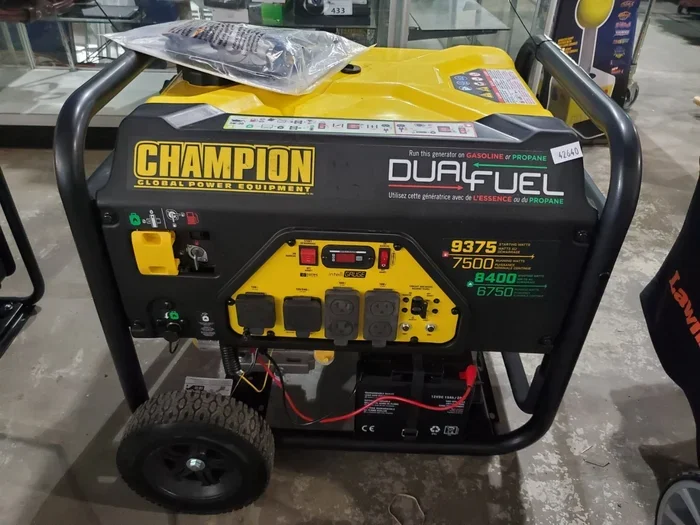
A 7500 watt generator sits in a sweet spot for most households. It is big enough to handle major appliances but small enough to remain portable. Most models run on gasoline or propane, and many offer dual fuel options. This makes them convenient for different situations.
The key to understanding what a 7500 watt generator can run lies in two numbers: starting wattage and running wattage. Starting wattage is the burst of power needed to kick on a motor. Running wattage is the steady power needed to keep it going. Many appliances need more power to start than to run. This is especially true for refrigerators and air conditioners.
Here is a quick look at what a 7500 watt generator can typically handle:
- Refrigerator and freezer combined
- Sump pump or sewage ejector pump
- Window air conditioner (mid-size)
- Electric water heater (in some cases)
- Lights throughout the house
- Microwave and small kitchen appliances
- Phone chargers, laptops, and TVs
- Power tools like circular saws and drills
- Well pump (small to medium)
The beauty of a 7500 watt generator is that you do not have to choose just one thing. You can run several items at once. Just make sure your total wattage stays within the generator’s capacity. We will talk more about that in the next section.
Starting vs. Running Wattage Explained
Starting wattage (also called surge wattage) matters a lot. A refrigerator compressor might need 2200 watts to start but only 700 watts to keep running. An air conditioner compressor might spike to 3000 watts on startup. If you do not account for this, your generator will trip or fail to start the appliance.
Always check the label on each appliance. It will list both starting and running watts. Add up your starting watts for all items you want to run at the same time. Make sure that number stays under 7500. Then do the same for running watts. This two-step check keeps your generator safe and efficient.
How to Calculate Your Power Needs
Before a storm hits, sit down and make a list. Write down every appliance you want to keep running during an outage. Next to each item, note its wattage. This simple step saves you from guesswork and prevents overloads.
Here is a basic formula to follow:
- List every device you plan to use at the same time.
- Find the starting wattage for each device.
- Find the running wattage for each device.
- Add up all starting watts. This is your peak load.
- Add up all running watts. This is your continuous load.
- Make sure both numbers stay under 7500 watts.
Most households do not need all 7500 watts at once. A typical home during an outage might run a refrigerator, a few lights, a sump pump, and a phone charger. That totals around 3000 to 4000 watts. This leaves plenty of room to spare.
If you plan to run a central air conditioner, a 7500 watt generator may not be enough. Central AC units often need 5000 watts or more just to start. You would need a larger generator for that. But a window unit or a portable AC works great with this size machine.
Quick Power Calculation Tips
- Use a watt meter to get real-time readings of your appliances.
- Round up when estimating. Better safe than sorry.
- Prioritize essentials first, like food preservation and sump pumps.
- Skip non-essentials like gaming consoles or extra TVs to save power.
- Check your generator’s fuel tank size. Larger tanks mean longer runtime at lower loads.
Essential Household Appliances a 7500 Watt Generator Can Run
When an outage hits, keeping your food cold and your home dry matters most. A 7500 watt generator handles these core household needs with ease. Let us look at the most common appliances homeowners rely on during blackouts.
Refrigerator and Freezer
A standard refrigerator uses about 700 watts to run and needs around 2200 watts to start. A freezer uses similar numbers. Running both together on a 7500 watt generator is no problem. In fact, you will still have plenty of power left over for other items.
Pro tip: Keep your fridge and freezer full during an outage. A full freezer holds its temperature longer. This reduces the runtime your generator needs to support them.
Sump Pump
If your basement is prone to flooding, a sump pump is non-negotiable during storms. Most sump pumps draw between 1300 and 1500 watts to start and about 800 watts to run. A 7500 watt generator can handle this easily, even if you are running other items at the same time.
Lights and Small Electronics
LED lights use very little power. A 10-watt LED bulb barely registers on your generator’s load. You can run dozens of LED lights across your home and still have capacity for other essentials. Incandescent bulbs use more, so switching to LED is a smart move during outages.
Phone chargers, laptops, tablets, and Wi-Fi routers all draw minimal wattage. You can keep everyone connected without stressing your generator.
Window Air Conditioner
A mid-size window AC unit (around 5000 BTU) draws about 1200 to 1500 watts to run. The starting surge is higher, usually around 3000 to 3500 watts. A 7500 watt generator handles this comfortably, especially if you are not running other high-draw items at the same time.
If you need to cool a larger room, a 10000 BTU unit might work too. Just check the wattage on the label first. Some larger units push closer to the generator’s limit.
Heavy-Duty Items a 7500 Watt Generator Can Handle
Beyond household essentials, a 7500 watt generator can power some serious tools and equipment. This makes it a great choice for homeowners who also need backup power for workshops, garages, or job sites.
Power Tools
Many common power tools work well on a 7500 watt generator. Here are some examples:
- Circular saw: About 1400 to 1800 watts starting, 1200 to 1400 running
- Drill press: Around 1000 to 1500 watts starting, 600 to 800 running
- Table saw: About 2000 to 2400 watts starting, 1500 to 1800 running
- Air compressor: Around 1600 to 2000 watts starting, 1000 to 1300 running
- Welder (small): About 3000 to 4000 watts starting, 2000 to 3000 running
You probably cannot run all of these at the same time. But you can run a circular saw and a drill at the same time without any issues. Just be mindful of your total load.
Well Pump
If your home uses a well for water, a generator is critical during outages. A standard submersible well pump draws about 2000 to 2500 watts to start and 1000 to 1500 watts to run. A 7500 watt generator handles this easily, leaving room for other household needs.
Microwave and Cooking Appliances
A standard microwave uses about 1000 to 1200 watts to run. It needs a similar surge to start. You can run a microwave alongside a refrigerator and a few lights without any trouble on a 7500 watt generator.
Electric stoves and ovens are a different story. They draw a massive amount of power and are generally not suitable for a generator of this size. Stick to microwave cooking during outages if you are relying on a 7500 watt generator.
Tips for Running a 7500 Watt Generator Safely
Safety should always come first when using a backup generator. A 7500 watt generator provides excellent power, but it must be used correctly. Follow these tips to keep your home and family safe.
Always Use a Transfer Switch
A transfer switch connects your generator directly to your home’s electrical panel. It prevents backfeed, which is when electricity flows back into the grid. Backfeed can be deadly for utility workers. A transfer switch also protects your generator and appliances from damage.
If you do not have a transfer switch, use heavy-duty extension cords rated for outdoor use. Plug appliances directly into the generator one at a time if needed.
Place the Generator Outdoors
Never run a generator inside your home, garage, or shed. Generators produce carbon monoxide, which is odorless and deadly. Place the unit at least 20 feet from your house with the exhaust pointing away from windows and doors.
Use Proper Grounding
Ground your generator according to the manufacturer’s instructions. This protects against electrical shock and ensures stable power delivery. Use a grounding rod and follow all local electrical codes.
Monitor Fuel Levels
Check your fuel level regularly during extended outages. Most 7500 watt generators run for 8 to 12 hours on a full tank at moderate load. Keep extra fuel on hand, but store it safely in approved containers away from heat sources.
Let the Generator Warm Up
Before plugging in appliances, let the generator run for a minute or two. This allows the engine and voltage to stabilize. Plugging in devices too early can cause power surges that damage sensitive electronics.
Common Mistakes to Avoid
Even experienced generator users make mistakes. Here are the most common ones and how to avoid them.
Overloading the Generator
The biggest mistake is plugging in too many devices at once. If your total wattage exceeds 7500, the generator will trip its breaker or shut down. Worse, it can damage your appliances or the generator itself. Always do the math before turning anything on.
Ignoring Starting Wattage
Many people only look at running watts and forget about starting surge. This leads to surprise overloads when a refrigerator compressor kicks on. Always account for the starting wattage of motor-driven appliances.
Running the Generator Out of Fuel
Letting the generator run dry can damage the carburetor and fuel system. Refuel when the tank hits a quarter full, and always turn off the generator before adding fuel.
Using Damaged Cords or Cables
Frayed or damaged extension cords are a fire hazard. Inspect all cords before use and replace any that show wear. Use cords rated for the amperage of the devices you are powering.
Skipping Regular Maintenance
A generator that sits unused for months may not start when you need it most. Run your generator under load for at least 15 minutes every few months. Change the oil, check the spark plug, and replace the air filter as recommended by the manufacturer.
Comparison: What Different Generator Sizes Can Run
Not sure if a 7500 watt generator is right for you? Here is how it compares to other common sizes.
| Generator Size | Typical Uses | Best For |
|---|---|---|
| 3000-4000 Watts | Lights, phone charging, small fridge | Camping, RVs, minimal backup |
| 5000-6000 Watts | Fridge, sump pump, a few lights | Small homes, apartments |
| 7500 Watts | Fridge, AC, sump pump, tools, lights | Most homes during outages |
| 10000+ Watts | Central AC, well pump, full house | Large homes, job sites |
A 7500 watt generator offers the best balance of power and portability. It covers most household essentials and several heavy-duty tools. For many families, it is the ideal size for outage preparedness.
Final Thoughts on What a 7500 Watt Generator Can Run
A 7500 watt generator is a reliable, versatile, and practical choice for backup power. It can handle the essentials like refrigerators, sump pumps, and lights. It can also power heavy-duty tools and a window air conditioner when needed.
The key is understanding your power needs and planning ahead. Know the starting and running wattage of every appliance you plan to use. Keep your total load within the generator’s capacity. And always follow safety guidelines to protect yourself and your equipment.
With the right setup and a little preparation, a 7500 watt generator keeps your home running smoothly during any outage. It gives you peace of mind and real practical value when you need it most. Invest in one today, and you will never worry about losing power again.
Frequently Asked Questions
Can a 7500 watt generator run a central air conditioner?
Most central AC units require more than 7500 watts to start, especially larger models. A 7500 watt generator works well with window units or portable ACs. Check the starting wattage on your AC unit before connecting it to any generator.
How long can a 7500 watt generator run continuously?
Runtime depends on the fuel tank size and load. Most models run 8 to 12 hours at 50% load. Running the generator at full capacity reduces runtime significantly. Always keep extra fuel on hand for extended outages.
Is a 7500 watt generator loud?
Noise levels vary by model and brand. Standard generators run around 70 to 80 decibels. Inverter generators in this wattage range are quieter, often around 60 decibels. Look for models with sound-dampening features if noise is a concern.
Can I run a 7500 watt generator in the rain?
You should never operate a generator in wet conditions. Water and electricity are a dangerous combination. Use a generator tent or canopy designed for this purpose. Always place the generator on a dry, level surface outdoors.
What fuel does a 7500 watt generator use?
Most 7500 watt generators run on gasoline. Many models also offer dual fuel capability, allowing you to use propane or natural gas. Dual fuel options give you more flexibility and longer runtime options during extended outages.
Do I need a permit to install a 7500 watt generator?
Permit requirements vary by location and local building codes. Many areas require an electrical permit for generator installation, especially if you use a transfer switch. Check with your local building department before installing your generator.