Oil Free Screw Air Compressor Ultimate Buyer Guide
An oil free screw air compressor delivers clean, contamination-free compressed air without any lubricating oil in the compression chamber. This guide covers everything you need to know, from how these machines work and their key benefits to buying tips and maintenance advice. Whether you run a food processing plant or a small workshop, you will find practical insights to make the right choice.
If you are shopping for a compressor, you have probably come across the term oil free screw air compressor more than once. And that is not by accident. These machines are rapidly becoming the go-to choice for businesses that need clean, reliable compressed air. Whether you are in food production, pharmaceuticals, or electronics manufacturing, the quality of your air supply matters more than you might think.
But what exactly makes an oil free screw air compressor different from a traditional compressor? Why should you care? And how do you pick the right one for your needs? This buyer guide answers all of those questions and more. We will walk you through how these machines work, what makes them special, and what to look for before you buy.
The goal here is simple. Give you the knowledge you need to make a confident purchasing decision. No fluff. No confusing jargon. Just clear, practical advice from someone who has done the homework for you.
Key Takeaways
- Oil free means cleaner air: These compressors eliminate oil contamination risks, making them ideal for sensitive industries like food and pharmaceuticals.
- Lower maintenance costs: Without oil in the compression chamber, you spend less on oil changes and fewer parts replacements.
- Energy efficient designs: Modern oil free screw compressors use advanced technology to reduce energy consumption and operating costs.
- Longer lifespan potential: Proper maintenance can extend the life of an oil free compressor significantly compared to oil-lubricated models.
- Quieter operation: Many oil free models run quieter than their oil-lubricated counterparts, improving the workplace environment.
- Higher upfront cost: The initial purchase price is often higher, but long-term savings offset this investment.
- Right sizing matters: Choosing the correct capacity and pressure rating ensures optimal performance and avoids unnecessary energy waste.
📑 Table of Contents
- What Is an Oil Free Screw Air Compressor?
- How Does an Oil Free Screw Air Compressor Work?
- Benefits of an Oil Free Screw Air Compressor
- Oil Free vs Oil Lubricated Screw Compressors
- Key Features to Look For When Buying
- Common Applications and Industries
- Maintenance Tips for Longevity
- Common Mistakes to Avoid
- Expert Insights
- Conclusion
What Is an Oil Free Screw Air Compressor?
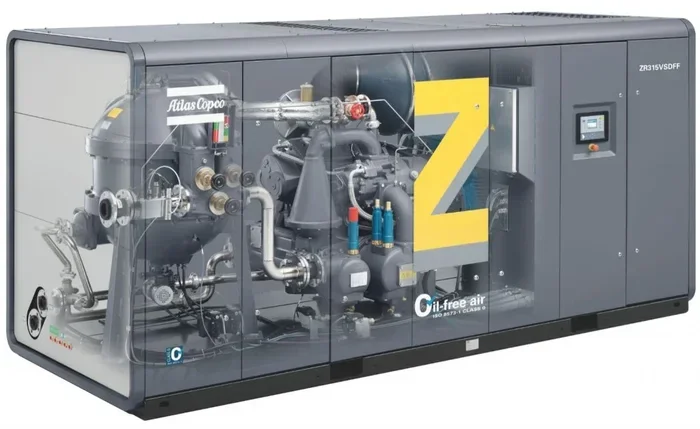
An oil free screw air compressor is a type of rotary compressor that compresses air without using any oil inside the compression chamber. Traditional screw compressors rely on oil for lubrication and cooling. But oil free models use specially designed screws and advanced materials to handle compression dry. The result is air that is completely free of oil contamination.
These machines use a twin-screw mechanism. Two interlocking rotors spin to trap and compress air. Because there is no oil involved in the compression process, the air that comes out is pure and clean. This is a big deal for industries where even tiny amounts of oil contamination can ruin products or damage equipment.
How Is It Different from Other Compressors?
Not all compressors are created equal. Piston compressors, for example, use a different mechanism entirely. And even among rotary screw compressors, there is a clear divide between oil-lubricated and oil free models. An oil-lubricated screw compressor uses oil to seal, cool, and lubricate the compression chamber. An oil free model skips the oil entirely. This fundamental difference affects everything from air quality to maintenance requirements.
When people talk about oil free compressed air, they mean air that contains zero oil particles. This is measured in parts per million (PPM). Oil free compressors deliver air with the lowest possible oil content, often meeting strict international standards like ISO 8573-1 Class 0.
How Does an Oil Free Screw Air Compressor Work?
Understanding how an oil free screw air compressor works does not require an engineering degree. Let us break it down into simple steps.
First, air enters the compressor through an intake valve. The twin rotors, which are male and female, begin to rotate. As they turn, the air gets trapped between the rotors and the compressor housing. The space between the rotors gets smaller as they continue to turn. This reduces the volume of air and increases the pressure. That is compression in its simplest form.
Since there is no oil inside the chamber, the compressor relies on other methods to manage heat. Water cooling or air cooling systems handle the thermal load. Some models use special coatings on the rotors to reduce friction and wear without oil. This is a clever engineering solution that keeps the machine running smoothly over thousands of hours of operation.
The Role of Timing Gears
One key component in an oil free screw compressor is the timing gear system. These gears ensure the male and female rotors maintain the correct clearance at all times. Without oil acting as a cushion, precise tolerances are critical. The timing gears keep everything aligned and prevent the rotors from touching each other. This is what allows the compressor to run dry without causing damage.
Benefits of an Oil Free Screw Air Compressor
There are many reasons businesses choose an oil free rotary screw compressor over traditional options. Let us look at the biggest advantages.
Cleaner Air for Sensitive Applications
The most obvious benefit is clean air. No oil means no risk of oil carrying over into your production process. This is essential in food and beverage processing, pharmaceutical manufacturing, and electronics assembly. Even trace amounts of oil can contaminate products, leading to costly recalls or failed quality inspections.
Reduced Maintenance Costs
When there is no oil in the compression chamber, you eliminate an entire category of maintenance tasks. No oil changes. No oil filters to replace. No dealing with oil disposal. Over time, this adds up to significant savings. Your maintenance team can focus on other important tasks instead of managing oil systems.
Better Energy Efficiency
Modern oil free screw compressors are designed with energy efficiency in mind. Many models feature variable speed drives (VSD) that adjust motor speed based on demand. This means the compressor only uses the energy it actually needs. Over a year of continuous operation, the energy savings can be substantial.
Longer Equipment Lifespan
Without oil degradation and carbon buildup, internal components last longer. The rotors and bearings experience less wear over time. With proper maintenance, an oil free compressor can serve your facility reliably for many years. Some well-maintained units run for 15 years or more.
Quieter Operation
Many users report that oil free models run quieter than oil-lubricated ones. The absence of oil circulation pumps and the precision engineering of the rotor clearances contribute to lower noise levels. This is a welcome benefit for facilities where noise reduction matters for worker comfort and safety.
Oil Free vs Oil Lubricated Screw Compressors
Choosing between an oil free and an oil lubricated compressor is one of the most important decisions you will make. Let us compare them side by side.
| Feature | Oil Free Screw Compressor | Oil Lubricated Screw Compressor |
|---|---|---|
| Air Quality | Zero oil in compressed air | Trace oil may be present |
| Maintenance | Lower maintenance needs | Regular oil changes required |
| Upfront Cost | Higher initial price | Lower purchase price |
| Operating Cost | Lower long-term costs | Higher due to oil and filters |
| Lifespan | Longer with proper care | Shorter due to oil degradation |
| Noise Level | Generally quieter | Slightly louder |
| Energy Efficiency | Often more efficient | Good, but varies by model |
| Best For | Clean air requirements | Heavy-duty industrial use |
As you can see from the comparison, the oil free air compressor has clear advantages in air quality and long-term cost savings. However, oil-lubricated compressors still hold their place in heavy-duty applications where raw power and lower upfront cost are the top priorities.
When to Choose Oil Free
Choose an oil free model if your industry requires clean air. This includes food processing, beverage bottling, pharmaceutical manufacturing, electronics assembly, and medical facilities. If your operations cannot tolerate any risk of oil contamination, going oil free is the right call.
When Oil Lubricated Makes Sense
Oil lubricated compressors work well for general industrial applications where air quality is less critical. Mining, construction, and heavy manufacturing often use oil-lubricated models. The lower upfront cost and high durability make them practical for these environments.
Key Features to Look For When Buying
Not all oil free screw compressors are the same. Before you buy, consider these important features carefully.
Pressure Rating and Capacity
Check the pressure rating, usually measured in bar or PSI. Match it to your equipment requirements. If your tools need 8 bar, buying a compressor rated for 10 bar gives you a comfortable margin. Similarly, look at the free air delivery (FAD) rating, measured in cubic feet per minute (CFM) or cubic meters per hour. This tells you how much air the compressor can supply at full capacity.
Variable Speed Drive Technology
A VSD or variable speed drive is a game changer. It allows the compressor to adjust its motor speed based on air demand. When your air usage drops, the compressor slows down and uses less energy. This is one of the smartest investments you can make in an oil free compressor today.
Cooling System
Since there is no oil to absorb heat, the cooling system in an oil free compressor is critical. Look for models with efficient water cooling or advanced air cooling systems. A good cooling setup prevents overheating and extends the life of your machine.
Duty Cycle Rating
The duty cycle tells you how long the compressor can run continuously without overheating. For facilities that need continuous air supply, look for a 100% duty cycle rating. Intermittent duty models are fine for workshops with periodic use.
Noise Level
If your compressor will be in an occupied workspace, pay attention to the noise rating measured in decibels (dB). Many modern oil free models are designed for quiet operation, often staying below 70 dB. This makes a real difference for worker comfort and productivity.
After-Sales Support and Warranty
Do not overlook the importance of good after-sales support. A solid warranty and responsive service team can save you thousands in unexpected repair costs. Look for manufacturers with a strong reputation for reliability and customer service.
Common Applications and Industries
The versatility of an oil free screw air compressor makes it suitable for a wide range of applications. Let us explore where these machines shine.
Food and Beverage Industry
In food processing, air comes into direct or indirect contact with products. Any oil contamination can ruin entire batches and create serious health risks. Oil free compressors ensure that the compressed air used in packaging, mixing, and conveying meets strict food safety standards.
Pharmaceutical Manufacturing
Pharmaceutical production requires the purest possible air. Even microscopic oil particles can compromise drug quality and safety. Oil free compressors with ISO Class 0 certification are the standard in this industry.
Electronics and Semiconductor Manufacturing
Clean rooms in electronics manufacturing demand ultra-pure air. Oil contamination can damage sensitive components and reduce product yield. Oil free compressors provide the clean air supply these environments need.
Automotive and Painting
Automotive paint shops require oil free air to ensure a flawless paint finish. Even tiny oil particles can cause surface defects like fish eyes or roughness. An oil free compressor delivers the clean, dry air that high-quality paint jobs demand.
Medical and Dental Facilities
Hospitals and dental clinics use compressed air for medical instruments and patient care. The air must be completely free of oil, moisture, and contaminants. Oil free compressors are the standard choice for these critical environments.
Maintenance Tips for Longevity
An oil free screw air compressor is a significant investment. Proper maintenance keeps it running efficiently for years. Here are some practical tips.
- Check the intake filters regularly. Clogged filters reduce airflow and force the compressor to work harder. Replace them on schedule.
- Monitor the cooling system. Keep the cooling fins and fans clean. Overheating is one of the top causes of premature failure.
- Inspect the timing gears. The timing gears keep the rotors aligned. Check for wear and replace them when needed.
- Drain the condensate. Even without oil, moisture can build up in the system. Use an automatic drain valve or drain manually.
- Keep the area around the compressor clean. Good ventilation around the unit prevents heat buildup and extends component life.
- Follow the manufacturer service schedule. Stick to the recommended maintenance intervals. Skipping service leads to unexpected breakdowns.
Quick Tip: Keep a maintenance log for your compressor. Recording service dates, filter changes, and any issues helps you spot patterns and prevent problems before they become expensive repairs.
Common Mistakes to Avoid
Even experienced buyers make mistakes when purchasing an oil free compressor. Here are the most common ones to watch out for.
Undersizing the compressor. Choosing a unit that is too small for your needs leads to constant running at full capacity. This increases wear and energy costs. Always calculate your total air demand before buying.
Ignoring the duty cycle. A compressor rated for intermittent duty will overheat if you run it continuously. Make sure the duty cycle matches your actual usage pattern.
Skipping the aftercooler. Compressed air comes out hot. Without proper aftercooling, moisture condenses and can damage your equipment. Invest in a good aftercooler or dryer.
Choosing price over total cost of ownership. The cheapest compressor often turns out to be the most expensive in the long run. Factor in energy costs, maintenance, and expected lifespan when comparing options.
Neglecting air treatment. Even with an oil free compressor, your air supply may contain moisture and particulates. Use proper filters, dryers, and separators to ensure the highest air quality.
Expert Insights
Industry professionals consistently highlight a few key points about oil free screw compressors that buyers should keep in mind.
Start with your air quality requirements. Before looking at any specific model, define exactly what level of air purity you need. This single decision will determine whether you need an oil free compressor or whether an oil-lubricated model with proper aftertreatment will suffice.
Think about total cost, not just purchase price. An oil free screw air compressor may cost 20 to 30 percent more upfront than an oil-lubricated equivalent. But the savings on maintenance, energy, and air treatment often offset this difference within two to three years of operation.
Consider future growth. Buy a compressor with some extra capacity to accommodate future expansion. Running a compressor at 100 percent capacity all the time is hard on the machine and wastes energy.
Do not overlook installation requirements. Proper installation affects performance and longevity. Ensure adequate ventilation, stable foundations, and correct electrical connections before startup.
Conclusion
An oil free screw air compressor is more than just a piece of equipment. It is an investment in clean, reliable, and efficient compressed air. From food processing plants to electronics clean rooms, these compressors deliver the air quality that modern industries demand.
The benefits are clear. Cleaner air, lower maintenance costs, better energy efficiency, and a longer equipment lifespan. Yes, the upfront cost is higher than oil-lubricated models. But the long-term savings and peace of mind make it well worth the investment.
Use the tips in this guide to evaluate your needs, compare options, and make a confident purchase decision. Take the time to size your compressor correctly, factor in total cost of ownership, and commit to a regular maintenance routine. Do these things, and your oil free compressor will serve you well for many years to come.
Now that you have the knowledge, you are ready to find the perfect compressor for your facility. Trust your research, ask the right questions, and invest in quality. Your compressed air system is the backbone of so many operations. Make it count.
Frequently Asked Questions
What does oil free mean on a compressor?
Oil free means that no oil is used inside the compression chamber. The air that comes out of the compressor contains zero oil particles. This is achieved through specially designed rotors, precision timing gears, and alternative cooling methods that replace the role oil plays in traditional compressors.
How long does an oil free screw air compressor last?
With proper maintenance, a quality oil free screw compressor can last 15 to 20 years or more. The lifespan depends on factors like duty cycle, operating conditions, and how well you follow the manufacturer’s maintenance schedule. Regular filter changes and cooling system care go a long way toward maximizing longevity.
Are oil free compressors more expensive to buy?
Yes, oil free compressors typically cost 20 to 30 percent more upfront than oil-lubricated models. However, the higher purchase price is often offset by lower operating costs over time. You save money on oil changes, oil filters, and reduced energy consumption, which makes the total cost of ownership competitive or lower.
Can an oil free compressor handle heavy-duty applications?
Absolutely. Modern oil free screw compressors are built for demanding industrial use. They are available in a wide range of sizes and pressure ratings. From small workshops to large manufacturing facilities, there is an oil free model suited to heavy-duty continuous operation.
Do I still need an air dryer with an oil free compressor?
Yes, you do. An oil free compressor delivers clean air without oil, but it does not remove moisture. Compressed air is hot and contains water vapor that condenses as the air cools. An aftercooler or air dryer is essential to remove this moisture and protect your equipment and end products.
What is the difference between oil free and oil less compressors?
The terms are often used interchangeably, but there is a subtle difference. Oil free means no oil enters the compression chamber at all. Oil less sometimes refers to compressors that use water or another medium instead of oil for sealing and cooling. Both deliver clean air, but their internal designs and maintenance needs can differ.