How to Choose the Right Compressor Size for Your Needs
Choosing the right compressor size is simpler than you think. You need to match CFM, PSI, and tank capacity to your tools and tasks. This guide walks you through every step so you never buy too much or too little.
Key Takeaways
- CFM and PSI are the two numbers that matter most when selecting compressor size.
- Tank size affects run time and efficiency, not just raw power.
- Matching your compressor to the job saves money, energy, and frustration.
- Oversizing and undersizing both cause problems you can easily avoid.
- Portability, noise, and duty cycle are just as important as power specs.
- Horsepower alone does not tell the full story of a compressor’s real capability.
- Future-proofing your setup means planning for tools you may add later.
📑 Table of Contents
- How to Choose the Right Compressor Size for Your Needs
- Understanding CFM and PSI
- Types of Compressors and Their Typical Sizes
- How to Match Compressor Size to Your Application
- Common Mistakes When Choosing Compressor Size
- Expert Tips for Finding the Perfect Compressor Size
- How to Calculate Your Ideal Compressor Size
- Final Thoughts on Choosing the Right Compressor Size
How to Choose the Right Compressor Size for Your Needs
Finding the perfect compressor size does not have to feel overwhelming. Whether you are setting up a home garage, running a small business, or tackling weekend DIY projects, the right air compressor makes all the difference. A unit that is too small will leave you waiting. A unit that is too big wastes money and energy. This guide breaks down everything you need to know in plain, simple language.
We will walk you through the key numbers, the different types of machines, and how to match your compressor size to real-world tasks. By the end, you will feel confident making the right choice. You will also learn common mistakes to avoid and expert tips that most guides skip. Let us get started.
What Does Compressor Size Actually Mean?
When people talk about compressor size, they usually mean three things. First is the air flow rate, measured in CFM (cubic feet per minute). Second is the pressure, measured in PSI (pounds per square inch). Third is the tank size, measured in gallons. Together, these three numbers define what the machine can do and how long it can keep working.
Think of it like a water hose. CFM is how much water flows through. PSI is how hard it pushes. Tank size is how much water sits in the reservoir at any given time. You need all three to be balanced for the job at hand. If one is off, your tools will not perform their best.
Some people also look at horsepower when they think about compressor size. While horsepower matters, it is not the whole picture. A motor with high horsepower but poor air delivery will still struggle. Always start with CFM and PSI. Those two numbers tell you what the machine can actually do for your tools.
Understanding CFM and PSI
CFM and PSI are the backbone of any air tool’s performance. CFM stands for cubic feet per minute. It measures how much air the compressor delivers at a given pressure. PSI stands for pounds per square inch. It measures the force behind that air. Both numbers must match your tool’s requirements for smooth operation.
Here is a simple rule of thumb. Add up the CFM needs of all the tools you plan to run at the same time. Then add 25 to 30 percent extra as a safety buffer. This gives your compressor room to breathe and prevents it from running constantly. It also extends the life of the machine.
PSI requirements vary widely by tool. A nail gun might need only 70 to 90 PSI. An impact wrench could need 90 to 100 PSI. Sandblasters and paint sprayers often demand 40 to 60 PSI but at higher CFM rates. Always check the tool’s label or manual before choosing your compressor size. This one step saves a lot of headaches later.
What Is Duty Cycle and Why Does It Matter?
Duty cycle tells you how long a compressor can run before it needs to cool down. It is expressed as a percentage. A 50 percent duty cycle means the machine can run for 10 minutes out of every 20. The rest of the time, it rests. Higher duty cycle machines are better for continuous work.
If you plan to run tools for long stretches, look for a compressor with at least a 50 percent duty cycle. Some industrial units offer 100 percent duty cycle, meaning they can run all day. For most home users, a 50 to 75 percent duty cycle is plenty. Just make sure your compressor size matches the tools you use most often.
Types of Compressors and Their Typical Sizes
Not all compressors are built the same way. Different types serve different purposes, and their compressor size ranges vary a lot. Let us look at the most common types you will encounter.
Portable Compressors
Portable compressors are compact and lightweight. They usually have small tanks, ranging from 1 to 6 gallons. These units are perfect for inflating tires, running small nail guns, and light-duty tasks around the house. Their CFM output is typically low, between 0.5 and 4 CFM at 90 PSI.
If you just need to inflate balls, air mattresses, or car tires, a portable unit is all you need. They are affordable, easy to move around, and very quiet compared to larger models. For basic home use, this compressor size hits the sweet spot between cost and capability.
Hot-Dog and Pancake Compressors
Hot-dog compressors have a vertical tank shape that looks like a hot dog lying on its side. Pancake compressors have a flat, round tank that sits low to the ground. Both are popular for home workshops. They typically offer 1 to 5 gallons of tank capacity and 2 to 5 CFM at 90 PSI.
These machines are great for framing nailers, finish nailers, and small impact wrenches. They are affordable and take up little space. However, they are not ideal for running multiple tools at once or for long continuous jobs. Think of them as the reliable workhorses of light-duty air work.
Twin-Stack and Wheelbarrow Compressors
Twin-stack compressors have two tanks stacked vertically. This design gives you more air capacity without making the unit much wider. Wheelbarrow-style compressors have two horizontal tanks and a handle for easy towing. Both offer higher CFM and tank sizes than portable or pancake models.
You will find twin-stack and wheelbarrow units in the 6 to 10 gallon range, with CFM outputs from 5 to 10 at 90 PSI. These are excellent for contractors and serious DIYers. They can handle framing guns, sanders, and sprayers for longer periods without stopping to refill the tank.
Stationary and Industrial Compressors
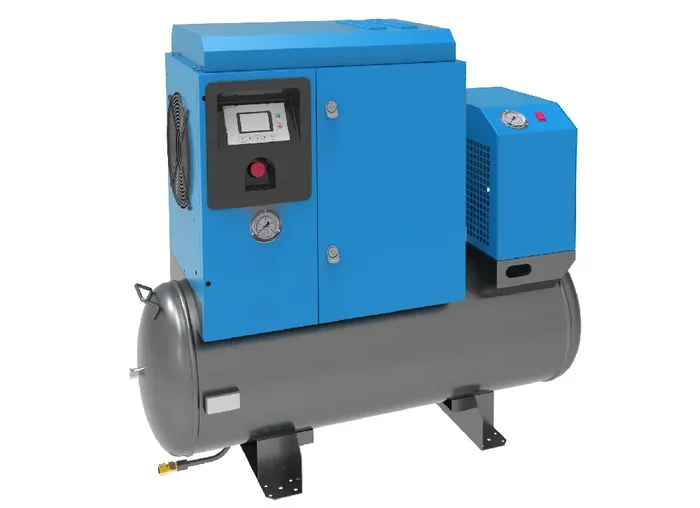
Stationary compressors are built for permanent installation in shops and factories. They come with large tanks, sometimes 60 gallons or more. Their CFM output can reach 20 or higher at 90 PSI. These machines are designed for heavy-duty, continuous use with powerful pneumatic tools.
If you run a body shop, a woodworking studio, or a manufacturing operation, this is the compressor size you need. They are louder and take up more space, but they deliver the air power that serious work demands. Some users even pair their setup with a what size whole house generator do I need to ensure backup power during outages.
How to Match Compressor Size to Your Application
Now that you understand the basics, let us talk about matching compressor size to real-world applications. The right choice depends on what tools you use, how often you use them, and where you work.
Home and Garage Use
For most homeowners, a 2 to 6 gallon tank with 2 to 5 CFM at 90 PSI covers the essentials. You can run a tire inflator, a brad nailer, a staple gun, and a small impact wrench. These machines are affordable, usually under $500, and they fit easily in a garage corner.
Consider your typical tasks. If you only inflate tires and hang pictures, a small portable unit is perfect. If you do furniture projects or light woodworking, aim for the higher end of that range. A compressor size in this sweet spot gives you flexibility without wasting money.
Automotive and Tire Shops
Auto shops need higher CFM and PSI for impact wrenches, spray guns, and air ratchets. Look for a machine with at least 5 to 10 CFM at 90 PSI and a tank of 20 gallons or more. The larger tank helps maintain steady pressure during repeated bursts of tool use.
Duty cycle matters a lot here. A mechanic running an impact wrench constantly needs a unit that can keep up without overheating. Twin-stack or wheelbarrow models work well for this environment. Think about how your shop layout might also benefit from a reliable what size whole house generator do I need for backup power during storms or grid failures.
Construction and Job Sites
Job site work demands portability and durability. You need a machine that can handle framing nailers, sanders, and sprayers throughout the day. Look for a wheelbarrow compressor with 6 to 10 gallons and at least 5 to 10 CFM at 90 PSI.
Gas-powered compressors are popular on job sites because they do not need an electrical outlet. Electric models are quieter and cleaner but require access to power. Choose your compressor size based on the most demanding tool you will run, then add a 25 percent buffer for safety.
Industrial and Manufacturing Use
Industrial operations require the highest compressor size categories. These setups can include multiple machines running simultaneously at high CFM and PSI. Tank sizes can exceed 100 gallons, and output can reach 25+ CFM.
In these environments, two-stage compressors are common. They deliver higher pressure more efficiently by compressing air in two passes. This reduces heat buildup and improves air delivery. If you run a facility that depends on continuous pneumatic power, investing in the right compressor size from the start pays off fast in productivity and lower energy bills.
Common Mistakes When Choosing Compressor Size
Even experienced buyers sometimes make mistakes when picking a compressor size. Here are the most common ones and how to avoid them.
Focusing Only on Horsepower
Horsepower gets a lot of attention, but it is misleading on its own. A motor with 5 horsepower might deliver less usable air than a 3 horsepower motor with a better pump design. Always look at CFM and PSI first. Horsepower is just one piece of the puzzle.
Ignoring the Safety Buffer
Many people buy a compressor that exactly matches their current tool needs. This leaves no room for growth. If you add a new tool later, you may find your machine cannot keep up. Always add 25 to 30 percent extra CFM capacity. This buffer lets you expand your tool collection without buying a new compressor.
Underestimating Tank Size
Some buyers focus only on CFM and ignore tank size. A larger tank does not make the compressor more powerful, but it does store more compressed air. This means the motor cycles on and off less often. Less cycling means less wear, lower noise, and longer machine life.
Buying Based on Price Alone
The cheapest compressor is not always the best deal. A low-cost unit that cannot keep up with your tools will frustrate you and waste your time. Spend time on the specs that matter. A slightly higher price for the right compressor size saves money and headaches in the long run.
Expert Tips for Finding the Perfect Compressor Size
Here are some insider tips that help you make the best decision. These come from years of experience in the compressor industry.
- Write down every tool you plan to run. List the CFM and PSI for each one. Add up the CFM for tools you will use at the same time, then add 30 percent.
- Visit a local dealer and test the machines. Ask to hear the noise level and see how fast it builds pressure. Your ears and hands will tell you things the spec sheet will not.
- Consider your electrical setup. A large compressor may need a dedicated 240-volt circuit. Make sure your workshop can support the power draw before you buy.
- Think about future needs. If you plan to add a spray gun, sander, or impact wrench soon, choose a compressor size that can handle the extra load now.
- Check the warranty and service network. A good warranty reflects the manufacturer’s confidence in their product. Local service centers make repairs much easier.
These simple steps put you ahead of most buyers. You will walk into a store or browse online with a clear picture of what you need. No guesswork, no regrets.
How to Calculate Your Ideal Compressor Size
Let us put it all together with a quick calculation method. This gives you a clear target for your compressor size search.
Step 1: List all your air tools and their CFM and PSI requirements. Step 2: Identify the tool with the highest CFM demand. Step 3: Add up the CFM for any tools you will run simultaneously. Step 4: Multiply that total by 1.3 for your safety buffer. Step 5: Choose a compressor that meets or exceeds that number at 90 PSI.
For example, imagine you run a finish nailer at 2.5 CFM and a sander at 5 CFM. You use them at the same time. That is 7.5 CFM total. Multiply by 1.3, and you need a compressor delivering at least 9.75 CFM at 90 PSI. A machine rated at 10 CFM would be a solid fit.
This method works for any application, from home garage to full industrial shop. It removes the guesswork and gives you a clear number to shop around. Once you have that target CFM and PSI, finding the right compressor size becomes much easier.
Final Thoughts on Choosing the Right Compressor Size
Choosing the right compressor size comes down to knowing your tools, understanding CFM and PSI, and planning for the future. The right machine makes every job faster, cleaner, and more enjoyable. The wrong machine causes delays, frustration, and wasted money.
Take the time to do your homework. Write down your tool requirements. Add your safety buffer. Consider tank size, duty cycle, and portability. Think about how your setup today might grow tomorrow. And if you are also thinking about home power backup, look into what size whole house generator do I need to keep your entire workshop running during an outage.
The perfect compressor size exists for every situation. You just need the right information to find it. Use this guide as your roadmap, and you will make a confident, smart choice every time. Happy compressing.
Frequently Asked Questions
What compressor size do I need for home use?
For most home projects, a 2 to 6 gallon tank with 2 to 5 CFM at 90 PSI is ideal. This handles tire inflation, nail guns, and small impact wrenches. It keeps costs low while giving you enough power for common tasks.
How do I know if my compressor size is too small?
If your compressor constantly runs without stopping or your tools lose pressure mid-task, the unit is likely too small. Check the CFM and PSI requirements of your tools and compare them to your compressor’s output. A machine that runs all the time is working too hard.
Can I use a small compressor for painting?
Yes, but you need a compressor with steady CFM output. Paint sprayers typically require 4 to 6 CFM at 30 to 50 PSI. A small tank may cause the motor to cycle frequently, which can affect spray consistency. A larger tank or a twin-stack model works better for painting.
Is a bigger compressor size always better?
No. A compressor that is too large wastes energy, costs more, and takes up extra space. The best compressor size matches your actual tool needs with a small buffer for future growth. Oversizing does not improve performance and can increase your electricity bill.
What is the difference between single-stage and two-stage compressors?
A single-stage compressor compresses air once and is best for lighter tasks under 100 PSI. A two-stage compressor compresses air twice, delivering higher pressure more efficiently. Two-stage units are better for heavy-duty, continuous work and can handle higher CFM demands.
Should I choose an electric or gas compressor for my size needs?
Electric compressors are quieter, cleaner, and easier to maintain. They work best in indoor shops and home garages. Gas-powered compressors offer more mobility and higher power for job sites without electrical access. Choose based on where and how you will use the machine most often.
=== CONCLUSION ===
Finding the right compressor size does not have to be complicated. Focus on CFM, PSI, and tank capacity. Match those numbers to your tools and tasks. Avoid the common mistakes that trip up most buyers. And plan ahead so your setup can grow with your needs.
Whether you are a weekend hobbyist or a full-time professional, the right compressor size makes every job easier and more efficient. Use the tips and calculations in this guide to shop with confidence. You will end up with a machine that fits your workflow perfectly and lasts for years to come.