How To Tell If Your Refrigerator Compressor Is Going Bad
A failing refrigerator compressor can ruin your food and cost you hundreds in repairs. You can spot the warning signs early if you know what to listen for and look for. This guide walks you through every symptom, test, and solution so you can act fast and keep your fridge running smoothly.
Your refrigerator compressor is the heart of your cooling system. When it starts to fail, your fridge can’t keep food cold, and that means spoiled groceries and a big headache. Knowing how to tell if your refrigerator compressor is going bad can save you time, money, and a lot of stress.
Most people don’t think about their fridge compressor until something goes wrong. By then, the problem has often gotten worse. But here is the good news. You can catch the early warning signs yourself. You do not need to be a professional technician to notice the clues your fridge is giving you. This guide covers every sign, test, and fix you need to know.
We will walk you through the sounds to listen for, the temperatures to watch, and the simple tests you can do at home. Whether your fridge is making weird noises or just not cooling right, you will find the answers here. Let us get into it.
Key Takeaways
- Strange noises like clicking, humming, or buzzing are often the first sign your compressor is struggling.
- Warm food and inconsistent cooling mean your compressor may not be running properly.
- Testing the compressor yourself is possible with a multimeter and a few simple steps.
- Common causes of compressor failure include dirty condenser coils, refrigerant leaks, and electrical issues.
- Repair vs. replace decisions depend on the age of your fridge and the cost of the fix.
- Regular maintenance can extend your compressor life and prevent unexpected breakdowns.
📑 Table of Contents
What Does a Refrigerator Compressor Do?
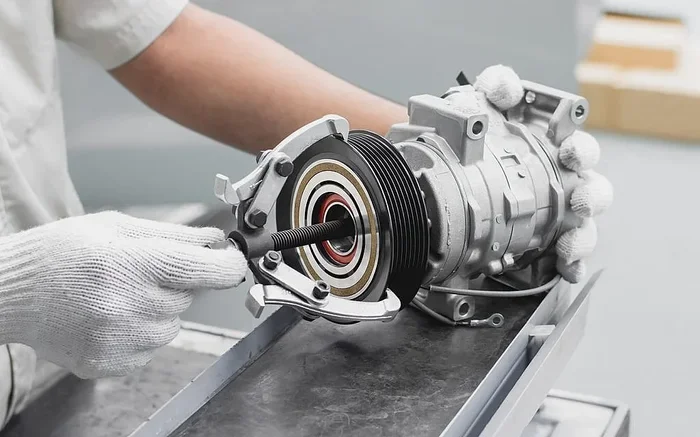
The compressor is the engine of your refrigerator. It pumps refrigerant through the system to remove heat from inside your fridge. Without a working compressor, your refrigerator cannot cool at all. Think of it like the motor in a car. If the motor dies, the car does not move. Same idea with your fridge.
Your compressor works hard every single day. It cycles on and off to maintain the right temperature. Over time, this constant use can wear it down. Understanding what the compressor does helps you understand why it fails and what to look for when things go wrong.
How the Cooling Cycle Works
The cooling cycle starts with the compressor. It compresses the refrigerant gas, which raises its temperature. This hot gas then flows through the condenser coils on the back or bottom of your fridge. The heat escapes into the air, and the gas turns into a liquid. The liquid moves through an expansion valve and evaporates in the evaporator coils inside your fridge. This process absorbs heat from the food compartment, cooling it down. The cycle repeats over and over.
If any part of this system breaks down, cooling suffers. The compressor is often the first component to go because it handles so much pressure and heat. Keeping an eye on how your fridge runs can help you catch problems before they become expensive repairs.
Common Signs Your Refrigerator Compressor Is Going Bad
The best way to protect your fridge is to catch problems early. Here are the most common signs that your compressor is failing. Check off each one against what you are experiencing right now.
1. Warm Food and Inconsistent Cooling
This is the most obvious sign. If your fridge is not keeping food cold, something is wrong. Check the temperature with a thermometer. Your fridge should be between 35 and 38 degrees Fahrenheit. The freezer should be around 0 degrees.
If you notice warm spots in the fridge or food that spoils faster than usual, the compressor may not be running correctly. Sometimes the compressor runs but does not cool enough. Other times it stops running entirely. Either way, warm food is a red flag you cannot ignore.
2. Unusual Noises From the Fridge
A healthy compressor makes a low humming sound when it runs. That is normal. But if you hear clicking, buzzing, rattling, or loud humming that does not stop, something is wrong.
- Clicking sounds often mean the compressor relay or start capacitor is failing.
- Loud humming with no cooling could mean the compressor is struggling to start.
- Rattling might indicate loose parts inside the compressor or debris near the condenser.
- Screeching or grinding signals serious mechanical damage inside the compressor motor.
Do not ignore these sounds. The longer you wait, the worse the damage can get.
3. Compressor Runs All the Time
A compressor that never shuts off is a compressor in trouble. Normal fridges cycle on and off throughout the day. If your compressor runs constantly without stopping, it may be failing to reach the set temperature. This constant running wears out the motor faster and can lead to a complete breakdown.
Check if the condenser coils are dirty first. Dirty coils make the compressor work harder. But if the coils are clean and the fridge still runs nonstop, the compressor itself may be the problem.
4. Ice Buildup or Frost in Unexpected Places
Excessive frost or ice buildup inside the fridge can point to a compressor issue. When the compressor does not cycle properly, the evaporator coils get too cold. This causes ice to form on the walls, shelves, or back panel of the freezer.
While ice buildup can also be caused by a bad door seal or blocked defrost drain, a failing compressor is a common culprit too. If you have ruled out the simpler causes, it is time to look at the compressor.
5. Higher Electricity Bills
A struggling compressor uses more electricity. If your energy bills have spiked and your fridge is running more than usual, the compressor may be the reason. A compressor that cannot maintain the right temperature will keep drawing power without actually cooling effectively. This wastes energy and costs you money every month.
Why Do Refrigerator Compressors Fail?
Understanding the causes of compressor failure helps you prevent future problems. Compressors do not just fail out of nowhere. There is almost always a reason behind it.
Dirty Condenser Coils
Dirty condenser coils are one of the most common causes of compressor failure. When dust, pet hair, and grime build up on the coils, the compressor has to work harder to release heat. Over time, this extra strain causes the motor to overheat and eventually burn out. Cleaning your condenser coils every six months can add years to your compressor life.
Refrigerant Leaks
Refrigerant is the lifeblood of your cooling system. If there is a leak, the compressor has to work harder with less refrigerant. This causes overheating and eventual compressor damage. Signs of a refrigerant leak include warm fridge, ice buildup, and a hissing sound near the coils. Refrigerant leaks require a professional to fix because handling refrigerant requires special certification.
Electrical Problems
Voltage spikes, faulty wiring, or a bad start relay can all damage the compressor. The start relay helps the compressor kick on. When it fails, the compressor may click on and off repeatedly or not start at all. Electrical issues are often preventable with a surge protector or voltage regulator.
Age and Wear
Most compressors last between 10 and 15 years. As your fridge ages, the compressor naturally wears out. If your fridge is over 10 years old and the compressor is failing, you may want to consider a full replacement rather than a repair.
How to Test Your Refrigerator Compressor at Home
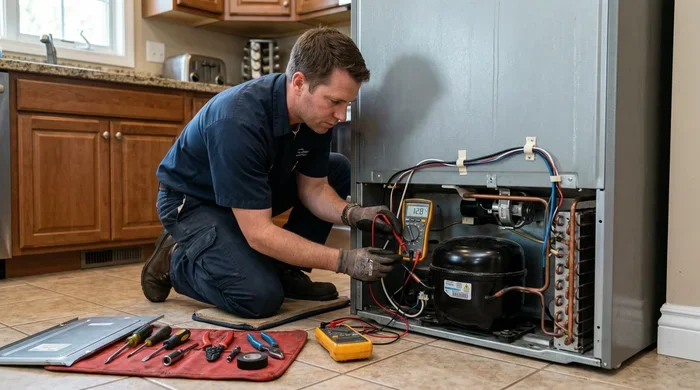
You do not need to be a repair expert to test your compressor. A few basic tools and some careful steps can help you figure out if the compressor is the problem. Always unplug your fridge before doing any tests.
Step 1: Check the Temperature
Place a thermometer in the fridge and the freezer. Wait two hours and check the readings. If the fridge is above 40 degrees or the freezer is above 10 degrees, the compressor is likely not cooling properly. This is your first clue that something is wrong.
Step 2: Listen and Feel
Stand near your fridge and listen carefully. Place your hand on the compressor, which is usually located at the back or bottom of the unit. You should feel a slight vibration when the compressor runs. If you hear clicking but no vibration, the start relay may be bad. If you feel vibration but no cooling, the compressor may be low on refrigerant or mechanically damaged.
Step 3: Test the Start Relay
The start relay sends power to the compressor motor. You can test it with a multimeter. Remove the relay from the compressor and set your multimeter to the ohms setting. Touch the probes to the relay terminals. If you get no reading or a reading of zero, the relay is bad and needs replacement. This is a cheap and easy fix compared to replacing the entire compressor.
Step 4: Check for a Hard Start
Sometimes the compressor struggles to start but still works eventually. This is called a hard start. You might hear the compressor groaning or clicking before it finally kicks on. A hard start kit can sometimes fix this problem cheaply. But if the compressor keeps struggling, the motor windings may be damaged and the compressor may need full replacement.
Step 5: Test the Compressor Windings
For a more advanced test, you can check the compressor windings with a multimeter. Locate the three pins on the compressor terminal block. They are usually labeled Common, Start, and Run. Check the resistance between each pair of pins. If you get an open line (infinite resistance) or zero resistance, the compressor windings are damaged. This means the compressor needs to be replaced.
Pro Tip: If you are not comfortable with electrical testing, call a licensed technician. Working with refrigerant and electrical components can be dangerous.
Repair vs. Replace: What Should You Do?
Once you confirm the compressor is bad, you need to decide between repairing it or replacing the entire fridge. This decision depends on a few key factors.
When to Repair
Repair makes sense if your fridge is less than 8 years old and the repair cost is reasonable. A compressor replacement typically costs between $500 and $1,000, including labor. If your fridge is otherwise in good shape, a new compressor can give you many more years of reliable service.
When to Replace
Consider replacing the fridge if it is more than 10 years old, the repair cost exceeds half the price of a new unit, or you notice other problems like frequent breakdowns. Modern refrigerators are much more energy efficient than older models. A new fridge can save you money on electricity bills over time.
| Factor | Repair | Replace |
|---|---|---|
| Fridge Age | Less than 8 years | More than 10 years |
| Repair Cost | Under $800 | Over $1,000 |
| Energy Efficiency | Old model uses more power | New model saves energy |
| Other Issues | Only the compressor is bad | Multiple parts failing |
| Warranty | Still under warranty | No warranty left |
If you do decide to replace your fridge, consider how you will power your temporary setup or backup cooling. A portable generator can help keep food safe during the transition. A generator can power essential appliances like your fridge while you wait for the new unit to arrive. Understanding how much power you need and how to connect a generator safely to your home is important during any appliance emergency.
Preventing Future Compressor Problems
The best way to deal with a bad compressor is to prevent one from happening in the first place. Regular maintenance goes a long way toward keeping your compressor healthy and your fridge running efficiently.
- Clean the condenser coils every six months to reduce strain on the compressor.
- Check the door seals regularly. A bad seal lets cold air escape and forces the compressor to work harder.
- Do not overload the fridge. Overpacking blocks airflow and makes the compressor work overtime.
- Use a surge protector. Voltage spikes can damage the compressor motor over time.
- Keep the fridge level. An unlevel fridge can cause the compressor to vibrate excessively and wear out faster.
- Do not place hot food inside. Let food cool to room temperature before putting it in the fridge. Hot food makes the compressor work harder to maintain the set temperature.
- Schedule professional maintenance once a year. A technician can spot small problems before they become big, expensive ones.
These simple habits can add years to your compressor life and save you from unexpected breakdowns. Prevention is always cheaper than repair.
When to Call a Professional
Some compressor problems are beyond DIY fixes. If you have tested the compressor and confirmed it is bad, you will likely need a professional to replace it. Refrigerant handling requires EPA certification, and compressor replacement involves working with high-voltage electrical components.
Call a licensed appliance technician if you notice any of the following:
- The compressor trips the circuit breaker repeatedly.
- You smell burning or see smoke near the compressor.
- The fridge makes loud grinding noises that do not stop.
- You suspect a refrigerant leak.
- You have tried basic fixes but the fridge still will not cool.
A professional can properly diagnose the issue and recommend the best course of action. Trying to fix a compressor yourself without the right skills and tools can be dangerous and may void your warranty.
Conclusion
Knowing how to tell if your refrigerator compressor is going bad empowers you to take action before the problem gets worse. From unusual noises and warm food to constant running and high energy bills, the signs are there if you know what to look for. Simple home tests can help you confirm the problem, and understanding when to repair versus replace saves you money and stress.
Regular maintenance keeps your compressor healthy and your fridge running smoothly for years. Clean the coils, check the seals, and protect your fridge from electrical surges. If the compressor does fail, you now have the knowledge to make the best decision for your home and your budget. Do not wait until your food spoils. Act early and keep your fridge in top shape.
Frequently Asked Questions
What are the first signs of a failing refrigerator compressor?
The first signs are usually unusual noises like clicking, humming, or buzzing from the back of the fridge. You may also notice that your food is not staying cold or that the compressor runs constantly without stopping. These early symptoms are your cue to investigate further before the problem gets worse.
Can a bad compressor still cool the fridge a little?
Yes, sometimes a failing compressor can still cool but not efficiently enough. You might notice warm spots in the fridge or the freezer not reaching the right temperature. If the cooling is inconsistent, the compressor may be partially damaged and heading toward total failure.
How much does it cost to replace a refrigerator compressor?
A compressor replacement typically costs between $500 and $1,000, including parts and labor. The exact price depends on your fridge model, the cost of the compressor part, and local labor rates. Always get a quote from a licensed technician before committing to the repair.
Is it worth replacing a compressor in an old fridge?
It depends on the age and overall condition of the fridge. If your fridge is over 10 years old and needs a compressor replacement, the cost may be close to buying a new unit. Newer fridges are also much more energy efficient, so a replacement could save you money on electricity over time.
Can dirty condenser coils cause compressor failure?
Yes, dirty condenser coils make the compressor work harder to release heat. Over time, this extra strain causes the compressor to overheat and eventually fail. Cleaning the coils every six months is one of the easiest and most effective ways to protect your compressor.
How long should a refrigerator compressor last?
A well-maintained refrigerator compressor typically lasts between 10 and 15 years. Regular cleaning, proper usage, and electrical protection can help extend its lifespan. If your compressor is nearing the end of its life, it is wise to plan for a replacement before it fails completely.